Introduction
Chronic wounds such as venous leg ulcers (VLUs), diabetic foot ulcers (DFUs) and pressure ulcers are a growing clinical and economic challenge within UK healthcare (Guest et al, 2020). Effective wound management relies on maintaining an optimal healing environment, managing exudate appropriately and protecting the periwound skin (Dowsett, 2022).
Wound care is inherently complex and resource-intensive, with variation in wound types requiring careful clinical decision-making, while healthcare professional (HCP) time remains a key driver of costs, particularly in community settings where care is often delivered by non-specialist HCPs (Guest et al, 2020; Voegeli et al, 2024). This highlights the need for simplified, effective treatment approaches that support the reduction of unwarranted variation in care delivery.
Notably, it is estimated that nearly 80% of chronic wounds managed in clinical practice are less than 2cm in depth, indicating that a large proportion of wounds on typical caseloads may be suitable for simplified treatment approaches (Braunwarth et al, 2017; Voegeli et al, 2024).
Exuding wounds are frequently managed using a standard of care (SoC), defined here as a two-dressing regimen comprising a wound filler combined with a secondary foam dressing* (Voegeli et al, 2024). This approach can increase treatment complexity, requiring HCPs to select and apply multiple products, which may contribute to higher overall costs and greater use of HCP time (Voegeli et al, 2024; Guest et al, 2020).
In addition, inadequate exudate management and the presence of ‘dead space’/the gap between the wound bed and the dressing may increase the risk of maceration, infection and delayed healing, negatively impacting patient quality of life (QoL) (Keast et al, 2020). Addressing this gap is therefore clinically important for healing outcomes and patient experience.
These factors highlight the importance of a simplified, evidence-based approach to wound care that improves healing outcomes. Requiring fewer products per patient while freeing up time and cost associated with dressing changes can simplify wound treatment. Biatain® Silicone supports a simplified one dressing approach for the treatment of wounds up to 2cm in depth by using one product instead of two, whilst being a clinically comparable and cost-effective***,**** alternative to SoC (Voegeli et al, 2024).
Although this article focusses on the management of chronic and hard-to-heal wounds, Biatain Silicone may also be used on acute wounds such as post-operative, traumatic wounds and donor sites (Coloplast, 2021).
How It Works: Biatain Silicone with 3DFit Technology
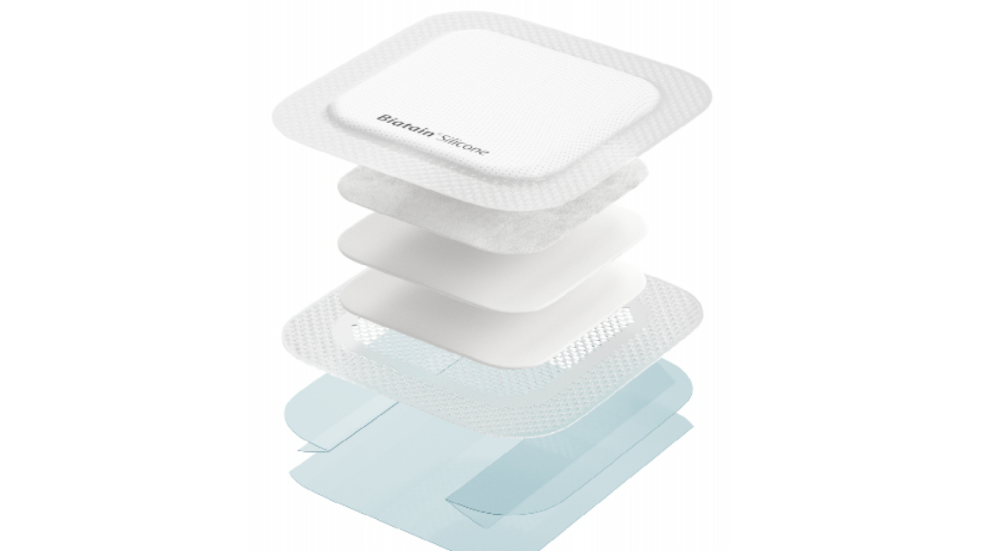
Biatain Silicone (Coloplast A/S) is a bordered silicone foam dressing with 3DFit Technology, designed to manage low- to highly-exuding wounds (Voegeli et al, 2024; Coloplast, 2021). In clinical practice, exuding wounds with depth are often managed using a wound filler in combination with a secondary dressing to address the gap between the wound bed and the dressing, which is recognised as an important factor in promoting an optimal healing environment (Keast et al, 2020).
Biatain Silicone supports a simplified one-dressing approach for wounds up to 2cm in depth by conforming to the wound bed and reducing the routine need for a separate wound filler (Voegeli et al, 2024).
3DFit Technology underpins the mode of action of Biatain Silicone, enabling the dressing to conform to the wound bed and fill the gap typically addressed through the use of a wound filler within SoC (Colboc et al, 2024; Braunwarth et al, 2017).
Key features and mode of action include:
- 3DFit Technology: works through three key mechanisms to support an optimal wound healing environment:
- Conforms to the wound bed: up to 2cm in depth** to reduce gap formation and reduce exudate pooling
- Absorbs vertically: to protect the surrounding skin and wound edges from maceration
- Retains exudate and 99.98% of bacteria*****: to reduce the risk of infection and damage to the periwound skin (Coloplast, 2022)
- Soft silicone contact layer: ensures minimal pain upon dressing removal (Colboc et al, 2024)
- Wear time of up to 7 days: enables long wear time and few dressing changes.
By conforming to the wound bed in wounds up to 2cm in depth**, Biatain Silicone reduces the routine need for a wound filler in appropriate wounds, which may represent a large proportion of wounds on a typical clinical caseload, enabling a one-dressing approach (Voegeli et al, 2024).
Benefits of a simplified one dressing approach
Using one dressing instead of two in wounds up to 2cm in depth offers a simplified dressing regimen and may reduce treatment burden for HCPs and patients, without compromising on clinical performance***,****(Voegeli et al, 2024).
The need for simplified wound care approaches is increasingly recognised, particularly in community settings where care is often delivered by generalist HCPs and workforce pressures are well documented (Guest et al, 2020; Doswett et al, 2022). In this context, reducing the complexity of dressing regimens may support more consistent and efficient care delivery.
Key practical benefits include:
- Requiring fewer products per patient
- Potential to free-up the time and cost associated with dressing changes***
- Potential for supported self-management (Voegeli et al, 2024).
Patient quality of life considerations
Chronic wounds are associated with pain, reduced mobility and impaired QoL (Redmond, Gethin and Finn, 2025). Dressing choice can directly influence patient comfort and daily functioning.
By requiring fewer products, being easy to handle and apply and supporting minimal pain on removal, Biatain Silicone offers the potential for supported self-management, which may help simplify ongoing wound care for patients, particularly in community settings (Cartier et al, 2014; Colboc et al, 2024; McDonald et al, 2020).
Clinical and economic evidence
A multicentre, open-labelled randomised controlled trial compared Biatain Silicone with SoC in patients with VLUs and DFUs ≤2cm in depth (Voegeli at al, 2024).
After four weeks of treatment, the study demonstrated comparable wound healing outcomes between Biatain Silicone and SoC, indicating that a simplified one-dressing approach can achieve on par clinical performance to SoC (Voegeli et al, 2024).
Biatain Silicone was associated with a 47% reduction in the mean number of products contributing to lower overall treatment costs (Voegeli et al, 2024).
Total mean estimated costs were significantly lower with Biatain Silicone (£14.30) compared to SoC (£21.40) (Voegeli et al, 2024).
Cost savings represented a 33% reduction in dressing-related costs compared with SoC (p=0.033) (Voegeli et al, 2024). These findings suggest that a simplified one-dressing approach saves costs***,**** while maintaining comparable clinical performance.
Supporting real-world evidence
Observational data from community practice further support the use of Biatain Silicone in the community setting. A sub-analysis of a prospective observational study demonstrated that, in real-world community settings, where no additional education was provided and dressings were selected based on nursing judgement by a mixed, largely non-specialist workforce, the use of a silicone foam dressing was associated with:
- 73% of wounds showing improvement, with 48% healed and 25% progressing towards healing within a median of 22.5 days
- Significant reductions in exudate level and exudate pooling (both p<0.0001)
- Significant improvements in the condition of the wound edges (p≤0.0001)
- Significant improvements in periwound skin condition (p<0.01)
- High levels of nurse- and patient-reported wound improvement (Colboc et al, 2024).
By the last follow-up visit, a high proportion of wounds had healed or were progressing towards healing, supported by significant reductions in wound area. While this study did not include an economic analysis, these findings complement the clinical trial evidence, highlighting the ability of Biatain Silicone to create an effective wound healing environment in routine community practice (Colboc et al, 2024).
Budget impact and cost savings
A UK-specific budget impact model evaluated the financial implications of transitioning from SoC to Biatain Silicone for eligible patients with VLUs and DFUs in the community setting at a national level (Dowsett et al, 2025). The analysis, based on conservative assumptions, estimated potential cumulative savings of £5.1 million over five years, driven by switching to Biatain Silicone from a two-dressing regimen.
These findings suggest that adopting a simplified one-dressing approach in wounds up to 2cm in depth saves costs***, as it requires fewer products per patient while maintaining clinical performance comparable to SoC. This can benefit patients, HCPs and the environment (Dowsett et al, 2025; Voegeli et al, 2024).
Conclusion
Biatain Silicone provides clinical performance comparable to SoC for suitable exuding wounds. Simplifying care to a one-dressing approach for wounds up to 2cm in depth may support evidence-based practice, with the potential to save costs*** and improve healing outcomes (Colboc et al, 2024; Voegeli et al, 2024).
Inclusion of Biatain Silicone on local formularies can support:
- Reduction in the number of products used
- Simplified dressing regime
- Alignment with value-based healthcare principles.
* Aquacel® Extra™ filler combined with a Mepilex® Border secondary dressing
** Conformability may vary across product design
*** Based on UK pricing data
**** Compared to the use of a filler and foam dressing in wounds up to 2cm in depth
***** Tested in vitro