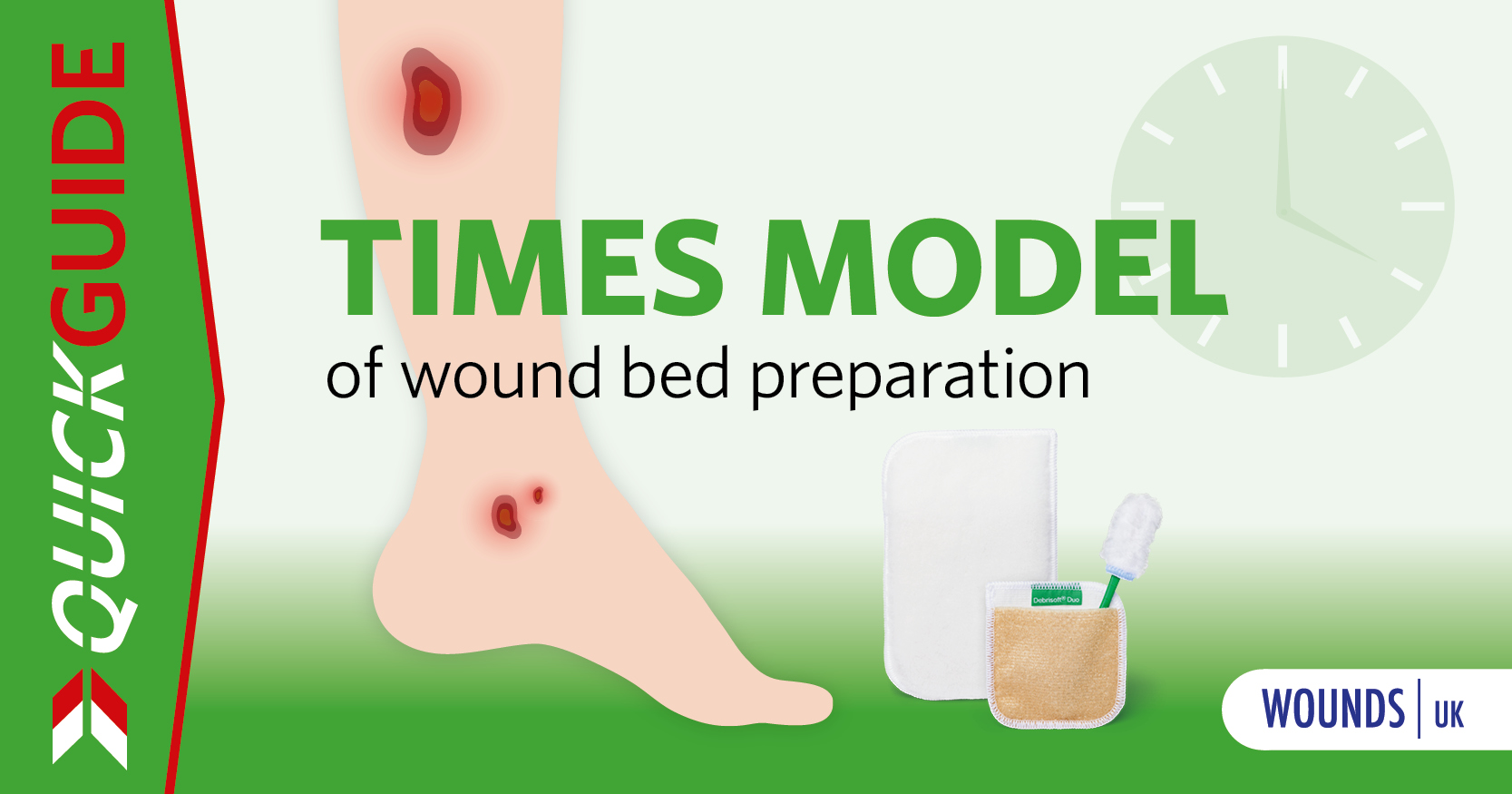
The TIMES table removing the barriers to wound healing
Tissue, non-viable or deficient
The overall appearance of the wound bed indicates the ‘health’ of the tissue within the wound bed. Devitalised tissue provides an ideal environment for microbial growth and, in most cases, should be removed to expedite healing.
Key actions:
- Mechanical debridement (e.g. Debrisoft® Duo) is recommended1
- Use a dressing with an appropriate level of absorbency, such as a gelling fibre dressing (e.g. Suprasorb® Liquacel Pro)
Infection, inflammation or biofilm
Wounds contain bacteria, which may proliferate and cause infection — delaying healing, and increasing pain, exudate and malodour. Even where infection is not apparent, healing may also be impeded by the presence of biofilm.
Key actions:
- Mechanically disrupt biofilm (e.g. by using Debrisoft Duo) to break it up and allow antimicrobials to work
- After disruption, use an antimicrobial dressing (e.g. Suprasorb Liquacel Ag or Suprasorb X + PHMB) for 2 weeks, then review
Moisture imbalance
Exudate is a normal part of wound healing, and drying out can impede the healing process. High levels of moisture (often containing harmful proteases) can break down new wound tissue and macerate periwound skin.
Key actions:
- Dry wound: Mechanically debride to remove loose dry skin; hydrate with a moisture-donating dressing
- High exudate levels: Mechanically debride to reduce the body’s automatic response to produce moisture; then select an absorbent dressing that retains exudate effectively (e.g. Suprasorb Liquacel Pro or Vliwasorb® Pro)
Edge of wound: nonadvancing, undermining
Lack of new, healthy tissue at the wound edges, or the presence of rolled edges, indicate wound healing is not progressing normally.
Key actions:
- Mechanically debride (e.g. Debrisoft Duo) encrusted exudate at wound edges to remove local barriers to healing
- Assess why the edge is not progressing — consider biofilm management (see I) or referral for biopsy
- Protect delicate edge tissue (e.g. dressing with Lomatuell® Pro)
Surrounding skin
The wound management strategy may effect the surrounding skin — the condition of which can, in turn, affect the wound healing process.
Key actions: Figure 1: before
- Address the causes of skin issues
- Manage hyperkeratosis/dry skin/ eczema/oedema/skin damage
- Mechanically debride hyperkeratosis (e.g. using Debrisoft Duo)3
- Protect the skin from further damage in line with best practice and local formulary guidelines
- Encourage self-care
Download the PDF below to access the full Quick Guide.