
It was encouraging to be in Westminster Hall this month to hear MPs debating the need for reform of vascular care. For those of us who have spent years calling for better care for people with lower-limb conditions, the fact that vascular disease was being discussed in Parliament at all, felt significant. As Jim Shannon MP, Chair of the APPG on Vascular and Venous Disease said, vascular disease remains an “often forgotten health issue”, one that can be “hidden in the shadows of our health service”.
The debate, on the potential merits of reform of the vascular sector, brought welcome attention to the very real consequences of getting care wrong: delayed diagnosis, inconsistent referral pathways, unequal access to specialist services and, ultimately, avoidable harm.
There was also recognition that vascular disease does not always receive the attention its impact warrants. Dr Zubir Ahmed MP, himself a former vascular surgeon, questioned whether vascular disease can effectively become a “second-class disease” when compared with conditions such as cancer.
These are important conversations to be having and it was heartening to hear support from across the political spectrum for earlier diagnosis, better prevention and more consistent care. But recognition is only useful if it leads to change.
From debate to delivery
A number of practical reforms were discussed in Westminster, including a national ‘foot attack’ pathway for urgent foot problems, community foot protection services, clearer waiting-time standards, commissioning based on patient outcomes and faster adoption of proven innovation.
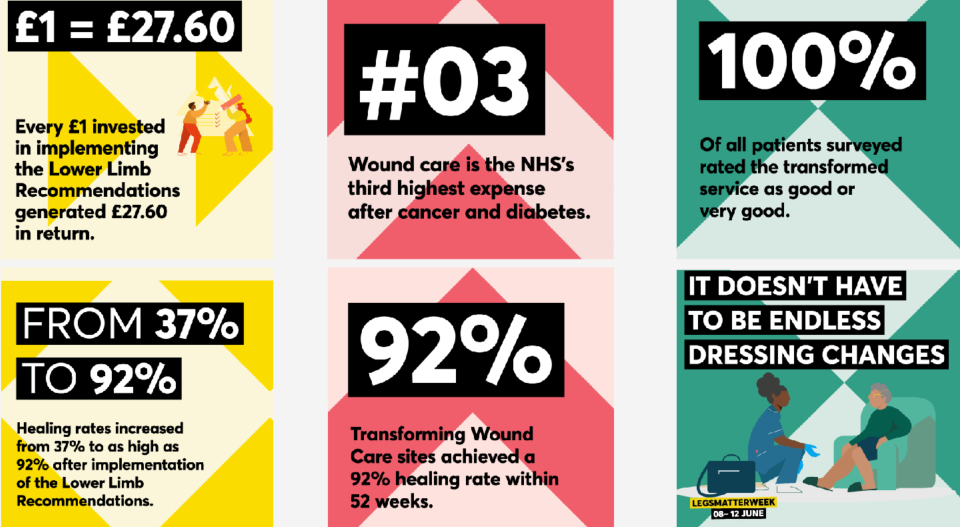
All of these speak to a central principle that Legs Matter has championed since the coalition was formed: it doesn’t have to be this way.
We already know a great deal about what good lower-limb care looks like. Evidence-based guidance exists. We know that early assessment matters. We know that people with wounds need the right diagnosis and treatment, rather than simply having their wound repeatedly dressed. We know that delays and fragmented pathways can allow manageable conditions to deteriorate into something much more serious.
The challenge now is not simply to produce more recommendations. It is to make sure that what we already know work is actually happening consistently, wherever a person happens to live.
Every healthcare organisation providing lower-limb care should be asking whether evidence-based guidelines are being implemented in practice. Are people receiving timely assessment? Is the underlying cause of a wound being identified? Are appropriate treatment and referral pathways in place? And are services measuring whether people are actually healing?
We also need to talk about wounds
There was one thing I would have liked to hear more about during the debate: leg ulcers and lower-limb wounds themselves. They are not a peripheral issue in this conversation. They are an important part of vascular care, and, for many people, a non-healing wound is where their experience of vascular disease becomes painfully visible.
Jim Shannon highlighted that more than 80% of amputations among people with diabetes are preceded by a foot ulcer. He also made perhaps one of the most memorable observations of the debate: “Standard rhetoric and warm words… will not stop a failing wound, nor will they save a limb.” He is right.
If we want to prevent deterioration and avoidable harm, we have to take lower-limb wounds seriously from the outset. That means recognising them as potential signs of underlying disease, ensuring people receive appropriate assessment and diagnosis, and making sure evidence-based care is available consistently.
It doesn’t have to be this way
The Westminster debate was a welcome step. Vascular disease, inequalities in care and preventable amputations were given a national platform, and there appeared to be considerable agreement about the direction in which services need to move. Now that agreement needs to translate into action.
For government and NHS leaders, that means turning ambitions around prevention, early intervention and community care into services that patients can actually access.
For healthcare organisations, it means making sure that evidence-based lower-limb care is not simply contained in guidance but embedded in everyday practice.
And for all of us working in leg and foot health, it means continuing to challenge the idea that poor outcomes are inevitable. They aren’t.
We know how much harm can be prevented when people receive the right care at the right time. The task now is to make that care the norm, not the exception..