This is a phrase we hear a great deal in the world of leg ulcer management. We are all aware of the facts and rightly upset by the unmet needs, the wasted pain, the delays and the harm associated with poor lower limb care. We know well that leg ulcer or lymphorrhoea management can be sorted and when managed swiftly, everyone benefits and we know that front-line clinicians are frustrated by the lack of concrete progress.
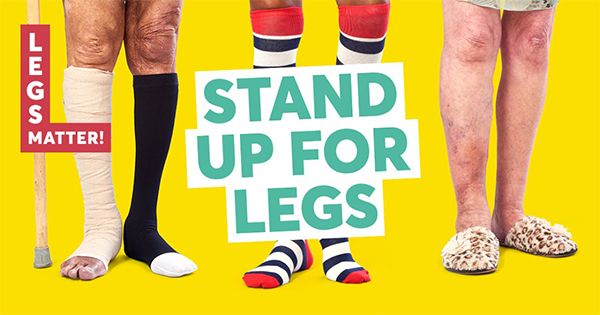
Legs Matter Awareness week is 8–12 June, a week in the year when clinicians across the country make a special focus on lower leg and foot conditions, especially leg ulcers and chronic oedema (scan the QR code on the PDF doc for more information). We absolutely love to hear from colleagues who are inspired to do something daft or provide a community event that increases the attention on this often-marginalised community.
This year, Legs Matter has a simple ask – for the national guidelines to be implemented and to be implemented consistently across the UK. There are some great examples of very good care across the country, but Legs Matter hears directly from patients seeking help; their stories are not what any clinician wishes to read. They are confused about their care, what they should be having or asking and they are feeling unheard; they are not sure where to turn to for help. They desperately want assurance and to have clarity on what care they need. The Legs Matter team seeks to help them be an advocate for themselves or for their loved one, to try and bring some clarity, explaining what help they need to request in way of information or referral. Some of their stories are simply harrowing and we feel powerless to truly help. These endless stories, and I am sure you also have many, drive our work and this campaign.
There is a phrase that I have heard too often from senior NHS leaders when presenting the opportunities that transforming lower limb management could bring: I have learnt to hold my tongue when ‘it’s a no brainer’ is exclaimed with enthusiasm. Unfortunately, this simplistic view is, by and large, followed by inactivity. Improving lower leg management remains in the ‘hard box’ for many despite the work done by the National Wound Care Strategy and others to show the way.
To many of us there remains a great deal of talk at round tables and conferences, the delivery of Best Practice Statements but little national action that will move this dial towards real world improvement. We have national standards developed with consensus, but implementation is basically a local choice and will be pushed by keen clinicians and local leaders. Despite knowing from Moffatt et al (1992) for more than 40 years what is good for our patients and our staff, lower limb wound management remains a postcode lottery.
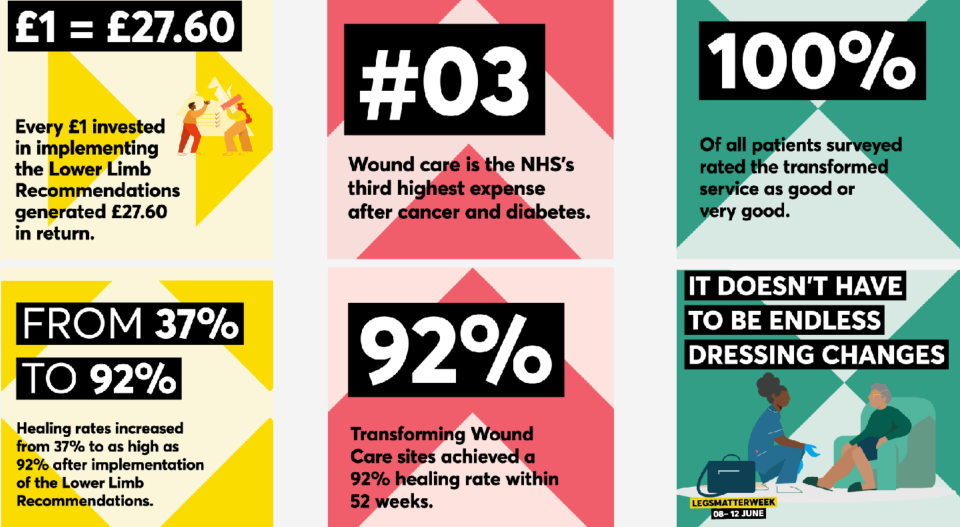
We have the evidence, the business case and the guidelines. We know what works and what we need to do. We do not need to reinvent this particular wheel! The National Wound Care Strategy guidance is all available on the Futures website. There are a number of documents that provide the financial evidence needed for a business case, giving examples of good practice from around the country demonstrating great outcomes and real-world service improvements in action. Currently, this is not accessible to the general public and responses from Legs Matter to patients cannot reference these important documents: open access remains a critical next step for this campaigning group.
Everyone needs to shout about how implementing this guidance improves healing and reduces delay and subsequent harm. This simply improves patient’s lives, reduces dressing spend and reduces unplanned hospital admissions. It is now unrefuted that simply using compression for all lower limb wounds reduces weekly nursing activity (Hopkins and Samuriwo, 2022). When there is endless talk about the reduction in community nurses and growing gaps in capacity, this is surely a winner! Healing wounds is such an enjoyable part of a community nurse’s job and many outcome studies report the positive staff impact of delivering a transformed service.
So, what is missing? We need to take action! Any change in the NHS is of course complex and tricky on so many fronts. There are a growing number of examples where this change is being implemented but we are asking for a consistent response. For people with any lower leg ulcer or laceration, it should not be just a lucky postcode that brings them a better life!
If you are reading this and feeling dispirited because you believe change in your system is never going to happen, I ask you kindly to identify if the following resonate as barriers in your local system and to take small steps to bring local challenge.
- ‘General practice will not manage leg ulcers.’ But could they use the national guidance to use Class 1 compression therapy within early intervention programme where an ABPI is not required? This will help their workload immediately by reducing exudate and need for appointments plus the use of shared self care. Healing could be swift, reducing dressing costs and stopping the need for referral to other services. This guidance is ready and waiting to be used. (Scan the QR code to watch the Legs Matter discussion with the RCN General Practice Forum webinar.)
- ‘There are delays in obtaining the ABPI’ preventing the use of compression therapy. Here point 1 above can be implemented, but also reading Atkin and Irvine (2026) review could be invaluable. These delays should be noted as incidents that prevent delivery of effective care.
- ‘Many of my colleagues think compression therapy takes up too much time.’ This has been refuted by Hopkins and Samuwiro (2022), who found that those using compression had fewer appointments per week. Importantly, we must object to this notion of compression therapy being a ‘nice to have’. We must contest this and be advocates for our patients. Compression therapy is a therapy, and patients have a right to this therapy that has Level A evidence as to its efficacy.
We encourage you to have a Legs Matter event in your locality and we have produced loads of resources that could enhance your event and provide the focus it needs. This year’s posters and resources focus everyone’s attention on the simple and recognised truth that in the world of lower limb care ‘it doesn’t have to be this way. There are other phrases that we hope could resonate for chief nurses and commissioners: that for lower leg care ‘it doesn’t need to cost this much’ and for community nurses ‘it doesn’t have to be endless dressing changes’. For patients and their family who watch on with concern, they need to know that ‘it doesn’t have to take this long to heal’ or ‘it doesn’t have to take over your life’; that it is their right to have access to evidence-based and therapeutic care.
We can all do our bit to change the world for people with unnecessary pain and suffering. Get involved with the Legs Matter campaign and become a Legs Matter Champion via the Legs Matter website. Be the influencer that brings real-world change and tell us what you are doing! We would love to hear from you and support your work! Say it. Share it. Change it!