
In my last article (Molyneux, 2026), I explored the idea of collaborative care – the difficult meeting point between clinicians with expertise, knowledge and experience, and patients with personal process, preferences and approaches. I argued for finding the balance between professional knowledge and patient autonomy through acceptance, understanding and curiosity. Easier said than done, of course!
In this article, I would like to expand that exploration to the landscape of modern clinical practice: an increase in expectations, pressures and demands within nursing, alongside heightened accountability, changing guidelines around legality and roles, and internet-informed patients.
Ideally, within this ever-changing context, we would have flexibility and clear pathways to navigate as needed, with the time and resources that this requires. Instead, we can often be met with the worst of both worlds; the restrictions, demands and expectations of the role and structures we exist in, alongside a need to be endlessly flexible and accommodating to various patients, lifestyles and preferences. And all within a tightly packed schedule.
As well as adding to the complexity of navigating wound treatment and patient relationships, this can also bring about doubt, frustration, and a fear of failure or error in the clinician themselves. I will explore what it means to practise in a space where a straight forward treatment plan can no longer be expected, as well as a potential loss of the sense of authority and expertise that was once more readily relied upon.
In addition to the practical implications of this shift, I will also take time to consider the emotional processes it may evoke in practitioners, and how we might best adjust and tend to ourselves in a terrain that is becoming increasingly hazardous, unclear and fear-driven.
Pressure, expectations and accountability
A landmark study by the Royal College of Nursing towards the end of 2025 found that 66% of UK nursing staff admitted to working when they should be on sick leave, 65.1% of those surveyed named stress as the biggest causes of illness and 70.4% are working in excess of their contracted hours at least once a week (Royal College of Nursing, 2025).
While this highlights the unsustainable nature of the role in all settings across the UK, it also shows the clear impact on the mental and physical health of the demands and expectations that this role now brings. On top of the common experiences of stress, burn-out and anxiety, I believe there is also additional cost in the practitioner’s emotional responses and processes in the face of mounting pressure, expectations and accountability.
With a more challenging context, complex treatment plans and varying cooperation from patients, it is no surprise to have experiences of frustration, fear, self-doubt and the looming worry of getting things wrong. If pressure and expectations rise while resources and certainty fall, tension only further increase and we feel even more stretched in what was already a challenging, uncertain landscape.
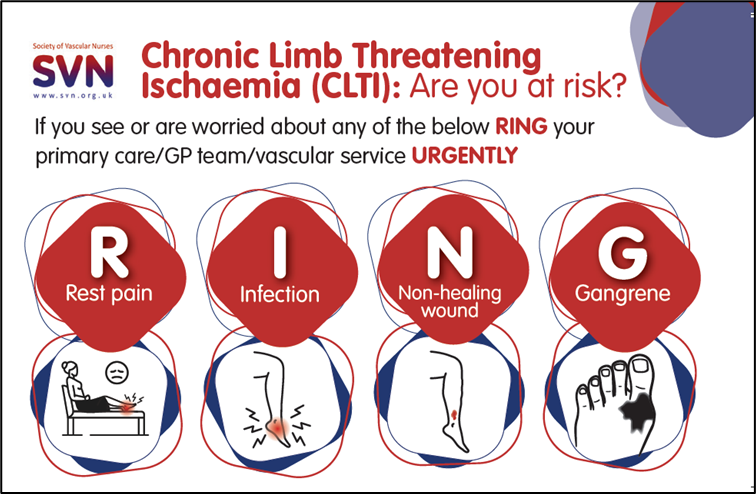
Alongside the increasing clinical complexity of wound care, there is also a wider shift in the expectations of the role, and the range of considerations that need to be held in mind at any given time (scan the QR code in the PDF doc for more information). While this may present an improving standard for the patients that are treated, the weight and burden of these changes are likely to fall on the shoulders of you, the under-resourced nurse.
In addition to this, there can be increasing pressure to ensure that decisions are continuously justified and accountable, whether to oneself or within the wider clinical context. What once may have felt a more reliable and straightforward approach to care can now feel deeply complex, requiring greater judgement and consideration in each moment.
While there is certainly an argument for increased accountability and guidance, there is also a risk that this brings with it an unhelpful pressure, creating experiences of self-doubt and fear, and continually facing a complex set of competing demands and requirements throughout each working day. This is before we even consider the patient relationships explored in my previous article.
This may not only impact the quality of presence and care that we can offer, but it can also result in being left with many personal processes and responses, in addition to an already challenging role and its demands.
We may find ourselves becoming frustrated with systems and patients that we exist amongst, exhausted from the pressures that we continually face or resigned to a new way of working which is vastly different from the environment and motivations that led us to this role in the first place.
Dealing with uncertainty and change
Change can often be challenging, and paired with this new landscape, it can be hard to remain steady and trusting in our practice and approach.
Facing uncertainty can be one of the hardest things to deal with in life. There is a lack of things to hold on to, an ever-changing environment and the ‘right’ approach can feel like an elusive construct.
We often seek control and certainty in order to make ourselves feel more safe and secure. The realisation that the world and the people in it are unpredictable and uncertain can be one of the hardest truths to face, but also, one of the most liberating things to realise.
When working with clients, and also thinking of my own process in relation to uncertainty, it is common to experience doubt, defensiveness, overcompensation and withdrawal. We rely on things being trustworthy and predictable, and when this is not our experience, we often clamber to find ways to deal with this lacking, or find a new kind of certainty to hold on to.
We can often get lost in blame or resistance, unspoken needs or disingenuous accommodating. Falling one side or the other in a situation that may require more nuance and a balancing of co-existing needs. Can we be honest about our own needs, preferences and thoughts, as well as being clear about our willingness to be flexible and the limits of what we are prepared to offer within these new surroundings?
If we are lacking some support around us, then it may be down to ourselves to give care and attention to how these things are really affecting us, as well as how to tend to ourselves as a result. It can be hard to give ourselves justification and validity to the range of emotions we are likely to be experiencing, as well as the assertiveness to state and honour our needs within the given framework.
Trust in self and experience
The more that we can be aware of the structures and challenges that we operate in, the more chance we give ourselves of being able to adjust accordingly. Not to simply deny or resist the landscape we find ourselves in, but to be able to reassess the approach that we take in order to navigate it as best we can.
I believe this also requires good self-awareness and care of ourselves as practitioners, being able to be purposeful and clear in how things are affecting us and what we need as a result. It can be all too easy to deny or distort many of our personal experiences because we feel they are unacceptable, unjustified or a sign of weakness. But whatever conclusion we finally come to, I think the first step is to at least be able to own the reality of how we are feeling, even if we feel that we shouldn’t be feeling that way, that other people are doing it better than us, or there once was a time when we were able to deal with all of this.
We don’t choose our emotions and if we are experiencing something in our lives, it is usually there for a reason. Therefore, can we give ourselves the same care, attention and acceptance as we give our patients and honour what it is we are feeling. No matter how unwelcome or unjustified it might feel?
There is little doubt about the increasing challenges that are faced in this ever-changing profession, and it feels completely understandable that we are going to be affected in ways that we may not have expected. So in amongst the embracing of uncertainty and change, we can also find space to be compassionate and honest with ourselves about how this is showing up in our lives and emotions, and what this might point us towards in relation to our needs and approach.
Our answer to uncertainty, pressure and expectation may not be to find new steady ground and certainty, but to be more able to be in the uncertainty itself, finding some footing in the approaches that we are taking, and why, as well as an honesty with how it is impacting us.
It is likely that what we may need to find, in ourselves, is a deeper trust and self-knowledge alongside collaborative care and co-operation. When faced with mounting pressures from both the structures we operate in and the patients we treat, I believe the requirement is to be able to trust in our decisions, intentions and offerings, whilst at the same time, being able to work collaboratively with our patients and team, rooted in a depth of understanding and compassion.
We can find solace in the knowledge and experience that we hold as professionals, but also make space for the uncertainty and variety of experience and preference of our patients and workplace (and ourselves). Not necessarily passively accepting these, and doing ourselves a disservice, but for them to co-exist and operate alongside each other to provide a full picture of what we are dealing with and need as a result.
As I come to conclude this piece of writing and read over the words that came before it, what I am left with, is just how much you have to navigate and juggle within this role (even before considering the ways we may deal with this optimally).
To not only be a nurse, but also a therapist, an employee, a carer, a listener, a student, a team-player, self-sufficient and relationship builder, to name just a few. I can type the ideals and aims from a far, and perhaps also bring into focus just how much is expected and required to do this role well, but the reality and likelihood of being able to balance all of these things successfully can be a whole other story.
So, while we can strive to do the best we can, and have the best intentions and work ethic, I think it is also worth remembering just what you are up against and how possible this all is. This can bring into focus the importance of also being able to practice some compassion and care for yourself whilst you navigate it all, as well as being realistic in what is expected of you and more importantly, achievable, as you find your way in this new uncertain landscape.