
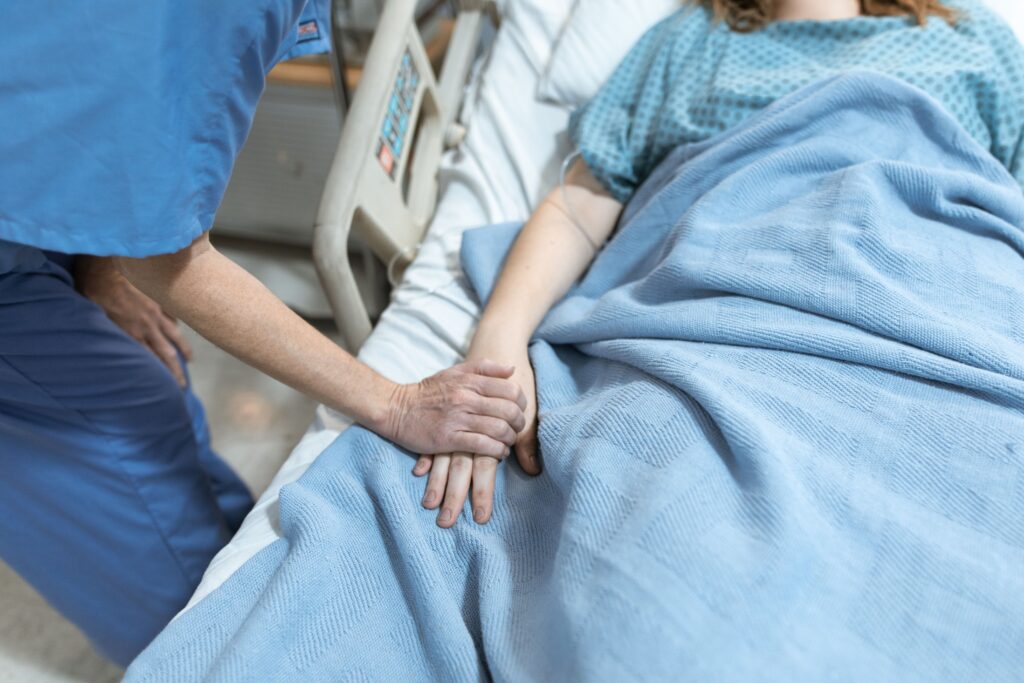
The butterfly effect is the idea that small changes can lead to a larger consequence over time, that a butterfly can flap its wings in one part of the world and cause a hurricane in another. Quite often in nursing, we do not see the greater impact our care (or lack of) has on patients, we are present for a short period of time in their lives which can sometimes feel inconsequential to us but leaves a lasting memory on the other.
This can be such a wonderful thought, that we can have such an impact on someone’s life that they remember us long after, for the kindness, compassion and skill we offered to them in a moment of need. However, there is an alternative side to the coin where nursing care leaves a more negative, long-standing influence.
A paper by Meadows and Levenson (2000) for the Kings Fund found that the majority of nurses came into the profession because they wanted to “help others” and “make a real difference”. Nurses do not wish to cause malice. However, we do not always see the extent of the difference we make, nor do we realise that even the simplest of tasks really can have a profound impact.
In wound care and tissue viability, what are sometimes considered “small” tasks can become pivotal moments in a patient’s story, yet, whether a generalist or a specialist nurse, these tasks are not always perceived with importance and with current NHS demands, often not prioritised. Some risk assessments can feel like endless reams of paperwork, but the correct pressure ulcer risk assessments and interventions are integral to maintaining skin integrity and ultimately keeping our patients well.
Recently, I was involved in the care of a patient towards the end of her life. Sadly, she passed away after a foot ulcer became septic, which resulted in an emergency above-knee amputation and, ultimately, her death, to the great distress of her family. However, the events that led to this outcome started over a year prior to her death. Reflecting on this patient’s journey has led me to consider the butterfly effect, that even the most seemingly minor of interventions can have such a significant consequence on a patient’s story.
For the purpose of this article, I will give the patient the pseudonym Janet to maintain confidentiality as per the Nursing & Midwifery Council (2018) code of conduct. In mid 2024, Janet was admitted to a renal ward with sepsis due to an infected dialysis line. She was confused, lacked capacity and while she was unwell, she was bedbound. She had multiple co-morbidities, including diabetes with peripheral neuropathy and peripheral arterial disease.
While she was an inpatient, she was assessed as high risk for pressure damage and placed on a pressure-relieving mattress as part of the routine tasks completed at a patient’s admission. However, the pump for her pressure-relieving mattress was hooked onto the end of her bed. Janet would inadvertently slide down the bed, and the plantar aspect of the fifth metatarsal head was left pressing against the hooks that held the pump in situ at the end of the bed.
As Janet was bedbound and confused, with neuropathy, she was in no way able to reposition herself or be aware of the risks of leaving her foot where it was. She was solely in the hands of the nursing staff in charge of her care. The end of the bed was not pulled out, the bed pump not unhooked, and neither offloading boots nor wedges were provided. Within 24 hours, she had developed a deep tissue injury, and due to her underlying health conditions, this quickly evolved to an unstageable pressure ulcer.
This is an all-too-familiar story, and usually at this point a tissue viability service will undertake an investigation, offer duty of candour and highlight themes for further education and training to prevent this happening again. This is all good practice; however, we only ever look at the harm caused at that moment: an unstageable pressure ulcer or arterial foot ulcer (or both, as I would say). Do we ever continue to watch the next part of the story unravel?
Janet’s story does not have a happy ending. Due to her co-morbidities and the complexities of her level of peripheral vascular disease, revascularisation was considered too risky, so a conservative approach was the choice of the vascular surgeons.
Janet recovered well enough to go home with her daughter for another year with close monitoring by high-risk podiatrists and visits to the outpatient vascular clinic. Just over a year after the wound was caused, she presented to A&E and was subsequently admitted to the same ward where the damage had been caused. She was diagnosed with sepsis due to the foot ulceration and associated delirium; she had to have an emergency above-knee amputation in an attempt to save her life. This failed to heal and then she passed away at home.
Her daughter is a great advocate for her mother’s story being told and it is a sadly familiar one. I am sure that every tissue viability nurse, ward manager and matron will have been involved in an investigation very similar to this one at the development of the ulcer, but until we start following the invisible string, it is hard to make long-term changes.
Had one nurse moved the end of the bed out, or used the knee gatch to prevent sliding down the bed or offered offloading and foot protection, Janet’s story may have been different. As clinicians, we can argue whether foot ulceration or even her death were inevitable due to her co-morbidities, but we can trace the start of this story to nursing care, and if we stop that butterfly from flapping its wings, maybe we can prevent the hurricane.