Standard negative pressure wound therapy (NPWT), such as Solventum™ V.A.C.® Therapy, is widely used to support wound healing by removing exudate and infectious material, promoting continuous wound drainage, stabilising the wound bed, drawing wound edges together and stimulating granulation tissue formation.
NPWT with instillation and dwell time (NPWTi-d), such as Solventum™ Veraflo™ Therapy, represents a further advancement in wound care. It combines the benefits of standard NPWT with automated, controlled instillation of topical wound solutions. Veraflo Therapy is specifically designed to promote wound healing in complex and hard-to-heal wounds by cleansing the wound bed and stimulating the formation of healthy granulation tissue (Acosta et al, 2025).
Wound types suitable for Veraflo Therapy include:
- Traumatic wounds
- Diabetic foot ulcers
- Venous leg ulcers
- Pressure ulcers/injuries
- Surgical wounds, including dehisced wounds
- Wounds with exposed intact bone
- Wounds with treated underlying osteomyelitis
- Infected or contaminated wounds with orthopaedic fixation hardware
- Full-thickness burns following surgical excision
- Wounds post-evacuation of haematoma (once haemostasis is achieved)
- Wounds serving as a bridge in staged or delayed amputation.
Unlike standard NPWT, Veraflo Therapy delivers a topical solution (e.g. normal saline) directly into the wound bed, allows it to dwell for a set period and then removes the solution along with slough, debris and exudate using negative pressure. This process is especially useful in wounds where surgical debridement is delayed or not possible.
Dressing considerations
Veraflo Therapy uses dressings specifically designed for instillation therapy that provide improved fluid distribution within, and removal from, the wound bed. Dressing selection can be determined by wound type [Table 1]. Dressing changes three times weekly (every 48–72 hours) is recommended as a minimum.
Solution considerations
There are a range of recommended compatible solutions to use for instillation, such as normal saline, hypochlorite-based solutions (e.g. hypochlorous acid solution or sodium hypochlorite solution [dilute Dakin’s solution 0.125% or quarter strength]), acetic acid solution (0.25–1%) and polyhexamethylene biguanide (0.1%) and betaine (0.1%) (Kim et al, 2020; Wounds Asia, 2022).
Hypochlorite-based solutions, such as hypochlorous acid solution or sodium hypochlorite solution, are recommended as the initial topical solution for wounds showing clinical signs of infection, followed by saline instillation after 24 to 48 hours. This should be in conjunction with appropriate systemic antibiotic therapy, and the decision to switch to saline should be based on ongoing patient and wound assessments. Topical antiseptic solutions are also recommended for instillation in certain cases, such as the presence of acute infection, high levels of bacteria colonisation or when treating wounds with orthopaedic fixation hardware (Kim et al, 2020).
Therapy setting considerations
Commonly used therapy settings include a therapy time of 2 to 3 hours for Veraflo Dressing and 2 to 2.5 hours for Veraflo Cleanse Choice™ Dressing. An appropriate dwell time setting of 10 minutes with saline (or other compatible solutions) and a pressure setting of -125mmHg is also commonly used (Kim et al, 2020) with Veraflo Dressing, unless non-viable tissue is present. Veraflo Cleanse Choice™ Dressing may be used as a wound cleansing option before surgical debridement or if debridement is delayed or not possible. When clinical goals are met, it is advised to discontinue therapy.
Conclusion
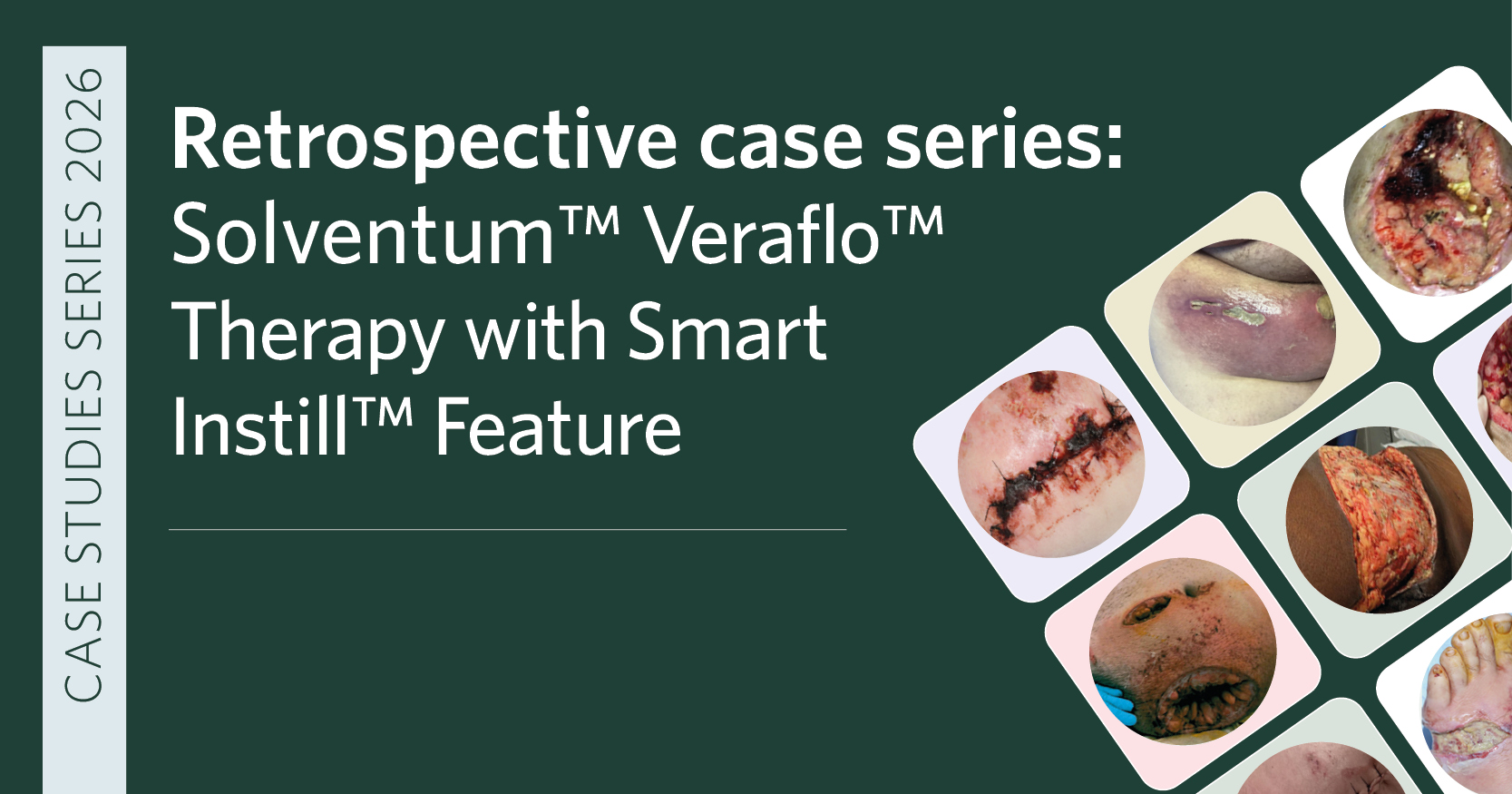
The eight case studies [Table 2] are representative of clinicians’ everyday use of Veraflo Therapy and may help to guide the appropriate use of this therapy in practice when managing complex wounds.
Download the PDF below to access the full case series resource