The process by which a patient seeks treatment for an ailment is determined by the faith they place in various systems of healing available in their society. This faith is informed by a complex and sometimes contradictory interplay of the individual’s lived experiences and insights and the myriad of sociocultural systems of knowledge the individual identifies with.
For a society accepting of the tenets of scientific rationalism, adherence to a microcosmic world of superstitious and magical beliefs may seem ludicrous. Yet, equally, 34% of people in Britain polled admit to being very or somewhat superstitious and engaging in practices, such as knocking on wood, throwing salt over one’s shoulder or avoiding walking beneath ladders. Interestingly, this figure has remained remarkably consistent over time despite declining beliefs in religiosity (Campbell, 1996; YouGov, 2022).
A study of superstitious and magical beliefs surrounding burn treatment in India found 55% of respondents would not have altered their belief in magical healing even if educated beforehand by a healthcare professional, suggesting factors beyond rational health-orientated goals can motivate belief (Dash et al, 2020). Superstitions function as a mechanism to reduce feelings of distress and anxiety through attributing control over uncontrollable or unknowable phenomena; despite typically being considered “erroneous beliefs,” superstitions still provide a want-fulfilling utilitarian function (Scheibe and Sarbin 1965).
Across the world, the COVID-19 pandemic saw a rise in the prevalence of non-scientific thinking and theories, even among societies whose mainstream cultural and political institutions have taught scientific rationalism and empiricism for centuries (Douglas 2021).
It is clear that superstitious and supernatural beliefs still hold sway for a significant (and even growing) section of society, and an understanding of what drives these beliefs will, over time, become more prescient in a healthcare context.
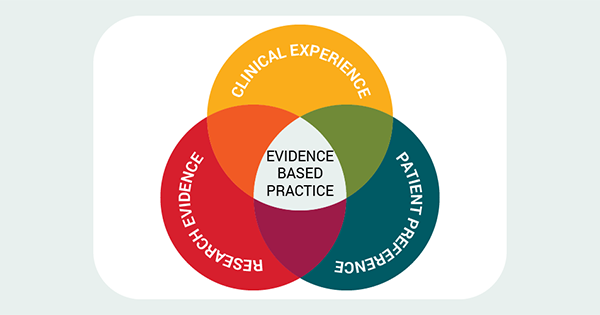
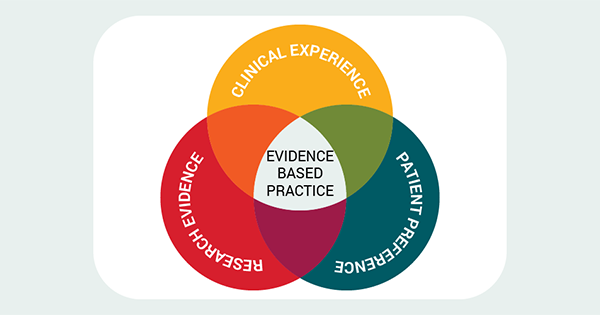
This paper aims to discuss the first limitations of knowledge under an exploration of the development of the scientific philosophy of medicine and discuss the role that faith has in evidence-based practice.
This article does not intend to provide a qualitative judgement nor promote non-scientific, magical or superstitious beliefs in healing. However, it does wish to divorce from the colonial mindset that belief in superstitions/magic belongs to archaic, childish or primitive modes of thought — superstitious rituals are very much part of everyday life and performed at a near unconscious level across cultures globally, and are forms of expression that can enrich daily life, culture and art (Risen, 2020).
This article serves as the foundational discussion in the series, setting the stage for the cultural and ethnographic explorations in part 2 of this series by providing a critical analysis of how science and faith interact in evidence-based practice, particularly in the context of wound care.
The drivers of superstition
Superstitions develop (sometimes unconsciously) as a by-product of adaptive learning to alleviate anxiety over phenomena mysterious or external to human control; they can be held personally or be part of societal rituals. Superstitious beliefs can be as mundane as having a lucky charm, reading a daily horoscope or forming part of a grand ritual involving myth, magic or religion.
Despite superstitious or non-rational beliefs being stereotypically associated with lower levels of education or wealth, studies indicate “forms of spiritual, non-rational beliefs arise independently of status and education as testified by the fact that people who are highly educated and have a high income largely invest in new-age materials and often admit to believing in extra-sensory perception” (Daprati et al, 2019). Scientific knowledge has a similar ontological basis as superstition: the desire to investigate stems from the same innate human need to understand, order and structure the unknown elements of the world (Berger, 1970).
Risen (2016) investigated superstitious beliefs under a framework divorced from magical thinking, discussing how superstitious beliefs are maintained in the secular world as part of an acquiescence model containing two systems. Prior investigations have treated superstition as erroneous with the implicit assumption that irrational beliefs will be corrected. Risen’s model differs in that it accepts that “sometimes people believe things that they know they shouldn’t” (Risen, 2016). Under Risen’s model, system 1 operates as an immediate cognitive response to an event, and system 2 is the process by which the outcome is interrogated and the superstition rejected. If system 2 is not engaged, then the association goes unchallenged, and the superstition remains as a heuristic. The factors defined as influencing system 2 engagement are: “the ability to be rational, the motivation to be rational, and contextual clues”(Risen, 2016).
In Britain, US and Japan, there exists a superstition that acknowledging hospital quietness will result in increased workload, which has been disproven by multiple studies and is systematically in opposition to the rational principles of medical sciences (Brookfield et al, 2023). Under Risen’s paradigm, it is likely this superstition goes unchallenged due to there being little motivation to challenge it. It is simply a harmless norm that cultivates a feeling of shared culture. Superstitious thinking appears to be a pervasive part of human nature; recognition and understanding of what drives superstitious beliefs will become increasingly important in clinical practice to combat non-scientific practice and ensure the success of treatments (O’Brien, 2013).
The development of empirical technique
Western medicine’s foundations derive from the scientific rationalist movement, a cultural system of knowledge that arose during the ‘age of reason’ beginning in the 17th century and routinely excludes immaterial knowledge and beliefs that are unverifiable and cannot be evidenced. Prior to the widespread adoption of empiricism, scientific and medical knowledge was primarily founded on a respective practitioner’s personal beliefs and experiences as filtered by a fragmented corpus of traditions passed on orally or in writing (Majno, 1975). These doctrines were built through appeals to the divine, astrology, biological, alchemical or medical anecdote or hearsay, and spread through trade, travel and war.
The distinction between “science” and “religion,” as we refer to them today, is a modern construction that arose during the 19th century. We consider the former as being based on a verifiable truth and the latter as involving supernatural or theological concepts (Harrison, 2015). Prior to that, religion (or, more accurately, its Latin precursor religio) referred to an interior state of piety rather than an objective institution, and science or scientia/scientiae referred to rational considerations and was a characteristic of intellectual virtue (Harrison, 2015).
It was during the ‘age of reason’ that Western philosophers constructed the view that all knowledge, and as a result, medical beliefs and practices, should be measurable, demonstrable and repeatable in studies. This belief in science needs to be verifiable led to the first clinical trial by James Lind studying the effects of scurvy in 1747, the first blind trials disproving Franz Mesmer’s hypnotic theory of animal magnetism in 1780 and arguably culminated in 1948 with the first randomised clinical trials investigating the effectiveness of streptomycin in treating tuberculosis (Hart, 1999; Donaldson, 2005; Bhatt, 2010).
A randomised clinical trial is now considered the gold standard in evaluating new methods of treatment and was a watershed moment in cementing the progression of knowledge under a system that is statistically and empirically analysed and has become the dominant method for determining the efficacy of treatments and new medicines.
Illustrative of the power and bias inherent in any age to the dominant knowledge system, Alfred Hill, one of the paper’s authors, expressed doubts as to whether physicians would be willing to accept this new methodology and break with the long-standing doctrine of treatment based on experience (Hart, 1999). Scientific rationalism’s methodologies demonstrated clear successes in reducing global mortality rates and raising global living standards by which its doctrine seemed self-evident in creating effective healthcare practices.
Yet despite these successes, many individuals and cultures still utilise traditional medicines based on superstition and magical belief, even when other treatments proven effective by scientific evidence are available. Religious and superstitious beliefs are still salient in modernity, challenging a dominant paradigm arising in the 19th century from influential sociologists of both the left and right, such as Max Weber and Karl Marx, that superstition and organised religion would cease to be relevant under the new system of secular rationalism and empiricism (Campbell 1996). These predictions, caught up in the fervour of their time, were blind to the fundamental reality that humans have always been motivated by complex sentiments and strange passions and are more than mere biological machinery.
The rise in popularity of the biosocial model of healthcare, which advocates for more holistic methods of care by acknowledging the gap between the empiric “ideal” patient of medical studies versus the “real” patient encountered in the clinic, suggests a trend toward deepening understanding of patient needs and insecurities by recognising wider cultural and social factors (Bolton and Gillett, 2019; Horwitz et al, 2021).
Just like religion, practitioners (and patients) need to hold faith in the purity of doctrine, the sanctity and honesty of studies and trust the assertions made by the scientific community.
Any knowledge held as plausible or valid as truth by an individual or culture is determined by complex and innate processes in which individuals and societies interpret uncontrollable and unknown phenomena into a familiar and understandable framework. These frameworks are described by sociologist Peter Berger (1970) as “systems of knowledge” and are culturally constructed as a coping mechanism to mediate the fear of the unknown.
Knowledge under Berger’s paradigm is judged as legitimate external to any truth value or empiricism; it is considered valid by virtue that an individual or society holds it to be true. Knowledge is, therefore, intrinsically bound by cultural and social hierarchies and perceptions of institutional power.
It is important to recognise rejection of modern medicine can have symbolic purposes beyond the material benefit of the medicine, such as preserving culture and traditional ways of life or as a protest against institutional/colonial power. These reasons may seem abstruse to those external to the respective system yet make perfect sense to those brought up inside it.
Beyond empiricism: the collapse of grand narratives
The processes of modern scientific technique have created a world of immense technical complexity that requires extensive study and specialisation to understand a mere fragment of the world. Where in the industrial age, technologies could be easily dissected, repaired and understood, in the postindustrial age, computers and phones function in essence like magical devices to all those without specialist knowledge. As such, society is compelled to accept that an object’s functioning is proof enough of the legitimacy of knowledge posited by its creators.
Gary Rolfe, in his book ‘Research, Truth and Authority: Postmodern Perspectives on Nursing’, describes this as a shift: “from the grand narrative[s] of religion to that of rationality, and then to that of technology [as] a reflection of the shift in the power base from the church, to state-funded science, to industry and big business. And the ultimate breakdown of all grand narratives has led finally to a free-for-all in which power is up for grabs by anyone” (Rolfe, 2000).
The recent increase in vaccine-hesitant beliefs in America serves as a prescient example of this free-for-all. Vaccination has coincided with a massive decline in mortality rates for diseases that were once almost certain death sentences. The need for vaccination was self-evident from those witnessing the horrors of containment in an iron lung, seeing the effects of death and disease on friends and families, and watching these horrors fall away with successful vaccination campaigns.
Yet today, shielded by the success of prior campaigns, the necessity of maintaining high vaccination rates is no longer self-evident, with parents to trust the necessity of vaccination on the authority of their physician or to research and understand it themselves where they are flung into an online free-for-all of conflicting opinions, profiteering holistic treatments and outright misinformation, which can cause expensive and devastating consequences for society.
One such study suggests that “a 5% decline in MMR vaccine coverage in the US, children would result in a threefold increase in national measles cases in this age group, for a total of 150 cases and an additional $2.1 million in economic costs to the public sector” (Lo and Hotez, 2017).
In their study on the development of conspiratorial belief, Roberts and Risen (2022) note if there is “a subjective sense [in the individual] that an event or circumstance is not adequately explained or accounted for by existing narratives,” conspiratorial beliefs in a framework can be applied easily to non-scientific medical beliefs. Many alternative medicine practitioners exploit mistrust in the system to profit off health anxieties further; those with institutional distrust are more likely to hold beliefs contrary to scientific orthodoxy (Furnham and Lachrach, 2017).
Due to modern communication technologies and a globalising world, these knowledge systems are no longer constrained by geographical boundaries; the modern individual is saturated by diverse and contradictory forms of information, which engender the same sense of anxiety that culturally bounded systems of knowledge attempt to remedy. Rather than attempting to sift through and examine these hyperdiverse systems of knowledge (a practically impossible feat) and suffering both a time and stress cost, it can be easier for the individual to align with a dominant group or voice according to preferences beyond rational evidence: in essence, an act of faith.
Where in the past, a healer was chosen out of necessity and lack of available knowledge and alternatives, medical trust in the modern age is assuaged by a surplus of contradictory options and doctrines. Medical science, for better or worse, no longer holds a monopoly over information: media corporations, public figures, politicians, religious leaders and individuals with internet access can all publicly assert an expert opinion of some kind.
Facts and evidence can easily be exploited and misinterpreted to be used as evidence of incompetence, failure or corruption regarding the medical system to promote alternative beliefs and theories.
In the US, the Biden administration’s optimistic but incorrect public statements that Covid-19 vaccinations would grant permanent immunity to the virus in 2020 fuelled skepticism in medical–political partnerships, giving talking points to the wider vaccine-skeptic agenda (Woodward and Yen 2021).
As the world becomes more interconnected, the risk of global crises increases. Specialist advice in policy becomes more necessary; it is crucial for truth, education and understanding to be at its core to combat those who would use fear and misinformation to profit off people’s health anxieties. Taking the time to listen to fears and concerns and ensure trust in institutions is critical to de-escalate those with superstitious or misdirected beliefs and avoid the pitfalls of enclavisation that Berger (1970) discusses.
Conclusion
Cultural systems of belief encompass opinions and facts comprising all forms of knowledge – from cultural histories, mythology and disease aetiology to rituals concerning birth, marriage, markets, and death – the individual acts as a nexus for these ideas as they use their own discretion to confirm or reject beliefs and guide how they interact with those in their own in-group and also how they interact and perceive out-groups as well.
In a world driven by scientific progress, it is easy to assume that rational empiricism would naturally replace all forms of superstitious and non-scientific beliefs. However, as explored in this paper, such beliefs remain resilient, even in societies that pride themselves on their adherence to evidence-based practices. The persistence of these beliefs reveals a deeper truth: human understanding of health, healing, and knowledge is not solely governed by empirical data but is filtered through cultural, social, and individual lenses.
Faith, whether in the rigour of peer-reviewed clinical trials or the mystical practices of traditional healers, plays an essential role in how patients and practitioners navigate health decisions. Superstitions, magical beliefs, and scientific rationalism coexist within these complex systems of knowledge, shaping not only what treatments are accepted but also the very nature of how individuals perceive illness and recovery.
As we move further into the digital age, with access to boundless information at our fingertips, it becomes more important than ever to understand the factors that drive belief. Health professionals must recognise that treating the individual involves not only addressing the body but also understanding the cultural, psychological, and emotional frameworks that influence their decisions. While evidence-based medicine remains a cornerstone of modern healthcare, acknowledging the power of faith — whether in science or tradition — can provide a more holistic and compassionate approach to treatment.
In conclusion, science and superstition are not diametrically opposed; both represent attempts to make sense of the unknown. The real challenge lies in integrating these perspectives in ways that respect cultural values while safeguarding public health and promoting the benefits of rational, evidence-based medicine.