This meeting report is based on a ‘Made Easy’ session that took place at the Wounds UK Annual Conference in Harrogate, on 10 November 2025. The session and meeting report were supported by an educational grant from CliniMed Ltd.
The session was opened by Samantha Holloway (Reader, Programme Director, Masters in Wound Healing and Tissue Repair, Centre for Medical Education, School of Medicine, Cardiff University) and Fiona Downie (Senior Lecturer, Anglia Ruskin University, Cambridge, UK), who outlined the learning objectives:
- Define MARSI and differentiate it from other skin injuries
- Identify risk factors contributing to MARSI
- Discuss the clinical impact of MARSI on patient outcomes
- Outline practical strategies for prevention, particularly the use of sterile medical adhesive removers such as Appeel® Sterile.
Throughout the session, one message remained consistent: every dressing matters, every dressing removal matters, and preventing MARSI begins with “I” — individual clinical responsibility.
What is a medical adhesive-related skin injury (MARSI)?
Medical adhesives are used in virtually every area of healthcare, from wound dressings and vascular access devices to ECG electrodes and medication patches (Hofman, 2023). Their role in stabilisation, protection and securement is indispensable. Yet the removal, repositioning and repeated application of adhesive products also pose a significant but often overlooked risk: medical adhesive-related skin injury (MARSI).
A MARSI is defined as skin damage resulting from the removal of products containing a medical adhesive, including tapes, dressings, electrodes, wound closure strips and medication patches (Fumarola et al, 2020). It can result in [Figure 1]:
- Skin stripping
- Skin tear
- Tension blister
- Non-allergic irritant contact dermatitis
- Allergic dermatitis
- Folliculitis.
Mechanical trauma, particularly skin stripping during adhesive removal, is the most common mechanism of injury.
Despite its frequency, MARSI remains under-recognised and inconsistently reported. During the Made Easy session, real-time polling revealed that almost one-third of attendees were unaware of MARSI or uncertain whether they had encountered it, highlighting a persistent gap in clinical awareness.
Epidemiology and risk factors
Understanding the scale of the problem requires distinguishing between prevalence and incidence:
- Prevalence refers to the proportion of a population with a specific condition (new and existing) at a particular point in time or over a defined period
- Incidence reflects the number of new cases of a condition that develop in a population during a specific time period.
Prevalence and incidence
Most epidemiological evidence on MARSI originates from acute care environments, particularly paediatric and adult intensive care units. Consequently, there is a clear need for further research to establish prevalence and incidence in primary and community care, where adhesive use is also extensive but less well studied.
Across available literature, MARSI appears widely prevalent, although reported rates vary according to patient vulnerability and intensity of adhesive use. Studies demonstrate:
- Adult acute care: prevalence 3.4–25% (mean 13%; Farris et al, 2015)
- Paediatric ICU: incidence 58.3 per 100 patients; 24.6 MARSIs per 1000 adhesive-use days (Kim et al, 2019)
- Pooled prevalence across settings: 21%, ranging from 10.96% to 42% (Bakhamees et al, 2024).
Critical care populations
High-acuity areas demonstrate disproportionately elevated MARSI risk:
- Among 430 adult ICU patients, incidence reached 11.86%, with more than 70% of cases involving epidermal stripping (Gao et al, 2020)
- Systematic reviews identify advanced age, fragile skin and prolonged hospitalisation as key predictors of MARSI in adult ICUs (Bakhamees et al, 2024)
- Paediatric ICU studies report high rates of epidermal stripping and skin tears; independent risk factors include oedema, hyperthermia, infection, immunosuppression and age ≤2 years (Şensoy et al, 2025; Wang et al, 2019).
Clinical impact of MARSI
MARSI compromises more than the skin’s surface. Its consequences extend to physical, emotional and economic domains (Collier, 2019).
Physical consequences
Patients frequently experience pain, burning, irritation and discomfort. Skin injury can delay healing, increase the risk of infection and create new wounds requiring management. In patients who are already vulnerable, such as older adults, neonates or those with chronic illness, even minor injuries can escalate into significant complications.
Psychological impact
Patients often remember MARSIs vividly. They may experience anxiety, reduced trust and heightened fear around dressing changes. Sleep disruption, reduced appetite and distress are common, especially in children and older adults. Clinicians may also experience moral distress when a preventable injury occurs.
Skin integrity and mechanisms of injury
Preventing MARSI begins with understanding skin integrity. The skin is a complex organ, functioning as a mechanical, immunological and chemical barrier. Its outermost layer, the stratum corneum, is composed of flattened corneocytes surrounded by lipid bilayers that act as a water-resistant seal. Natural Moisturising Factor (NMF), a mixture of amino acids, urea and other hygroscopic molecules helps retain moisture and maintain flexibility. The skin’s surface pH, typically around 4.5, ensures an environment compatible with lipid-processing enzymes and hostile to pathogens (Moncrieff et al, 2015).
When these protective features are compromised by age, illness, dryness, inflammation, dehydration or medication, the skin becomes more susceptible to injury from mechanical forces such as traction, stripping and shear. Adhesive removal is a particular risk point. ven gentle peeling can remove layers of the stratum corneum if the skin is fragile or dry, or if the adhesive bond is stronger than the skin’s tensile capacity.
Diagnosis and differential diagnosis
Accurate diagnosis requires distinguishing MARSI from other commonly encountered skin conditions. Misclassification is frequent and can lead to inappropriate management.
MARSI is a skin injury directly associated with the application or removal of medical adhesives. It can be distinguished from other types of skin injuries as follows:
- Pressure ulcers: caused by sustained pressure and ischaemia, not adhesives
- Allergic dermatitis: typically localised to the adhesive site, whereas systemic allergic responses extend beyond this area
- Incontinence-associated dermatitis: results from prolonged exposure to urine or faeces (moisture-associated skin damage), not adhesive use.
Assessment
Comprehensive skin assessment is important for early recognition. Clinicians should examine skin temperature, colour and moisture balance, while also considering fragility, elasticity and overall integrity. See Table 2 for key assessment elements and Table 3 for MARSI documentation requirements.
Risk assessment
Risk assessment should begin at first contact and continue throughout care, as a patient’s vulnerability can change quickly. Common risk factors include:
- Extremes of age (neonates; frail older adults; see Box 1)
- Fragile, inflamed or dermatologically compromised skin
- Repeated application and removal of adhesives
- Excess moisture, perspiration or exudate
- Oedema, fever or infection
- Critical illness and prolonged ICU stay
- Chronic diseases (e.g. diabetes, cardiovascular disease)
- Device-dependent patients (e.g. PICC lines, stomas, PEG tubes)
- Medications (particularly steroids or agents that impair healing).
Preventing MARSI: Translating knowledge into practice
Preventing MARSIs is straightforward in principle: clinicians must first recognise MARSI as an avoidable harm, then apply consistent, evidence-based strategies to minimise risk.
Prevention rests on four core pillars:
- Systematic risk assessment
- Judicious use of adhesives
- Maintenance of skin integrity
- Safe, atraumatic removal techniques.
In practice, clinicians should:
- Use adhesive dressings and devices only when clinically necessary
- Consider alternative methods of securement where appropriate (e.g. bandages or retention garments)
- Confirm whether the patient has any known sensitivities or allergies to product components.
Preventing MARSI therefore begins with a conscious decision about whether an adhesive is required, followed by careful selection of the least traumatic product that will still achieve clinical goals.
Maintaining skin integrity
Maintaining skin integrity is equally important. Application of appropriate barrier preparations can help preserve hydration, protect the epidermis and support adherence, particularly in patients with fragile or compromised skin. Routine, structured skin assessment ensures early recognition of changes and timely intervention.
Good skin care practices [Table 4] underpin all aspects of MARSI prevention. Together, these measures help maintain the resilience of the stratum corneum and reduce susceptibility to mechanical injury.
The Role of Sterile Medical Adhesive Removers in MARSI Prevention
Safe adhesive removal is important to MARSI prevention. The use of sterile medical adhesive removers, particularly in vulnerable populations or compromised skin, is strongly supported by clinical leaders.
By reducing the mechanical forces exerted on the skin during removal, these products support atraumatic practice and are particularly valuable in high-risk environments such as intensive care, paediatrics, oncology and postoperative care.
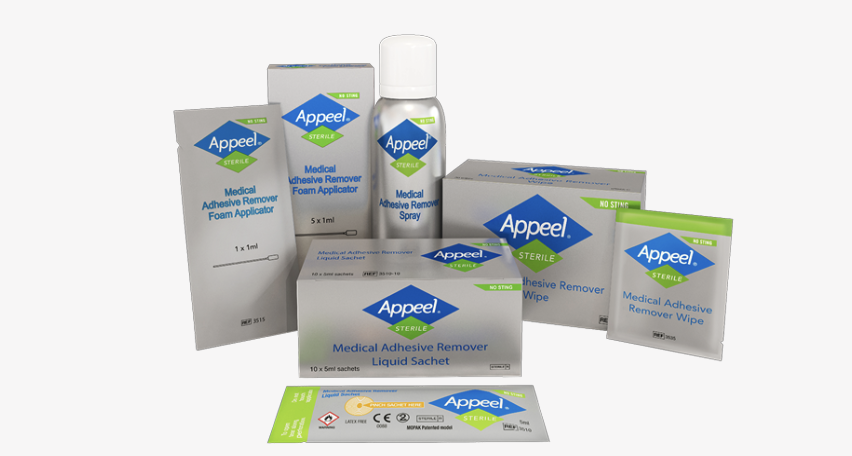
Appeel® Sterile (CliniMed) is a leading example.
Benefits of Appeel® Sterile Adhesive Remover
- Weakens the adhesive bond between the adhesive medical product/device and the skin
- Reduces shear, tension and skin stripping
- Enables removal on both intact and injured skin
- Reduces patient pain and anxiety
- Supports best practice in infection prevention and wound care.
Appeel® Sterile is sterile, non-sting, fast-drying and residue-free, and can be used on both intact and injured skin. It’s multiple formats, including a 360° spray for difficult-to-reach areas, 5ml sachets for larger dressings and precision applicator sticks for small device removal, enable flexible use across a range of clinical situations.
Implementation across clinical settings
MARSI prevention should be embedded within everyday practice across all healthcare environments, including theatres, ICUs, emergency departments, paediatric and adult wards, outpatient clinics, community nursing and home care. Regardless of setting, the principles remain consistent:
- Regular, structured assessment of skin integrity
- Avoidance of harsh cleansers and unnecessary adhesive use
- Maintenance of optimal hydration and nutrition
- Selection of the least traumatic adhesive compatible with clinical need
- Routine use of sterile adhesive removers during dressing or device removal.
Education is essential. MARSI can occur anywhere adhesive devices are used, from acute hospitals to primary care and the home. Access to a full range of dressings, barrier products and adhesive removers, alongside time and training for safe application and removal, is fundamental to good practice.
When clinicians feel informed and supported, MARSI prevention becomes a realistic, sustainable standard rather than an aspirational goal.
MARSI = I
The mnemonic “MARSI = I” helps reinforce individual accountability:
- I assess the skin
- I choose the least traumatic adhesive
- I remove adhesives safely
- I report and document injury
- I prevent avoidable harm.
This emphasises that MARSI prevention is both a shared organisational priority and a personal clinical responsibility enacted at each patient interaction.
Conclusion
MARSI is a common yet preventable cause of harm, contributing to pain, delayed healing, psychological distress and increased healthcare costs. Under-recognition, misclassification and inconsistent reporting continue to obscure its true burden.
Reducing MARSI requires a deliberate shift in approach: every adhesive application and every removal carries risk and warrants careful consideration.
A proactive strategy, incorporating risk assessment, protection of skin integrity, judicious product selection and routine use of sterile adhesive removers can significantly reduce MARSI incidence and severity.
Appeel® Sterile demonstrates how sterile adhesive removers can be integrated into standard practice to support safe, gentle and effective removal across all skin types.
As awareness grows, the message is clear: MARSI is preventable and prevention is everyone’s responsibility. MARSI begins with “I”—I recognise it, I report it and I take responsibility for protecting the skin at every stage of care.