
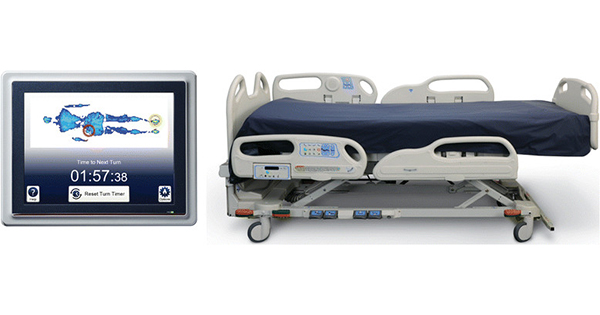
Individuals with long-term conditions, including frailty, are highly vulnerable to pressure ulcers (PUs). They are often managed in their own homes, spending prolonged periods in bed or a chair, where their skin may be exposed to potentially harmful pressures (Caggiari et al, 2024). Pressure-mapping systems help assess interface pressures, providing visual feedback to alert individuals and carers to high-risk areas. Recently, this technology has been adapted to monitor over prolonged periods (24-72 hours), creating the opportunity to observe temporal trends. Although this continuous pressure monitoring (CPM) technology has previously been used in hospital, little is known about its potential to improve the prevention and management of PUs in the community (Makhsous et al, 2007; Sakai et al, 2009; Motamedi et al, 2012; Peterson et al, 2013; Glavaz, 2017; Ho et al, 2023).
In the community, highly dependent patients lack homecare due to a shortage in workforce, (a problem which is seven times greater than in spring 2021), with 36% struggling to get out of bed (AgeUK, 2022). Informal carers experience a low quality of life and feeling overburdened, influenced by factors related to PUs (Rodrigues et al, 2016) with nurses visiting as infrequently as every 3-5 days (Guest et al, 2020). The reliance on short bursts of care, by untrained care assistants, has significant limitations for preventing community-acquired PUs. Provision of care varies between geographical locations, with inequitable access impacting rural areas (Parkinson et al, 2024).
Patients are key partners in their care, influencing both service provision and equipment provision. There is a reliance on the use of alternating support mattresses, despite limited evidence supporting their superiority over static surfaces (Reddy et al, 2006; McInnes et al, 2012; Shi et al, 2021). This may in part be due to the complexity in PU formation, with both patient-related factors (age, nutrition and skin status) and external factors (interface pressure, shear and microclimate; Coleman et al, 2014). Patients can find pressure-relieving equipment uncomfortable, hot, sweaty and unstable with vibrations. Individuals who stop using, or refuse to use, equipment are often classified as “non-compliant” or “non-adherent”, suggesting an unequal, paternalistic attitude to their care (Jordan et al, 2002; Ledger et al, 2023). Empowering both carers and individuals is critical, and CPM may serve as a valuable tool in facilitating this (Aylward-Wotton and Kent, 2016; Aylward-Wotton et al, 2019; 2020; Ledger et al, 2020).
The NHS Long Term Plan (Alderwick and Dixon, 2019) highlights technology as a potential tool to enhance patient-centred care in the community. CPM could provide critical information for patients, carers and healthcare professionals to manage PU risk, yet its use in the community is unexplored. This study developed from a pilot project, highlighted challenges in managing repositioning behaviours, and prolonged sitting time. The present service improvement project aimed to address gaps in PU prevention and explore CPM technology’s potential to support self-management while lying and sitting.
Methods
This project used a mixed-method case study design utilising the Knowledge to Action Framework (KTA) (Graham and Tetroe, 2010). This included identifying problems, adapting knowledge to the local context, assessing barriers to knowledge use, implementing interventions to monitor, evaluating and sustaining the knowledge gained. The study recruited individuals who refused, or were reluctant to use, pressure-relieving equipment from the community setting.
A commercial CPM system (ForesitePT, Xsensor, Canada) was used. The bed sensing array consisted of a fitted mattress cover embedded with 5,556 sensor cells, over a surface area of 762 × 1,880mm and spatial resolution of 15.9mm. A seating sensor system, with 1,024 sensor cells over a surface area of 45.7cm x 45.7cm and spatial resolution of 12.7mm, was also used. The systems continuously recorded interface pressure values with a sampling frequency of 1 Hz. Each sensor operated within the pressure range of 5–256mmHg (0.7 −34.2 kPa), with an accuracy of ±1 mmHg.
Sensor arrays were placed on the mattress, underneath a bed sheet, or cushion, showing real-time pressure distribution attached to a monitor. Systems were cleaned between patient use as per the infection prevention standards of the healthcare trust. User feedback from patients, carers, and nurses assessed the useability and acceptance. Data collection occurred: baseline (T1), on removal of the pressure map (T2), and during a 4-week follow-up (T3) [Figure 1].
The evaluation spanned an 11-month period. The project was registered as a service improvement project with the NHS organisation with ethical approval provided by University of Plymouth for secondary analysis of the data (REF 14/15-352).
Study Population
Adults (18+), with long-term conditions, including frailty, were recruited, identified as being at high risk of developing PUs, using an adapted Braden Scale (Bergqvist and Frantz, 2001), and Rockwood frailty index with a high-risk classification defined as Level 5 and above (Rockwood et al, 2005), deteriorating PUs or those reluctant to use pressure-relieving equipment. Participants received standard care as per guidelines (European Pressure Ulcer Advisory Panel [EPUAP], 2019; NICE, 2019) and were referred to the Tissue Viability Service (TVN) in a Southwest Trust, by district nurse, occupational therapists, wheelchair services or Care Homes (Nursing).
Study framework and objectives
The study utilised the Knowledge to Action (KTA) framework [Figure 2], combining quantitative and qualitative data to explore barriers, benefits, and strategies for implementing the technology. Knowledge mobilisation techniques, such as audit and feedback, educational materials and reminders, supported the evaluation process. Patient input guided the implementation, with patient-driven decision-making identifying postures to avoid.
The primary outcome assessed whether CPM technology facilitated ulcer healing and prevented new PUs from developing. Secondary outcomes evaluated technology acceptability among patients and carers, its capacity to monitor interface pressures over time, and its ability to identify unsuitable pressure-relieving equipment.
Data collection and analysis
Data were collected from medical and social care records, with additional qualitative feedback gathered at T2 and T3. Demographic information, medical history, medications and PU details were recorded at T1 and T2. Prior to data collection, the clinical teams were trained on how to use CPM. Patients and carers received information and a demonstration on the visual display of cold colours (green, blue) representing low pressures (10-50mmHg) and warm colours (red, yellow) representing high pressure (51-100mmHg). A tissue viability nurse (TVN) assessed skin condition, support services, mobility, frailty, BMI and sensory impairment. Photographs of PUs were catergorised according to international guidelines through consensus between team members (EPUAP et al, 2019).
The ForeSite PT System was installed by a TVN with sensitivities set at 5mmhg-100mmhg to enable patients and carers to identify ‘hot-spots’. Monitoring lasted several hours to a maximum of 4 days, with adjustments made following patient and carer input. Individuals remained on their prescribed support surface, receiving routine care (NICE, 2018; EPUAP, 2019). Reasons for removing the CPM system were recorded in the data collection form (DCF), with opportunity to stop monitoring at any time.
Data were captured electronically [Figure 3] and then the following day, the key findings were shared with the caregiver and patient. Recommendations for adjustments in posture, repositioning, or support surface were provided using the data summary. Patients were assessed at four-weekly intervals to track wound status and new PU development. Findings were documented on the DCF and institutional clinical incident reporting system (DATIX).
Data were gathered via patient questionnaires designed to capture patient experiences with CPM using open and closed questions via Meridian©. Healthcare worker questions focused on the systems to support TVN decision making, while the carer questions assessed their understanding of the monitor images and its impact on care provision. Patient questions explored the acceptability of CPM, and any issues. Responses were thematically coded using NVivo© software (Braun and Clarke, 2006). IBM® SPSS® Statistics was used to analyse changes in PU severity, pressure patterns, identify high pressures, over time, on areas of areas of concern and the effectiveness of interventions.
Results
During the recruitment period 44 patients were included, with most living in their own homes (n=36) and a smaller proportion in nursing/residential homes (n=8). Ages ranged from 18 to 94 years (SD = 16.8), with a majority being female (n=28, 63%). Most patients (79%) were bedbound, chair-bound, or wheelchair users, with a frailty index of 7 or higher (Rockwood et al, 2005). Neurological conditions, including multiple sclerosis, cerebral vascular events and Parkinson’s disease, affected 30% (n=13), while end-stage dementia was the second most common condition (n=8, 18%). A total of 45 pressure ulcers (PU) were recorded, ranging from Category 2 to Category 4. By the study’s end, 25 ulcers (56%) had healed, with an additional 3 (7%) healing at follow-up, bringing the total healing rate to 63% (n=28) [Table 1].
Forty-four patients had 45 Pus ranging from category 2-category 4. Twenty-five (56%) of pressure ulcers were healed with a further three (7%) healing at follow up. Following the review of the CPM data and wishes of the patients, six pressure relieving mattresses and 11 cushions were upgraded. Twenty-one patients remained on the same mattresses, 15 patients remained on the same cushions. The patients who remained on the same equipment required alteration to the weight setting on the support surface, carer education on repositioning of patients, and a further nine patients’ mattresses and 10 cushions were downgraded.
Qualitative feedback
A total of 50 feedback questionnaires were distributed, with 44 patients completing the surveys (34 patients, 13 carers, and 3 healthcare workers), while 10 patients were unable to respond. The main themes identified from carers’ feedback included:
- Visualisation of high-pressure points: The ability to visualise high-pressure areas on the monitor using the color-coded system (with cool colours indicating low pressure and warm colours indicating high pressure)
- Supporting repositioning strategies: Carers appreciated the ease of use and understanding the need for repositioning based on the monitor’s colour signals
- Usability of the CPM technology: Some patients requested removal of the CPM system due to discomfort, particularly due to the slippery or hot nature of the sensor map.
Despite some discomforts and technical issues, all patients, carers, and healthcare workers found the technology useful for identifying high-pressure points. An interesting observation from the feedback was that families actively engaged in using the colour map on the monitor to identify pressure points and adjust care, providing them with more self-efficacy.
Comments from carers
Carers appreciated the ability to quickly assess the high-pressure areas through colour visualisation, with one carer commenting: “Grandchildren were very interested and kept saying ‘don’t worry, there are no red spots nanny’”
Another carer remarked: “This is amazing and has given me control and stopped the guesswork”
The system also helped carers understand when to reposition patients, especially those who have limited mobility: “Able to see when to turn and what happened when on the side. It has enabled me to see pressure increase to hips and feet if completely on side.”
Additional feedback
Technology efficiency: One comment was, “Amazing to have this new technology available in Cornwall”
Portability Issues: There were concerns about the monitor’s portability and the hot temperature of the monitor, with a short lead causing discomfort during use.
Patients particularly appreciated the reassurance provided by the CPM system. For example, spinal cord injury patients, who may lack the ability to detect discomfort, found the system especially valuable.
Discussion
This study aimed to address gaps in current prevention strategies and explore the potential of CPM to support the self-management of PU risk in the community. The results suggest that CPM can inform support surface selection, provide patient education and enable patients and carers to better manage PU risk and treatment. The use of CPM also led to changes in the type of equipment patients used. For example, patients who were sleeping in upright positions or remaining seated for extended periods were identified as having higher peak pressures and the appropriate adjustments to equipment were made. This study demonstrates a wider application of CPM beyond a focus on the absolute interface pressure values (2-7), by using the power of biofeedback as a primary mechanism to support shared decision-making.
Challenges and insights
Some key challenges encountered during the project included:
- Geographical spread: A large geographical spread of patients, which could be mitigated by using a central server for software access, although more devices would be necessary to reduce travel times
- Increased clinical time: More clinical visits were needed for complex patients to ensure appropriate care.
Conclusion
It is not possible to attribute the causation of healing or the potential reduction in treatment costs to the use of the technology, however, both nurses and carers valued the data generated by the technology. This resulted in an increase in patient-centred care, an increase in patient empowerment, the ability to influence patient decision making and equipment choices. However, using CPM in a real-world community setting stretched the technology beyond its original design, which was intended for hospital use. The study helped identify reasons why some people may refuse, or dislike using certain support services and showed that patient involvement in PU management leads to improved self-esteem, quality of life, and autonomy. The ForeSite PT System’s ability to match the equipment to the patient, rather than the patient to the equipment, also provided additional benefits.