Pressure ulcers remain a persistently crucial issue in healthcare settings and nurses play a pivotal role in their prevention and management through thorough skin assessment (Chaboyer et al, 2018; Nancy et al, 2022). The development of pressure ulcers has been perceived as a sign of poor quality of care (Samuriwo and Dowding, 2014). According to Mukwende (2020), optimum pressure ulcer prevention and care outcomes for individual patients rely on the nurses’ and other healthcare professionals’ ability to precisely assess the skin and make correct diagnoses. A comprehensive understanding of the signs and symptoms of skin damage across different skin tones (Mukwende, 2020) must also be included within pre-registration education, either through placement as a student or by in-service training when qualified (Gray et al, 2019).
At present, anecdotal evidence suggests that nurses may overlook skin tone diversity during skin assessment and implicit skin tone bias in healthcare. This oversight often influences their ability to competently assess the skin and promptly identify early breakdown, especially in people with dark skin (Oozageer Gunowa et al, 2021). Louie and Wilkes (2018) and Lester et al (2019) argue that unequal representation of diverse spectrum of skin tones in training materials results in a lack of competence in holistic skin assessment, especially in dark skin tones. Addressing these disparities through the education and training of healthcare staff is important for enhancing healthcare equity and improving outcomes across diverse populations (Cole and Waller, 2023). Hence, there is a need for an in-depth review of the literature to explore the influence of education on nurses’ awareness of skin tone diversity.
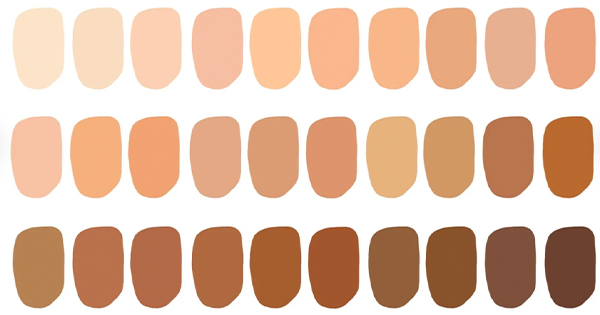
Pramod et al (2024) conducted a pre- and post-training survey among 24 nursing staff at the Christie NHS Foundation Trust in Manchester to incorporate skin tone awareness into the aSSKINg (assess risk; skin assessment and skin care; surface; keep moving; incontinence and moisture; nutrition and hydration; and giving information or getting help) bundle and PURPOSE T (Pressure Ulcer Risk Primary or Secondary Evaluation Tool) pressure ulcer risk assessments, using the skin tone tool (Wounds UK, 2021).
Pramod et al (2024) found that prior to the training, 96% of participants had not received adequate training on skin tone diversity, with 54% unaware of skin tone bias in healthcare. Only 13% felt confident discussing diverse skin tones and 42% knew how to use the skin tone tool.
Similarly, in a pre- and post-training study conducted by Machuca (2022), 15 experienced nurses in Florida’s medical–surgical units were assessed for their ability to identify pressure ulcers in patients with dark skin. A total of 93%of nurses reported regularly performing skin assessments. After a targeted YouTube training session, there was statistical evidence linking the training to increased knowledge levels about recognising pressure ulcer in patients with dark skin tones (p<0.002).
Both Machuca (2022) and Pramod et al (2024) agree that training and development initiatives can significantly increase awareness and understanding of skin tone diversity. The study population (nurses) and settings are appropriate since nurses are projected as the primary frontline caregivers for pressure ulcer prevention and management (Kennerly et al, 2012; Yan et al, 2022).
The reality of skin tone bias
The above findings resonate with previous surveys by Oozageer Gunowa et al (2020); Enwezor (2021) and Pusey-Reid et al (2023) who reviewed the contents of skin assessment training materials used in nursing education. They all highlighted the issue of implicit skin tone bias in nursing education and its impact on skin assessment skills. Oozageer Gunowa et al (2020) found that the teaching materials on skin tone diversity in undergraduate nursing education at five English universities were brief with no current guidelines for integrating diversity into the nursing curriculum. Inadequate variety of visual illustrations in assessment and training materials also exist with insufficient black or brown images or teaching aids in the clinical setting (Enwezor, 2021; Pusey-Reid et al, 2023).
Oozageer Gunowa (2022) underscores the ethnic and racial disparities in healthcare, particularly in wound management, leading to divergent health outcomes. For example, individuals with dark skin tones face a higher risk of severe pressure ulcers, and nurses often struggle to detect early signs of deterioration in dark skin tones (Moore et al, 2011; Oozageer Gunowa et al, 2018; Black and Simende, 2020). Louie and Wilkes (2018) and Lester et al (2019) support the idea that this challenge is largely attributed to inadequate education of nurses and poor representation of variety of skin tones in training and assessment materials.
Before training, 46% of clinicians had misconceptions that individuals with dark skin were at lower risk of developing higher categories of pressure ulcers when compared to their counterparts with light skin tones (Pramod et al, 2024). However, previous research proposes that individuals with dark skin tones have a higher chance of developing severe pressure ulcers because category 1 pressure ulcers have the potential to advance to more severe ulcerations when early signs of deterioration and potential deep tissue injuries are missed during skin assessments (Bauer et al, 2016; Oozageer Gunowa et al, 2018; Black and Simende, 2020).
Inclusive skin assessment practices
The Wounds International Consensus Document (Dhoonmoon et al, 2023) suggests using other major signs, such as pain, warmth, swelling and discolouration, when assessing skin deterioration, particularly as skin conditions, symptoms and wound presentations can vary across different skin tones (Mukwende, 2020). Black and Simende (2020) also proposed the following tips when assessing darkly pigmented skin:
- Having a high index of suspicion for pressure injury
- Using appropriate lighting to see the skin
- Comparing damaged areas with normal skin through palpation
- Employing a skin tone tool for description, utilising technology for temperature and blood flow assessment
- Understanding wound healing stages specific to dark skin.
These strategies aim to enhance accuracy and sensitivity in evaluating dark skin, addressing unique challenges and ensuring thorough patient care (Black and Simende, 2020; Dhoonmoon et al, 2023).
Impact of education on nurses’ awareness of skin tone diversity
Both and Machuca (2022) and Pramod et al (2024) emphasise the positive influence education can have on skin tone diversity awareness, even in different settings. Machuca (2022) reported an increase in the mean knowledge score (from 62.4% to 96% in the pre- and post-intervention surveys, respectively). The increase was attributed to the study as result was statistically significant (p<0.002).
According to Pramod et al (2024), more staff (93%) felt comfortable discussing skin tone with patients after training. The awareness of the prevalence of pressure ulcer developments among patients with dark skin also increased from 29% pre-training to 71% post-training. In addition, nurses could correctly identify a patient’s baseline skin tone using the skin tone tool after training, and many nursing staff (79%) agreed the skin tone tool should be incorporated into the aSSKINg bundle. This led to the skin tone tool being included in the aSSKINg bundle to facilitate initial skin assessment and promptly identify early deterioration in the skin condition (Pramod et al, 2024).
Discussion
While both papers highlight strengths to drive skin assessment practices for pressure ulcer prevention across different skin tones, there are important limitations that must be taken into consideration. Notably, neither paper specified the participant selection process, or the formula used to calculate the sample size (Machuca, 2022; Pramod et al, 2024). Therefore, it is uncertain whether the participants accurately represent the entire target population or whether the findings can be generalised or survey reproduced in non-acute settings (Fan et al, 1999; Polit and Beck, 2010). Moreover, there were no statistical tests employed by Pramod et al (2024) to verify that the observed improvements were directly associated to the training received by the participants, making the results less statistically grounded (Gerald, 2018). In addition, Machuca (2022) only assessed the immediate outcome of the training. It is questionable whether the positive results from the training are sustainable in the long term. Finally, the evidence from both papers is considered weak in relation to the hierarchy of evidence, though there were positive results from the training (Polit and Beck, 2010; Aveyard, 2014).
Despite the limitations by Pramod et al (2024) and Machuca (2022), both yielded productive training outcomes. In addition, Pramod et al (2024) reported impressive feedback from both patients and staff. Staff reported increased confidence in using the skin tone tool for holistic skin assessment to correctly identify patient’s baseline skin tone and recognise early deterioration in skin condition. Patients reported feeling satisfied and reassured that nurses were acknowledging different skin tones due to integration of the skin tone tool into routine clinical practice. This enhanced their confidence in the quality of care they received (Pramod et al, 2024).
Furthermore, the misunderstanding surrounding the prevalence of pressure ulcer in dark skin compared to light skin was corrected (Pramod et al, 2024). These positive outcomes emphasise the importance of nurses’ awareness of skin tone diversity for culturally competent skin assessment practices.
Generally, there is a lack of research evidence to spotlight how education and training affect nurses’ awareness of skin tone diversity (Rebouco and Rivera, 2023), and the evidence mentioned above is not strong enough to rely on when the hierarchy of evidence is considered (Polit and Beck, 2010; Aveyard, 2014). However, the Nursing and Midwifery Council emphasise the importance of respecting diversity and equality among patients (Nursing and Midwifery Council, 2018). The Nursing and Midwifery Council (2018) mandates that nurses treat every patient with equity and justice, while acting as an advocate to confront biased practices in the healthcare environment. Nurses owe all patients the moral and professional responsibility of providing fair care, including thorough skin assessment, irrespective of their skin tone (Hondi, 2023).
It is important for nurses to ensure that every patient’s skin is correctly assessed, and deterioration is identified early, regardless of skin tone (Queen and Harding, 2020; Dhoonmoon et al, 2023). According to Moore et al (2011) and Ousey et al (2015), it is crucial to recognise that individual skin tones can significantly influence how pressure ulcers manifest and how they are assessed. This necessitates a tailored approach to skin assessment and pressure ulcer management, ensuring both objectivity and cultural competence. Understanding the patient’s baseline skin tone during the first assessment may help to establish early detection of any deviation from the normal skin and ensure prompt actions are taken to prevent further deterioration (Marshall et al, 2021).
Using a validated skin tone assessment tool, like the one adapted from Ho and Robinson (2015) in skin assessment, made patients feel satisfied with the standard of care being provided because the patients observed that care was individualised based on their skin tone (Pramod et al, 2024). It is important to integrate this tool into local guidelines, policy and training/education and ensure that healthcare providers universally acknowledge its role in patient satisfaction.
Finally, since the research evidence highlights the positive impact of education on nurses’ awareness of skin tone diversity, different skin tones should be considered when developing staff education and training materials. It is crucial to include visual aids of varying skin tones in training and assessment materials to ensure professionals are adequately equipped with the knowledge and skills required to competently conduct an unbiased skin assessment (Dhoonmoon and Fletcher, 2022). This allows customisation to the patients’ individual needs and fosters a more inclusive standard of care by ensuring early detection of skin changes (Rebouco and Rivera, 2023).
Conclusion
The role of nurses in pressure ulcer prevention cannot be overemphasised in healthcare. There is insufficient evidence to establish the effect of education on nurses’ awareness of skin tone diversity; however, nurses have a moral and professional duty to ensure culturally competent skin assessments to prevent pressure ulcers, regardless of the patient’s skin tone (Nursing and Midwifery Council, 2018). The paucity of evidence in this area calls for more rigorous research to establish the effectiveness of education on nurses’ awareness of skin tone diversity, and the impact of incorporating skin tone tools in skin assessment practices and materials.