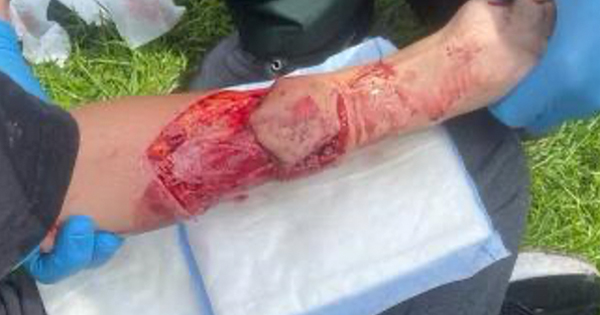
There are a variety of lower leg wounds that present to the plastic surgery team. These wounds often require tissue coverage that may be in the form of a skin graft, a tissue flap or a dermal substitute. These wounds include open fractures, significant degloving injuries [Figure 1], pretibial lacerations and haematomas, dog bites, skin cancers, fasciotomy wounds requiring optimisation for skin grafting, necrotising fasciitis and a vast array of burn injuries.
While initially these wounds are often acute, our team soon identified that within certain demographics, mainly older people, some of these wounds would become chronic, precipitating many challenges to treat. Nevertheless, as plastic surgery is renowned for welcoming a challenge and often regarded as problem-solvers (Thompson, 2023), we decided to set up a Complex Lower Leg clinic for patients with perplexing lower-limb wounds, providing they were potentially suitable for plastic surgery intervention.
The aim of the new service was to deliver more focused lower leg care, as well as embedding a multi-speciality approach as advocated by British Association of Plastic Reconstructive and Aesthetic Surgeons (BAPRAS, 2024) to patients within plastic surgery and to ensure we were not just thinking about our own speciality in isolation in terms of wound coverage and healing.
How the complex lower leg service works
Patients are referred from GP surgeries, community partners, other hospitals in the region and wards in the hospital in which our plastic surgery department is situated. In addition to referring acute wounds on lower legs, patients began to be referred with wounds that had remained unhealed for a number of years, despite various efforts and interventions from different services. It soon became clear that there were a number of uncertainties concerning these wounds.
The patients who attended the Complex Lower Leg clinic received an in-depth consultation with senior members of the plastic surgery team, in conjunction with optimal wound care, regular debridement (including sharp debridement), biofilm and matrix metalloproteinases management, and variations of negative pressure wound therapy and modern wound care products.
Our patients’ wounds were free from infection and foreign bodies; however, the progress of these wounds was limited — wounds were not healing or the healing was slow. This discontent and evolving unanswered questions sparked the interest of the plastic surgery lower leg team, and ignited the need to further investigate several questions [Figure 2]:
- Why were these wounds not healing?
- What was going on?
- Was it something else?
- How can this be improved?
- What information are we missing?
What needed to change
You do not know, what you do not know!
As a result of many unanswered questions, we made the decision to review the complex lower leg service and scrutinise the knowledge we thought we had about lower leg wounds.
As part of this process, we began to review as much literature as possible on the topic. We realised that 1.5% of the UK population (730,000 patients) were living with a leg ulcer, often caused by trauma or injury, and that the annual cost of this to the NHS was an astonishing £1.94 billion (Guest et al, 2015; 2017). We also realised that even minor injuries, such as skin tears or pretibial wounds, can cause chronic leg ulcers (Wounds UK, 2022; Seppala, 2023).
It was highlighted that the estimated prevalence of pretibial injuries was around 40-70 per 100,000 per year (McClelland et al, 2012; Glass and Jain, 2014; Thomson et al, 2014; Hili et al, 2017). Although these figures are debatable due to their primary figures being taken from studies between 10 and 20 years ago, it still seemed logical to focus some of our changes around this area, as many pretibial wounds fall into the remit of plastic surgery and thus, our workload (Laing et al, 2002; Laing and Tan, 2009). We wanted to ensure that we were not sending our patients down the route of a chronic wound as a result of us missing key information or unintentionally omitting initial actions required to aid healing.
When we reviewed our processes for patients with pretibial injuries, including those with haematomas, we noted patients would be assessed using a blank consultation sheet. Once the specialist nursing team received the consultation sheet to book the patient into the Complex Lower Leg clinic, there were inconsistencies in information documented and provided to the patient. There was no classification of injury, mixed treatment approaches were employed depending upon which clinician saw the patient, and the patient was usually referred to the burns and plastics specialist nursing team for follow-up, with no specific plan indicated. Another important finding was that the clinicians usually obtained good, generic information, but minimal information specific to the lower leg, such as neuropathic or vascular assessment, as advocated by the National Wound Care Strategy Programme (NWCSP, 2020). Answers obtained from patients are only as useful as the questions asked; therefore, there would rarely be any mention of signs of venous or arterial insufficiency in the consultation documentation, nor would there be indication of palpable pulses, oedema or any other key information, such as ankle–brachial pressure index (ABPI) assessment, as recommended in numerous guidelines and best practice statements (Wounds International, 2015; NWCSP, 2020; 2023; Wounds UK, 2019; 2022; Legs Matter, 2023).
It is important to highlight that these findings are not a criticism because before now, our speciality has never been told what questions are key or what information is needed to ensure the lower leg wounds we see do not progress to ulcers and are managed optimally.
Other challenges
Another process and frustrating challenge we had as a team was accessing timely ABPI assessments. Quite often at the point of the patient’s initial assessment in our clinic, the patient would have had their wound for more than 2 weeks. At this point, if an ABPI and leg assessment were desired, our team would need to make a referral to our local community colleagues to perform this assessment. However, this would usually take another 2 weeks to happen — contrary to current recommendations that patients should have an ABPI assessment within 2 weeks of initial injury as it is a vital part of the lower-limb assessment (Wounds UK, 2019; Legs Matter, 2023).
Our team would then need to chase up the request for an ABPI prior to any further interventions because from a plastic surgery perspective if reconstructive options are being considered it is crucial to identify any issues with circulation that could jeopardise the success of certain interventions, particularly flap reconstructions and skin grafts.
Another obstacle was the lack of direct communication with our community colleagues. The current channel was a third party service, in which messages were left from the teams and a call back was requested as it was critical this information was not misinterpreted. There was no set time for when the community contact would call back. When they did, the nurse who had left the message was often not available to take the call and the ABPI results were not provided. The whole monotonous process would then start again. Our interventions and plans, including the instruction to put the patient into compression if appropriate, could not commence until we had this information, leading to another 2-week wait for the patient. Quite often we felt as though we were chasing our tails and we were sure there had to be a more succinct way.
Evidence review
We looked more widely at what evidence was available:
- What was being advocated?
- What did the literature say about lower leg wounds?
- What is the assessment standard?
- Are we missing the mark?
When we started to look, we realised there was so much new evidence and information, so much amazing work, and we were missing the mark because we had not advanced with the evidence.
We learnt about diabetic feet, more about ABPIs, principals of compression, arterial and venous leg ulcers and peripheral arterial disease (PAD).
The most alarming revelation for us was when we looked at the statistics on PAD and the life-changing consequences individuals faced as a result. It was saddening to learn that PAD leads to approximately 11,500 lower-limb amputations in England and it is unacceptable that 80% (9,200, [Figure 3]) of these amputations could have been prevented if PAD was identified sooner (All Party Parliamentary Group [APPG], 2016).
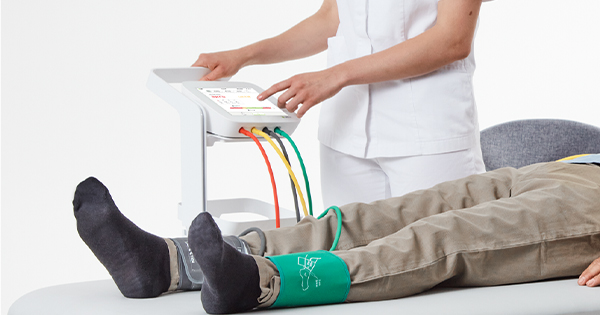
A simple way to help identify PAD is by performing an ABPI, which is a key component of lower leg assessment and takes around 1 minute to complete once the cuffs are in situ. It seemed sensible to incorporate this assessment within the Complex Lower Leg clinic. In addition to helping to reduce the risk of amputation, early detection of PAD also identifies patients at risk of a heart attack or stroke and prompts more timely referrals to the appropriate services (APPG, 2016).
Our mission
There were many parts to our mission to improve lower leg care within the plastic surgery service and it was soon realised it was not simply a case of obtaining an ABPI machine. Our team’s objectives were:
- Standardised practice
- Optimised patient outcomes
- Improved diagnosis and management
- Faster healing
- Streamlined care
- Align with wider wound care context
- Prompt interventions and referrals
- Collaborative working with other specialities.
Our action
The team collaborated and reconnected with key teams, including diabetes and vascular services, to review referral criteria and processes and to understand more about their roles and what they had to offer to help optimise patients and their lower-limb wounds.
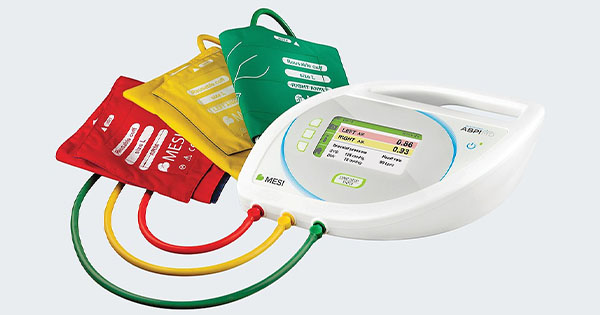
An ABPI machine was purchased from charitable funds, along with the appropriate training. Lower-leg teaching was then developed and cascaded to the rest of the plastic surgery nursing team, in conjunction with an adapted version of the Wounds UK (2019) algorithm, to provide guidance for compression care and direction around what to refer and when. Wallet-sized traffic light cards were also made, so information was always at hand and could be kept within our ID badges to support action from ABPI measurements and leg assessments.
Another change in practice was the development and implementation of a pretibial and haematoma pathway for patients within plastic surgery. The pathway aims to aid assessment and diagnosis, as well as advancing care via asking targeted questions, gaining a more thorough insight into important factors that may predict issues around wound healing and likely ulceration or underlying disease. The pathway prompts the team to consider the services of other specialities and helps identify specific indicators of venous or arterial disease. It prompts a more leg-specific assessment, as opposed to a general patient and wound assessment to mirror best practice of assessing the patient, their limb and their wound [Figure 4] (NWCSP, 2020; Wounds UK, 2022)
The pathway helps to classify the degree of injury [Figure 5], thus aids in planning treatment. It also provides clear instructions on how to treat the injury and encourages photographs to be taken as they are more reliable than written descriptions and to align with best practice in wound documentation (NWCSP, 2021).
While this classification system is somewhat dated, it was chosen for its suitability within the context of plastic surgery, where the presence of necrosis and haematoma are key factors determining the degree of intervention from the plastic surgery team.
Additionally, the pathway has prompts around establishing vascular assessment, but overall it is a step-by-step booklet with all relevant information in one place, negating the previous freestyle consultation and inconsistent information provided [Figure 6].
By implementing these changes in our practice, our patients have faster referrals, thus faster interventions, whether this may be an angiogram or angioplasty to optimise the chance of success of plastic surgery, or is orthotic shoes for offloading in diabetic foot wounds.
Other positive actions include the patient having a timely ABPI at the point of presentation to our Complex Lower Leg clinic, compression is commenced sooner, surgical decisions are better informed, and — arguably the most significant change — there are more targeted questions now embedded into our practice around lower-leg assessment.
Our staff are now able to discuss compression with patients and recognise when a patient may benefit from it. The overall goal is to help fast-forward to healing but most importantly our patients can regain a better quality of life not governed by dressing changes and hospital appointments; or waiting all day for a home visit, no longer having to worry about whether their dressing will leak or smell malodourous if they go out.
Case study prior to the changes of the Complex Lower Leg clinic
Patient X attended the Burns and Plastics Dressing Clinic with a small burn on their foot [Figure 7]. They had their first assessment under the plastic surgery nursing team and subsequent follow-up appointments, which included months of trialling different dressings, debridement and negative pressure wound therapy, yet the wound was not healing.
As Patient X had diabetes, it was expected that healing would be problematic. However, while we knew about the impact of diabetes on wound healing, we did not have the knowledge about the patient requiring an offloading device to redistribute the pressure from the location of the burn over the bony prominence. The offloading aspect was the missing piece of care and as soon as the patient was referred to the diabetic foot clinic and received an offloading shoe, the wound soon began to heal.
To demonstrate the contrast in care, if the same patient attended the Complex Lower Leg clinic today, on their first assessment they would have had an ABPI assessment, foot pulses checked and a referral to diabetic foot clinic rather than that referral coming after several months of trialling a vast array of unsuccessful treatments.
Other lessons learnt as a result of our lower leg journey and critiquing our current practice was that, because the patient was diabetic they were twice as likely to have PAD compared to someone that does not have diabetes (Wounds International, 2013). Clinicians should also have a lower threshold for suspecting infection as symptoms can be masked by diabetes.
Figure 8 illustrates the difference in our approach now. We are getting into the habit of recognising what else we are looking for. Instead of merely looking at the wound, we are also looking at the colour of surrounding skin, that brownish staining indicating haemoglobin in the tissues from damaged blood vessels; we are looking at the thickness of the toenails that could indicate PAD. We are looking for spider veins, varicose veins and varicose eczema. We are comparing both legs and feet with shoes and socks off, looking at the colour and feeling temperature of the toes, feet and limbs, but overall, we are looking for signs of venous or arterial insufficiency.
Personal perspective
From a personal perspective, as well as my role as a plastic surgery nurse, my part of continuing this lower leg journey has been to incorporate it into my other role as a university nurse lecturer via instilling lower-leg care sessions into both pre- and post-registration nursing programmes so that our nurses can start off with this knowledge as a baseline and hopefully continue the passion around it.
Let’s not be pigeonholed into only thinking about our “speciality” because just as all systems in the body are interlinked, so should our specialities; they should complement, not complicate, each other. Between our different specialities, the knowledge is there, so why should unhealing wounds be acceptable? Aligned services, knowledge and expertise should mean all of the solutions and answers are there. If we think something could be improved, we should instigate that change!
Conclusion
It is essential that we challenge and review our practice because while there are now many positives implemented from adapting a new dimension of care within plastic surgery to assess and diagnosis different issues with the lower leg, the reality is that without these changes in practice, wounds would continue to be unhealed for longer. With that comes an abundant amount of physical and psychosocial factors — employment implications, financial implications, pain, infection risk and risk of antimicrobial resistance if wounds require multiple courses of antibiotics and overall poorer health outcomes and quality of life. So, no matter what speciality you are, start digging; research, question, do not settle — we and our patients deserve more.