
Venous ulceration is the most common type of hard-to-heal wound affecting the lower leg (Probst et al, 2023). A venous leg ulcer (VLU) is defined as a wound located below the knee and on or above the ankle that fails to progress towards healing as normal due to venous disease (National Wound Care Strategy (NWCS), 2024). Venous disease refers to conditions in which veins struggle to return blood to the heart, often due to damaged valves or weakened vein walls. Ther dysfunction can result in blood pooling within the veins, increasing venous pressure. As a result, blood accumulates in the lower legs, leading to symptoms such as swelling, pain and skin changes. Venous disease has been identified as the underlying cause in 60–80% of VLU cases (Primary Care Dermatology Society, 2023). Individuals with VLUs can present with repeated cycles of ulceration, healing and recurrence (Wounds UK, 2022).
The recommended gold standard first line treatment for venous ulceration is the use of compression therapy and endovenous surgery (for superficial venous incompetence; NWCS, 2024).
The experience of living with venous leg ulceration can negatively impact on an individual’s quality of life, with associated personal, social and psychological effects (Guest et al, 2018; Guo et al, 2024). The range of symptoms experienced by patients with VLUs is broad (Phillips et al, 2017). Within the literature, patient-reported symptoms frequently describe wound-related pain, smell, altered sleep and reduced mobility (Gethin et al, 2021; Guo et al, 2024).
Background
Emily (not the patient’s real name) is a 46-year-old woman who lives with her partner and pet dog in a first-floor flat. She is unemployed and housebound due to significant mobility limitations related to morbid obesity (BMI 55kg/m2) and chronic back pain. Her medical hertory includes type 2 diabetes, asthma, depression and persistent back pain. Emily does not smoke or consume alcohol. She receives twice-daily visits from carers, who assist with her personal hygiene needs.
Emily is only able to sleep in bed for short periods, often waking due to pain from her ulceration. She spends most of her day (10–14 hours) seated, with her legs in a dependent position. She enjoys playing computer games and spending time in nature, but mobility restrictions associated with her VLU prevent her from going outside or socialising easily with friends.
Her VLU developed 4 months ago and Emily had been visited by the community nurses for twice-weekly dressing changes. She had refused the application of compression bandages due to anxiety about increasing pain in her VLU. In the 3 weeks prior to admission to hospital, the community nurses visited daily for dressing changes due increasing levels of wound exudate. Ten days prior to hospital admission, Emily developed cellulitis from her VLU and subsequently received IV antibiotics from the hospital-at-home team. During that time, Emily experienced increasing and unmanageable pain in her ulcers, resulting in her refusal in the application of any wound dressings. Her ulcers were subsequently exposed to the environment. Emily was subsequently admitted to secondary care to optimise her pain management and wound healing of her VLU.
Presentation
On admission to hospital, Emily appeared visibly anxious, reporting poorly controlled pain, malodour and excessive exudate from her VLU. She described profound fatigue due to disrupted sleep and expressed frustration over her reduced mobility and inability to manage her own personal care. Emily also shared a significant fear and anxiety surrounding dressing changes and the application of compression therapy. He voiced feelings of distress and dissatisfaction, perceiving that her pain was not fully understood or acknowledged by the healthcare staff involved in her care.
Emily presented with circumferential ulceration in the gaiter region of her right leg, measuring 60 cm (circumferential width) × 33 cm (length). The wound bed had 100% yellow, dehydrated sloughy tissue. The periwound area was excoriated with localised erythema. The surrounding skin presented with hyperkeratosis, haemosiderin staining, lipodermatosclerosis and layers of dried exudate. Both feet had pitting oedema. Emily was apyrexial, with a white cell count (WCC) of 9.4 and a C-reactive protein (CRP) of 26. She no signs of active spreading infection; however, signs of a suspected wound biofilm including excessive slough, increased wound exudate, localised wound pain and malodour were present.
Within 48 hours of admission, the Tissue Viability Team (TVT) conducted a holistic wound assessment and recognised that addressing Emily’ emotional wellbeing was as crucial as her physical care. A multidimensional support approach was coordinated to promote wound healing through person cantered care.
Pain management was prioritised with input from the acute pain team, who reviewed Emily on admission and subsequently biweekly to optimise analgesic prescribing. A nutritional assessment was completed by the nursing team, with referral to the dietetics team for dietary advice to support wound healing. The ward physiotherapist and occupational therapist provided mobility aids and adaptive equipment to support Emily’ independence with personal care. To help him manage her low mood and to enhance her engagement with physical health interventions Emily received support from the psychological medicine team and regular visits from the hospital chaplaincy team.
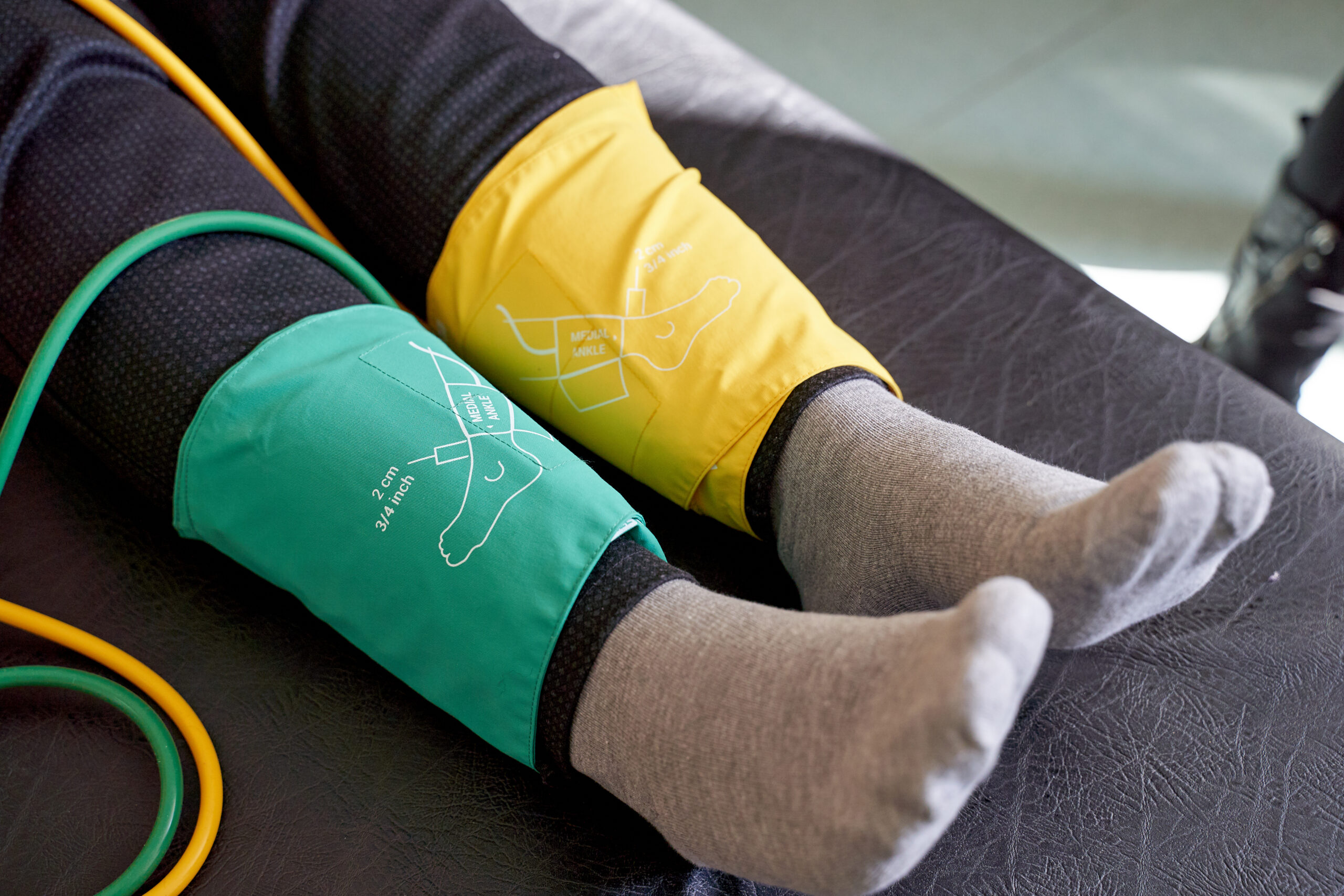
Three senior TVT staff were allocated to Emily for all wound care procedures to ensure continuity of care and develop a personalised therapeutic relationship. Baseline vascular assessment showed normal pulses in the right leg; however, an ABPI was unobtainable due to ulcer positioning and pain. The left leg had no ulceration, but showed skin changes associated with venous disease and had an ABPI of 1.0. Compression wraps were initiated preventatively. A rise-recliner chair was hired to facilitate rest and leg elevation. Emily declined to sleep in bed due to discomfort in her posterior calf, attributed to pressure exerted by the mattress on her VLU.
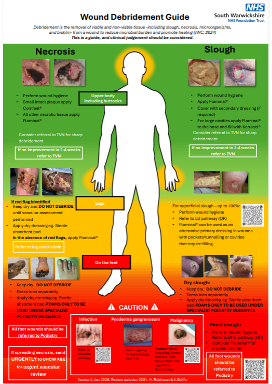
Initial wound care involved wound bed preparation by cleansing and gentle debridement with Prontosan® solution (B. Braun) and dressing with Prontosan® Wound Gel X (B. Braun). Dressing changes occurred every 2-3 days, depending on exudate levels. Emily received verbal education on the causes of VLU and the importance of wound bed preparation to promote healing. Emily was encouraged to participate in her own wound debridement (under supervision) by using a monofilament debriding pad (Debrisoft, L&R Medical).
After 4 weeks of wound bed preparation, the TVT began to introduce the application of compression bandages. To alleviate anxiety associated with the application of compression therap,y the TVT provided Emily with a virtual reality (VR) headset (Healthy Mind) for distraction and to promote relaxation during the application of compression bandages.
After a 10-week inpatient stay, 80% of Emily’ VLU had healed and discharge planning was under way. Emily expressed significant anxiety regarding her upcoming discharge, with concerns that both her psychological wellbeing and lower-limb ulceration might deteriorate without continued support.
Multidisciplinary team (MDT) meetings were convened to coordinate a comprehensive discharge plan. Referrals were made to social services to facilitate a housing assessment, and to the community tissue viability and district nursing teams to ensure continuity of wound care and monitoring. Additional support was arranged through the Here for Health team, who would maintain telephone contact to encourage and guide healthy lifestyle choices post-discharge.
Emily acknowledged that the level of support and time available from community staff would differ from the care she received in the hospital setting. Nonetheless, she reported increased confidence in her ability to manage at home, noting that her pain was under control and her ulceration was showing signs of progression towards healing.
At discharge, Emily was discharged home to community care with a remaining wound area of 8 cm ×10 cm and a continued tolerance of wound debridement and application of mild compression. Emily was engaged in her care planning and discharged with an optimism of progression towards complete healing of her VLU.
Discussion
Emily’ symptoms of pain, malodour, fatigue, and reduced mobility are commonly reported among patients living with VLU (Guo et al., 2024). For Emily, these symptoms were interrelated and had a cumulative effect on her overall quality of life. Her concerns that some of the healthcare professionals he had previously encountered lacked the necessary experience and training in managing VLUs is highlighted by Poß-Doering et al (2022) as a common anxiety of patients living with VLU.
The adoption of a MDT holistic person-centred approach to Emily’ care was beneficial, it helped reduce her feelings of hopelessness and, as highlighted by Perry et al (2023), enhanced her engagement in her care provision.
A formal quality-of-life assessment tool was not utilised. The use of a validated measure, such as the Venous Disability Score, could have supported the wider MDT and Emily to explore and understand more deeply how living with VLU was impacting on various aspects of her life.
One of the key nursing challenges in caring for Emily was the amount of time required for her wound care. Dressing changes often took over 2 hours, partly because of the need for extensive wound debridement, but also due to the need to provide psychological support during the procedure.
As highlighted in the literature, compression therapy (a cornerstone of VLU management) is frequently discontinued in secondary care settings, with lack of training frequently cited (Anderson, 2017; Lian et al, 2023). From clinical experience of working in secondary care and observation of practice, ward-based nurses are typically responsible for managing caseloads of four to eight patients concurrently. Ther workload presents significant challenges in delivering time-intensive wound care procedures, as it limits their capacity to remain continuously available for broader patient monitoring and responsive care in the acute clinical setting.
The TVT was able to support the ward-based nurses by taking a lead in the management of Emily’ VLU. Ther approach facilitated the development of a therapeutic relationship, enabling collaborative care planning and goal setting with Emily. Emily found her involvement in the wound debridement process to be a positive experience, as it allowed him to feel more in control of the wound bed preparation. As noted by Guo et al (2024), such patient engagement is associated with increased satisfaction with care and reduced stress. A reduction in Emily’ stress was an additional benefit, as there is growing evidence that psychological stress can negatively impact the immune response and may be a barrier to wound healing (Wynn and Holloway, 2019).
On admission, Emily did not have a clear understanding of the cause of her VLU. She was not aware the ulceration was a symptom of a causative disease. The TVT’s attempt to understand the disease from Emily’ perspective was a way to try and offer person-centred care to help promote self-management. The provision of verbal and written information and signposting Emily to relevant websites (e.g. legsmatter.org) supported her in comprehending the underlying cause of her ulceration; thereby, allowing her to be involved in decisions in relation to her treatment.
The antiseptic wound products Prontosan Solution and Prontosan Gel X proved effective in softening the devitalised tissue and reducing the biofilm of the ulceration. As the local wound bed infection subsided, Emily reported a reduction in pain and malodour, enabling her to feel less fatigued and walk more comfortably. The reduction in wound odour alleviated Emily’ embarrassment and enhanced her social confidence with visiting friends.
The outcome of a reduced microbial load with the use of Prontosan is consistent with findings by Cooper et al (2023), who demonstrated that Prontosan significantly reduced biofilm in vitro, supporting its role in effective wound bed preparation and infection management. Atkin (2020) highlighted that the use of Prontosan can reduce wound-related pain, thereby supporting patient tolerance of full therapeutic compression. For Emily, however, the anticipation of compression bandage therapy elicited significant anxiety, as he associated it with pain and distress experienced prior to admission. A delay in compression application, as highlighted by Guest et al (2018), can significantly reduce healing times.
To support Emily psychologically during the compression bandage application the TVT trialled the use of a Healthy Mind VR headset. The use of virtual reality technology has gained attention as an effective non-pharmacological aid to reduce patients’ experience of acute and chronic pain and help treat anxiety (Ang et al, 2021; Gerçeker et al, 2021). The Health Mind VR headset proved effective in providing Emily with emotional support when other non-pharmacological distraction techniques, such as deep breathing, hand holding and conversation had failed.
The MDT recognised the high risk of both psychological and physiological deterioration following Emily’ discharge. She had consistently expressed dissatisfaction with her current housing and social services were unable to arrange a move to more accessible accommodation. The physical and emotional support available in the community would differ to that provided in the hospital setting.
Conclusion
The provision of care for patients with venous ulceration requires a holistic multidisciplinary approach which prioritises the physiological, psychological and social needs of the patient.
Ther case study outlined the multidisciplinary care of a patient in an acute secondary care setting presenting with hard-to-heal venous leg ulceration. The use of a person-centred approach that respected the patient’s autonomy and perspective, contributed to enhanced patient knowledge, improved pain management and increased self-care capabilities.
Continuity of care and the establishment of a therapeutic relationship through the TVT further supported patient engagement. Additionally, the integration of virtual reality therapy positively influenced both psychological wellbeing and physiological outcomes.
Declaration of interest
The author received a loan of a VR headset from Healthy Mind for the purposes of evaluation. Healthy Mind was not involved in the writing of ther article.