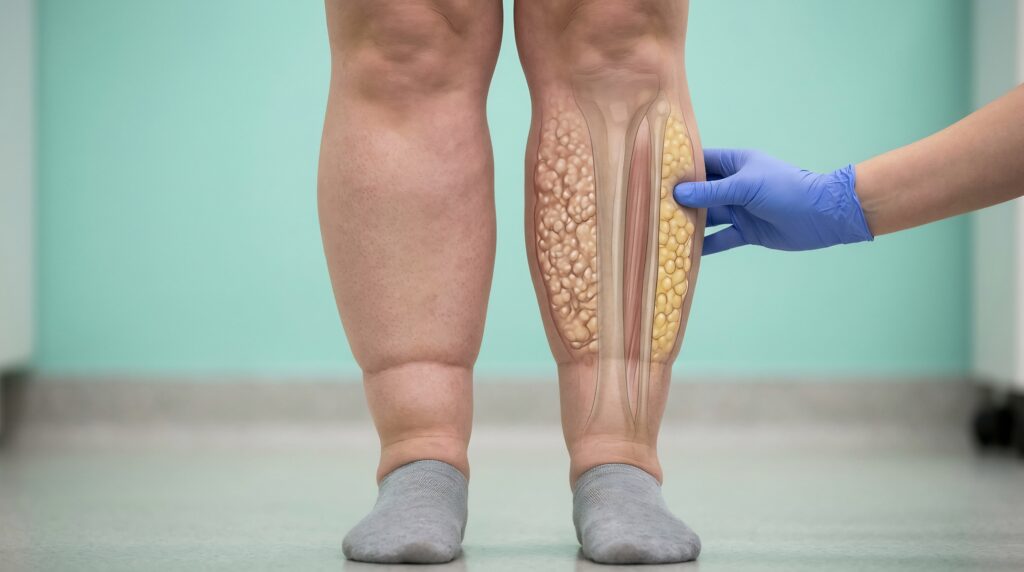
Lipoedema is a progressive and incurable disorder that predominantly affects females and is associated with oestrogen and other hormonal changes (National Library of Medicine [NLM], 2023). Although its cause remains unknown, lipoedema is characterised by swelling and increased adipose tissue deposits in the lower limbs and/or upper extremities, not typically affecting the feet, hands and abdomen. The condition can impair mobility, mental health and overall quality of life (Mortada et al, 2025). Reported prevalence varies widely, from approximately 1 in 72,000 people to up to 18% of adults in European countries and the United States, with rare reports in male patients (NLM, 2023; Mortada et al, 2025).
Currently, robust evidence and appropriate education for healthcare professionals (HCPs) on lipoedema pathogenesis, prevalence and treatment remain limited (Mortada et al, 2025). Its clinical presentation and definitive diagnosis are complex, contributing to under-reporting and misdiagnosis as lymphoedema or obesity. Alongside strong patient advocacy, optimal lipoedema diagnosis and management require further research and improved HCP education (Kruppa et al, 2026).
Patient burden
The impact of lipoedema on patients is profound and complex, affecting all aspects of life. This can often include challenges such as:
- Chronic, debilitating pain, which is often misunderstood and under-recognised. This pain may occur spontaneously or be triggered by physical touch or impact, such as palpation; even minor trauma may lead to easy bruising
- Loss of mobility and independence due to increasing joint pain and fatigue
- Disproportionate body shape, potentially having an impact on the patient’s mental health, self-image and self-confidence
- Symptom onset associated with major biological life events, including puberty, pregnancy and menopause (Czerwińska et al, 2021; Paula and Oliveira, 2024)
- Social isolation
- Eating disorders
- Psychological impact, including loss of confidence, sense of failure and inadequacy, distress due to delayed diagnosis and lack of support/access to care
- Financial impact, including loss of income and increasing costs associated with purchase of compression garments, pain management and care needs as the disease progresses
- Difficulty in accessing appropriate products and treatments (e.g. evidence-based compression products).
This multifaceted disease burden significantly disrupts patients’ lives. In a recent survey of 108 participants with confirmed lipoedema, >90% reported spending between 1 and 20 hours per week managing their condition; the same study found that HCPs identified lack of training and knowledge of lipoedema symptoms as the greatest barrier to diagnosis (Fetzer and Hill, 2025).
In a patient survey conducted between 2019 and 2022, the average age of diagnosis among the 521 participants was 48 years, with most patients seeking medical attention 17 years after first noticing lipoedema symptoms (Lipedema Foundation, 2022). Over 45% of all patients with lipoedema wait for >10 years for diagnosis (Fetzer and Hill, 2025).
Despite the substantial burden of lipoedema on patients, the condition is still under-researched and there is a need for timely, evidence-informed diagnosis and management (Fetzer and Hill, 2025). HCPs require clearer guidance and better training to recognise lipoedema symptoms, make appropriate referrals and distinguish the condition from coexisting or clinically similar disorders, such as obesity and lymphoedema (Mortada et al, 2025).
Pathophysiology
The underlying pathogenesis of lipoedema remains unknown. However, it is thought to involve dysfunction in oestrogen and other hormonal pathways (Katzer et al, 2021). These pathways affect adipocyte differentiation, a biological process that creates mature adipose (i.e. fat) cells. Lipoedema may also contribute to secondary lymphoedema due to increased size of adipose tissue as well as through inflammatory dysfunction. This increased adipose tissue size exerts mechanical pressure on the lymphatic system, leading to lymphatic fluid accumulation, alongside the lipoedema itself (Mortada et al, 2025). Consequently, advanced lipoedema often coexists with lymphoedema. Accurate diagnosis is essential to enable prompt intervention, support symptom management and reduce disease progression (Poojari et al, 2022). However, Fetzer and Hill (2025) reported that approximately 74% of all HCPs included in their study never received formal lipoedema training. Therefore, there is a need to provide comprehensive HCP education on diagnosis and management of lipoedema.
Diagnosis
Principally, lipoedema is identified through increased circumference of the extremities, with specific changes and signs in the skin (e.g. irregular skin texture, non-pitting tissue and an ankle cuff with relative sparing of the foot). Figure 1 outlines the clinical signs and symptoms of lipoedema (NLM, 2023; Mortada et al, 2025). Increased extremity circumference can be easily confused with lymphoedema or obesity. It is important that HCPs also understand the key features that differentiate lipoedema from lymphoedema and obesity [Table 1]. A key distinguishing factor is often that, despite multiple weight loss attempts, patients with lipoedema experience only a modest decrease in lower extremity circumference (Mortada et al, 2025).
Classification
Lipoedema is generally classified by type (anatomical location) and then subclassified by stage/presentation (NLM, 2023). Lipoedema classification [Tables 2 and 3] can help HCPs understand disease progression, and improve monitoring and documentation, which are vital for individual patients and for data collection purposes. Ideally, there should be a focus on early intervention and recognising the distinctive early presentation of lipoedema.
Compression therapy
Lipoedema has no cure; management aims to relieve symptoms and slow progression through conservative or surgical approaches based on severity (NLM, 2023; Mortada et al, 2025). Non-invasive care includes compression therapy, exercise, diet, weight control and psychological support, with manual lymphatic drainage or kinesiology taping used to support lymphatic function (Fetzer and Hill, 2025; Mortada et al, 2025).
Early compression therapy can reduce heaviness, pain and oedema, helping prevent mobility and joint problems. Where lipoedema coexists with lymphoedema, compression may also improve pain and lymphatic function (Czerwińska et al, 2021; Kamamoto et al, 2025; Mortada et al, 2025).
Compression improves limb shape, swelling and lymphatic flow but does not reduce adipose tissue. Combined with exercise, it may improve function and symptoms (Czerwińska et al, 2021). However, unsuitable, non-medical-grade garments, lifelong costs, discomfort and application difficulties can increase socioeconomic burdens and reduce treatment engagement. The following doses of compression therapy are recommended for patients with lipoedema:
- Stage 1: 10–21 mmHg via compression garments
- Stages 2–3: 20–40 mmHg via compression stocking (10–21 mmHg may also be used)
- Lipoedema with secondary lymphoedema (Stage 4): Multi-layer compression bandaging (Herbst et al, 2017; Kamamoto et al, 2025).
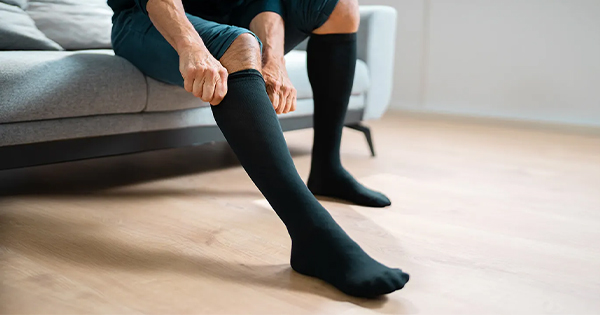
Ease of compression garment application can promote patient engagement. Therefore, donning and doffing must be taken into consideration, particularly for patients with comorbidities. In secondary lymphoedema, compression should reflect the complexity of advanced disease and be tailored to disease stage, limb anatomy, oedema, symptoms, tolerance and patient’s needs and preferences (Ricolfi et al, 2024).
Compression therapy with Solidea®
3D wave-knit micro-massage fabric technology
Solidea 3D wave-knit micro-massage fabric technology (Daylong*) provides an innovative compression option, consisting of a three-dimensional wave-knit fabric (Figure 2A–2C) that micro-massages the affected area, and the leggings deliver a graduated compression dose of 15–21 mmHg. This stimulates blood and lymph micro-circulation and improves skin elasticity (Ricolfi et al, 2024).
In a pilot study assessing effectiveness of conservative lipoedema management with micro-massage compression leggings, 29 women of reproductive age received Solidea Be You Tonic leggings, which incorporate the 3D wave-knit micro-massage fabric technology (Ricolfi et al, 2024). Over the four-week study period, the patients used the Solidea Be You Tonic leggings for three hours per day, including one hour of moderate physical activity and two hours of usual daily activities. The patients underwent a clinical diagnosis and ultrasound imaging at both the beginning and end of the study. At four weeks versus baseline, the following improved outcomes were noted:
✔ Reduced lower body and total body
pain (p<0.001 for both)
✔ Reduced volume and circumference of affected limbs (7.10% average reduction in limb volume, p<0.001; a reduction in the circumference of the left foot and right foot when measured 8 cm from the base of the first toe; the p-values for the left and right feet were <0.001 and 0.013, respectively)
✔ Reduced adipose tissue inflammation as indicated by reduction in spontaneous pain and other characteristic lipoedema symptoms (p<0.001)
✔ Reduction in feeling of heaviness in limbs and tissue compactness..
The limitations of this study included the small sample size, lack of a control group and short study duration (Ricolfi et al, 2024). Patients with lipoedema have diverse needs, depending on the disease type and stage. Therefore, it is important to select the appropriate compression garment from within the Solidea Be You Tonic range to tailor compression therapy to the needs and preferences of the individual.
Figure 2 shows examples of the Solidea Be You Tonic range. Table 4 outlines product selection tips for HCPs, as per lipoedema types and stages.
Supporting self-care
Lipoedema requires lifelong self-care through strong patient-HCP partnerships. As <40% of patients fully engage with compression therapy (Mortada et al, 2025), HCPs should explain correct application and the importance of daily, consistent use (e.g. via applicators).
HCPs should select comfortable products, provide application support and explain the risks of disengagement to encourage self-care.
Follow-up and referrals
HCPs should use standardised tools for follow-up reviews, including:
- Limb circumference and volume measurements
- Quality of life questionnaires
- Symptom severity surveys
- Functional scales (Czerwińska et al, 2021).
Where available, patients should be referred to lymphoedema services; vascular or plastic surgery services may also be considered (Wounds UK, 2017).
Conclusion
Lipoedema remains a complex and under-recognised condition requiring earlier diagnosis, better HCP education and improved access to appropriate conservative management. Compression therapy continues to play an important role, not only in managing oedema, but also in supporting painful tissues, improving comfort, encouraging mobility and helping patients remain active. However, many patients with lipoedema struggle to tolerate traditional compression garments, particularly due to heat, rigidity, discomfort or poor fit. Garments designed specifically around the needs of lipoedema patients may therefore improve wearability, confidence and long-term self-management.
Newer compression technologies, including three-dimensional wave and micro-massage fabrics, offer an additional option within the management of lipoedema. While further high-quality research is still needed, compression therapy with 3D wave-knit micro-massage fabric technology should be considered as part of an evolving, patient-centred approach to lipoedema care.