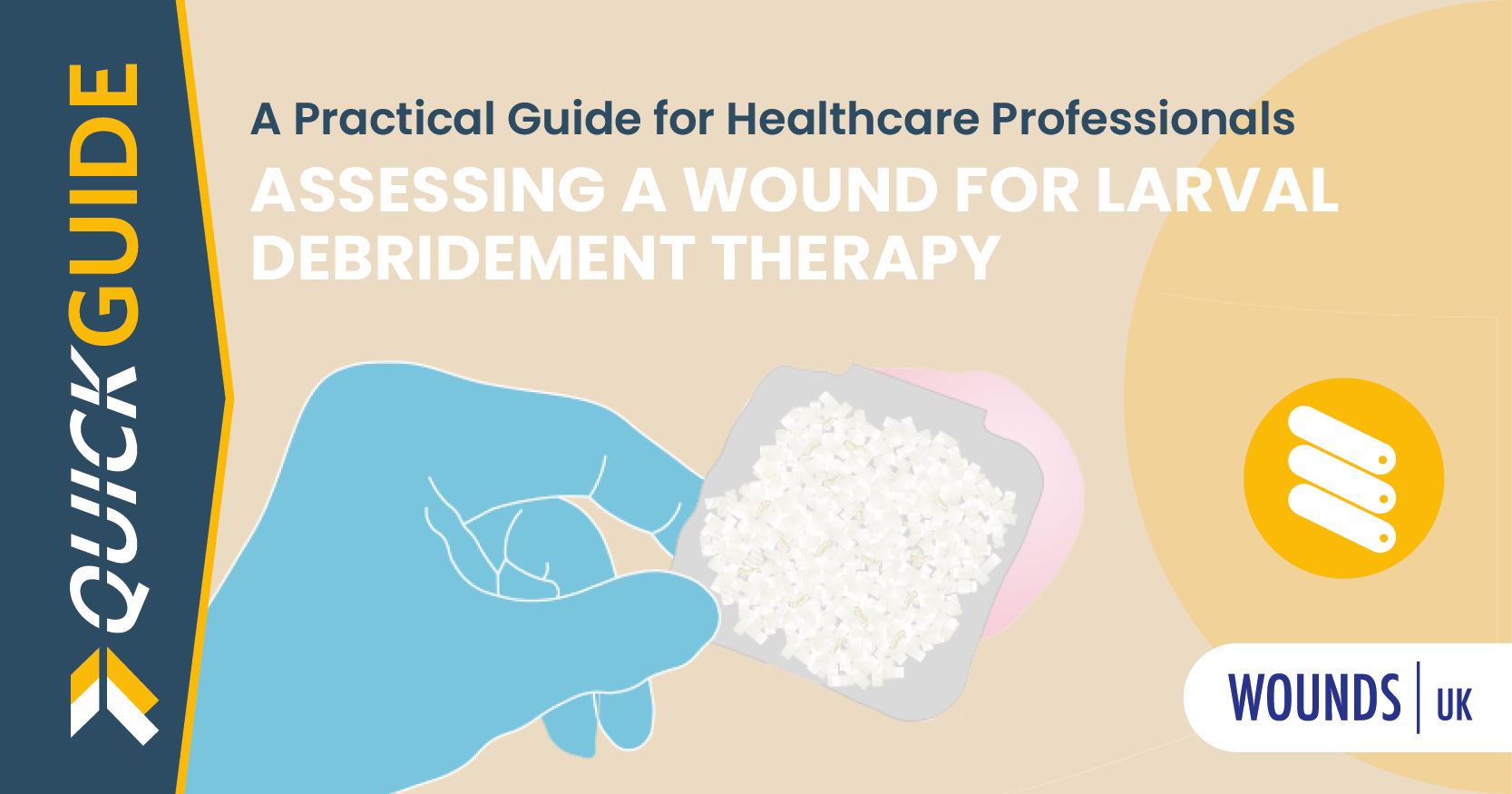
This practical Quick Guide provides healthcare professionals with an overview of how to assess wounds for Larval Debridement Therapy (LDT), also known as maggot therapy or biosurgery. LDT uses sterile greenbottle fly larvae to selectively remove necrotic, sloughy and infected tissue, supporting rapid wound bed preparation while preserving healthy tissue.
The guide outlines the key benefits of LDT, including selective and rapid debridement, support for wound healing and management of bacterial burden. It highlights situations where LDT may be particularly valuable, including wounds that repeatedly re-slough, static wounds, suspected biofilm and cases where surgical debridement presents challenges or risks.
It also provides a structured approach to assessing wound suitability, considering factors such as wound type, size, depth, location, exudate, bacterial burden, existing products and the consistency of slough. Suitable wound types include diabetic foot, venous, arterial, mixed aetiology and pressure ulcers, as well as non-healing surgical, post-traumatic and infected wounds.
Finally, the Quick Guide presents a straightforward treatment pathway from initial assessment through treatment, review and repeat cycles where required, alongside practical clinical tips for dressing selection and maintaining an appropriate wound environment.
Download the PDF below to access the full Quick Guide resource.