This meeting report is based on a ‘Made Easy’ workshop that took place at the Wounds UK Annual Conference in Harrogate on 11th November 2025. The workshop and meeting report were supported by an educational grant from Richardson Healthcare. The session was delivered by Valerie Edwards-Jones, Emeritus Professor of Medical Microbiology at Manchester Metropolitan University and James Linsley, Clinical Lead Podiatrist and Non-Medical Independent Prescriber.
Wound malodour is defined as an unpleasant odour produced by a wound and a highly distressing symptom for people living with wounds (Fletcher, 2008). It is reported by up to 76% of patients and can occur in individuals with both acute and chronic wounds (Mahoney, 2025). Despite its prevalence, malodour remains an often under-recognised aspect of wound care, yet it can have a significant impact on patients’ overall wellbeing.
It is important to acknowledge that wound malodour is not always indicative of a serious complication. In some cases, odour may be part of the normal healing process and does not necessarily signify infection or deterioration (Pramod, 2025). However, the presence of any odour, even if faint or clinically insignificant, can have a profoundly negative impact on patients.
Wound malodour can negatively affect both emotional and physical wellbeing, leading to embarrassment, low self-esteem and social withdrawal. Patients may report nausea, anxiety and a reduced willingness to engage in daily activities or social interactions (Mahoney, 2025). Persistent odour can undermine patients’ confidence in healthcare professionals and the effectiveness of their treatment, further compounding distress.
Assessment and management of wound malodour are challenging due to its subjective nature. What is perceived as mild by a clinician may be overwhelming for the patient. As a result, care is often guided by the clinician’s interpretation of the odour rather than a patient-centred approach that prioritises comfort and quality of life. Recognising the personal impact of wound malodour is therefore essential to delivering holistic and compassionate wound care.
Background: Why wound malodour matters
The perception of smell is highly subjective, with the same odour often perceived and described differently by different individuals. This subjectivity is underpinned by the complexity of the human olfactory system. The human nose contains over 5 million scent receptors, enabling it to detect extremely low concentrations of volatile organic compounds (VOCs) (Edwards-Jones, 2018). These receptors have differing affinities, allowing the nose to distinguish between a wide range of odours (Fletcher, 2008).
The olfactory system is closely linked to the central nervous system, meaning that smells can trigger immediate and powerful biological and psychological responses (Fletcher, 2008). Odours are processed in areas of the brain associated with emotion and memory, which explains the strong connection between smell, past experiences and emotional reactions (Fletcher, 2008). As a result, odour can evoke feelings such as disgust, anxiety or distress, even when there is no conscious awareness of why these emotions arise (Marshall, 2022).
Interpretation of smell is also shaped by an individual’s environment and personal experiences. Certain odours are commonly associated with concepts of cleanliness or uncleanliness, health or illness. People are therefore often highly conscious of how odour is perceived by others, and those who are considered to be ‘unclean’ or ‘dirty’ may be subject to stigma and social judgment.
The stigma significantly amplifies the impact of wound malodour on patients. Concerns about how they are perceived can lead to embarrassment, social isolation and reluctance to discuss odour openly with clinicians. Evidence suggests that 62% of patients believe their experience of care would improve if clinicians were able to effectively eliminate wound odour (Mahoney, 2025). Odour can also be challenging for family members and carers, who may struggle to balance sensitivity towards the patient with their own feelings of discomfort. Understanding the physiological, psychological and social dimensions of smell helps to explain why wound malodour is such a critical issue in wound care and highlights the importance of compassionate, open and patient-centred management strategies.
Microbiology of wound odour
How microorganisms produce wound odour
Most wounds are contaminated or colonised with microorganisms, even in the absence of clinical infection (Edwards-Jones, 2018). Chronic wounds in particular are generally colonised by a complex mixture of aerobic and anaerobic bacteria. Aerobic bacteria require oxygen to survive and are often found in the superficial layers of the wound, whereas anaerobic bacteria thrive in deeper, poorly oxygenated environments and are therefore commonly associated with devitalised tissue (Coluccio, Palomera and Spero, 2024).
As part of their normal growth and metabolic processes, microorganisms break down proteins, lipids and carbohydrates present within the wound bed. This metabolic activity results in the production of VOCs, which are released as waste products (Daneshkhah, Siegel and Agarwal, 2020). These VOCs include fatty acids, sulphur-containing compounds and amines, all of which have distinctive and often unpleasant odours (Edwards-Jones, 2018). The type and intensity of odour produced will depend on the microbial species present, the wound environment and the availability of oxygen and nutrients.
Infection and biofilm
Malodour is most commonly associated with infection, although it can also occur in the absence of overt infection. Organisms responsible for wound infection are generally pathogenic bacteria, such as Staphylococcus aureus, Pseudomonas aeruginosa, Streptococcus pyogenes (group A Strep) and a range of anaerobic species. In acute wounds, infection is often caused by a single pathogen, although mixed infections may also occur.
Chronic wounds are more likely to contain complex polymicrobial communities. It is estimated that up to 80% of chronic wounds have a biofilm. Biofilms consist of microorganisms embedded within a protective, glue-like extracellular matrix and are commonly found in non-healing chronic wounds and malignant fungating wounds. The presence of biofilm intensifies wound malodour by supporting metabolically active microbial communities that continuously produce VOCs. Biofilms also protect bacteria from host immune responses and antimicrobial therapies, allowing them to persist. As a result, odour may remain despite regular cleansing or dressing changes (Cavallo et al, 2024).
Devitalised tissue
Devitalised tissue, sometimes referred to as necrotic tissue, is tissue that is no longer viable and cannot resume normal cellular function. Tissue breakdown may occur for many reasons, including reduced or absent blood supply, pressure, trauma or as part of autolytic debridement. Devitalised tissue provides an ideal environment for bacterial proliferation, particularly anaerobic organisms.
During tissue breakdown, specific chemical compounds are released, most notably cadaverine and putrescine (Edwards-Jones, 2018). These amines are commonly described as having the smell of ‘rotting flesh’ and are a significant contributor to wound malodour. Their presence often indicates ongoing tissue degradation and high bacterial activity.
Malignant fungating wounds
Malignant fungating wounds (MFWs) occur when cancerous cells infiltrate and break through the skin surface, resulting in a complex and often rapidly deteriorating wound. Tumour growth can compromise local bloody supply, leading to hypoxia, tissue necrosis and increased susceptibility to bacterial colonisation (Edwards-Jones, 2018).
Wound malodour is a common and distressing symptom of MWFs and is thought to arise from a combination of tissue breakdown and microbial metabolic activity. Putrescine and cadaverine are among the most commonly identified compounds associated with malodour in these wounds and are often considered to be foul-smelling (Edwards-Jones, 2018). Effective management of odour in MWFs is therefore a priority in improving patient comfort and quality of life.
Psychosocial burden of malodour
Malodour is consistently identified as one of the most distressing symptoms associated with wounds. Survey data from patients and clinicians indicate that wound malodour is ranked as the second most distressing wound-related symptom after pain (Mahoney, 2025). Its impact extends far beyond the physical presence of odour, creating a ‘ripple effect’ that affects patients, their families and friends, as well as the clinicians responsible for their care.
Impact on patients
Wound malodour can have a profound and wide-ranging effect on patients’ emotional, physical and social wellbeing, often influencing daily activities, relationship and confidence in care. Commonly reported effects include:
- Embarrassment
- Stress
- Social withdrawal
- Low self-esteem
- Anxiety
- Financial implications (impacting ability to work)
- Nausea and reduced appetite
- Lack of confidence in clinicians.
Impact on families and carers
The presence of wound malodour can also affect families and carers, altering interactions and increasing emotional strain within caregiving relationships. Reported effects include:
- Reduced interaction with patient
- Revulsion
- Perceived lack of hygiene
- Distress.
Challenges for clinicians
Clinicians are required to manage wound malodour while balancing clinical, emotional and professional considerations, often in the context of limited guidance and resources. Key challenges include:
- Difficult to assess
- Limited validated treatment options
- Managing own personal reactions
- Clinical/therapeutic inertia.
Patient coping strategies
Many patients eventually resign themselves to living with a malodorous wound and develop their own strategies to mask the odour rather than address its underlying cause (Gethin et al, 2023a). Common coping strategies include:
- Frequent changes of bedding and clothing
- Using deodorants, air fresheners, incense or perfume
- Opening windows or increasing ventilation
- Excessive cleaning (Gethin et al, 2023a).
While these strategies may provide temporary relief, they do not address the underlying causes of malodour and may delay appropriate intervention, leading to feelings of helplessness or frustration when odours persist (Gethin et al, 2023a).
Challenges in assessing malodour
Accurate assessment of wound malodour remains challenging and is a key barrier to effective management. There is currently no standardised tool routinely used in clinical practice. A survey of more than 1,400 healthcare professionals found that only 12% routinely assess wound odour, highlighting the limited priority given to this symptom in comparison to other wound characteristics. Environmental conditions and individual sensory differences can further influence how odour is perceived and interpreted (Gethin et al, 2025).
Assessment is complicated by differences in perception between clinicians and patients. In some cases, when odour is not considered indicative of an underlying wound complication, it may not be treated as a clinical priority. However, even low levels of malodour can cause significant distress for patients. Most existing assessment tools focus primarily on the clinician’s perception of odour rather than the patient’s experience, despite evidence that patients may be significantly affected by odour that clinicians perceive as minimal (Gethin et al, 2023b). This variability can complicate communication within multidisciplinary teams and make it difficult to monitor changes in odour over time.
Existing assessment tools
Several odour classification scales have been developed, although their use in practice remains limited. Survey findings suggest that only 4.5% of clinicians use a formal odour scale, with the majority relying on descriptive terminology to characterise odour (Gethin et al, 2014).
Recognised tools include:
- Baker and Haig Odour Scale: A simple scale ranging from ‘no odour’ to ‘strong odour’
- TELER Odour Scale: A 0–5 scale that describes both the strength and duration of odour
- TELER Impact of Odour: A tool that combines clinician assessment with some patient-reporter outcome measures (Richardson Healthcare, 2023).
Barriers to accurate assessment
A number of factors can interfere with the reliable assessment of wound malodour, contributing to inconsistency in documentation and management. These include:
- Differences in odour perception between patients and clinicians
- Influence of room ventilation and environmental conditions
- Clinician desensitisation to odour over time
- Patients detecting odour earlier or more intensely than clinicians.
Managing wound malodour
Effective management of wound malodour requires a structured and holistic approach that addresses both the underlying causes and the impact on the patient. Although there are relatively few validated treatment options available, malodour is often multifactorial and may be associated with infection, devitalised tissue, poorly vascularised tissue, generalised wound odour and exudate (Edwards-Jones, 2018). Management should therefore be tailored to the individual wound and patient, with each contributing factor addressed where possible to optimise outcomes.
Two key priorities should underpin malodour management: identifying and treating the cause of the odour, and ensuring patient comfort and wellbeing (Fletcher, 2008). In some wound types, particularly MFWs, treating the underlying cause of malodour may not be achievable. In these situations, the focus of care shifts towards symptom control and maintaining patient quality of life (Edwards-Jones, 2018).
Core management strategies
Person-centred care: The human side of malodour
Managing odour is as much about restoring comfort, dignity and wellbeing as it is about treating the causes of malodour. Conversations about odour should be approached sensitively, using language that does not unintentionally reinforce embarrassment or stigma. Simple, open questions such as, “have you noticed any changes in the smell of the wound?” can help normalise discussion and create a safe space for patients to express concerns. Person-centred communication not only improves the accuracy of assessment but also helps to build trust between clinicians and patients.
To help patients feel more comfortable discussing malodour, clinicians can:
- Ask openly about odour
- Validate the patient’s experience
- Discuss management options transparently
- Involve patients in decision-making
- Provide emotional support alongside clinical interventions.
Neutralising odour with activated charcoal
Activated charcoal is widely used across multiple industries to neutralise unpleasant odours. It is a porous form of carbon produced via controlled oxidation, creating a vast network of microscopic pores (Ganjoo et al, 2023). With a surface area of 300–2,000m²/g, it can adsorb gases and liquids, including odorous molecules (Ganjoo et al, 2023). This sponge-like structure allows it to bind to a variety of chemical compounds, which is why it is commonly used in filtration systems such as water filters.
Activated charcoal also has established medical applications, including oral administration to adsorb toxins within the gastrointestinal tract (Edwards-Jones, 2018). In wound care, activated charcoal is used to neutralise wound malodour as part of a patient-centred management strategy that prioritises comfort and minimises the psychosocial impact of odour.
C-Sorb Carbon technology: A 2-in-1 approach
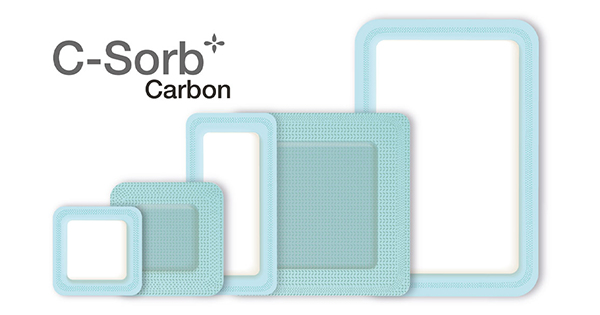
C-Sorb Carbon is a 2-in-1 superabsorbent dressing with an integrated activated charcoal layer. It is designed to absorb and retain moderate-to-high levels of exudate while simultaneously neutralising wound malodour.
C-Sorb Carbon features a superabsorbent polymer (SAP) core that swells and forms a gel on contact with fluid, locking exudate away from the wound bed and reducing the risk of maceration. Its unique Hydrophilic Dispersion Matrix (HDM) technology enables rapid absorption and even distribution of fluid throughout the core, helping to minimise uncomfortable bulking and reduce excessive pressure, including under compression therapy.
An integrated activated charcoal layer adsorbs and binds VOCs responsible for malodour. This layer is positioned above the superabsorbent core to ensure its odour-neutralising properties are not compromised. By addressing both exudate management and malodour, C-Sorb Carbon may improve patient comfort while managing moderate-to-heavy exudate levels (Richardson Healthcare, 2025).
The dressing is also available with an adhesive border (C-Sorb Carbon Border), allowing for secure yet gentle fixation, easier application to hard-to-dress areas and atraumatic removal. It is important to emphasise that C-Sorb Carbon should be used alongside appropriate treatment of the underlying causes of malodour, as it is not a substitute for comprehensive wound care.
Key messages
- Malodour is one of the most distressing symptoms for people living with acute and chronic wounds and can have a significant negative impact on quality of life
- Understanding the microbiological mechanisms underpinning wound odour supports more informed and effective assessment and management
- Devitalised tissue, biofilm formation and high bacterial burden are key contributors to persistent wound malodour
- Assessment of malodour remains inconsistent in clinical practice due to its subjective nature and the lack of standardised assessment tools
- Effective management should address both the underlying causes of malodour and the patient’s lived experience, with comfort and dignity as central goals
- Activated charcoal dressings, such as C-Sorb Carbon, can play a practical role in neutralising odour while supporting exudate management and patient confidence
- Person-centred communication and proactive, sensitive questioning about odour are essential components of high-quality, holistic wound care.