
This article reports the key findings from a symposium session at the Wounds UK annual conference on Monday 10th November 2025.
Introduction
Hard-to-heal wounds are a significant challenge within UK healthcare, accounting for approximately 67% of the £8.3 billion annual cost associated with wound care in 2017/18 (Guest, Fuller and Vowden, 2020). Hence most expenditure is consumed by wounds that fail to progress in a timely manner. Delays in effective treatment prolong healing and drive clinical complications and increased resource use.
At the 2025 Wounds UK Annual Conference, Convatec® hosted a symposium led by Alison Parnham, Clinical Nurse Specialist in Tissue Viability at Nottingham City Care, and Professor Julian Guest, Health Economist. The session explored the reasons wounds become chronic and difficult to heal. It also examined the implications of treatment delays, the importance of proactive management of biofilm and the role of evidence-based antibiofilm technologies in restoring progress. A key focus of the symposium was the presentation of new evidence for a multicentre randomised controlled trial (RCT) and accompanying health economic analysis comparing Aquacel® Ag+ Extra™ with Cutimed® Sorbact® in hard-to-heal venous leg ulcers (VLUs). Drawing on clinical data, real-world case studies and a structured approach to wound hygiene, the symposium emphasised the need for earlier recognition of biofilm in wounds that are not overtly infected, and more consistent application of effective treatments within community and acute care settings.
This report summarises the key scientific, clinical and practical messages from the symposium, including the latest RCT and economic outcomes showing improved healing rates, faster time to closure and lower overall costs associated with proactive antibiofilm intervention. This positions them within the wider national priorities of improving wound outcomes, reducing variation and strengthening antimicrobial stewardship.
Understanding hard-to-heal wounds
A wound is considered hard-to-heal when it does not progress through the expected phases of wound repair despite appropriate standard care (Bishop, 2021). While this definition is well understood by clinicians, the symposium highlighted that delayed recognition and suboptimal treatment selection remain common in practice, contributing to prolonged wound duration and avoidable escalation of care. Many wounds do not receive a clear diagnosis, meaning that underlying aetiologies and contributing factors often remain unaddressed (Morton and Phillips, 2016).
The symposium focussed on what differentiates wounds that stall despite appearing clinically “non-infected”. Professor Julian Guest and Alison Parnham emphasised that a large proportion of hard-to-heal wounds harbour biofilm-driven inflammation that is not captured by traditional signs of infection. This was reflected in the multicentre RCT presented by Beraldo et al (2025), in which 97% of VLUs enrolled were classified as not clinically infected at baseline.
Despite this, outcomes differed significantly depending on treatment choice. In the RCT, Aquacel Ag+ Extra demonstrated a 35% higher likelihood of healing within 12 weeks compared with Cutimed Sorbact, alongside a faster median time to wound closure (56 days vs 70 days). Importantly, wounds treated with Aquacel Ag+ Extra were also more than three times less likely to experience an adverse event, reinforcing the clinical consequences of addressing biofilm early.
These findings challenged the assumption that antimicrobial dressings should be reserved only for infected wounds and reframed biofilm as a key driver of delayed healing. Parnham linked these data to clinical practice, noting that visual indicators such as persistent slough, excess exudate, malodour or non-advancing wound edges should prompt consideration of covert biofilm and early antibiofilm intervention, even in the absence of classic infection signs.
The role of biofilm in delayed healing
Nearly 8 out of 10 hard-to-heal wounds contain biofilm (Malone et al, 2017), making it a common and often under-recognised contributor to delayed healing. Biofilm disrupts healing by maintaining a state of chronic, low-level inflammation, which can persist even when wounds appear clinically non-infected (Liu et al, 2024). Biofilms are structured communities of bacteria and other microorganisms encased within a protective extracellular matrix composed of polysaccharides, proteins, extracellular DNA and metal ions, creating a physical and biochemical barrier that limits immune clearance and reduces the effectiveness of antimicrobial therapies (Zhao, Sun and Liu, 2023). As a result, bacteria within biofilm can be up to 1000 times more tolerant to antimicrobials, contributing to treatment failure and prolonged healing (Sharif and Yadav, 2025).
Because biofilm is frequently covert, reliance on overt signs of infection can delay appropriate intervention. This helps explain why wounds may stall despite appearing stable or “non-infected” and reinforces the need for treatment strategies that address biofilm directly rather than waiting for clinical infection to develop.
While interventions such as debridement remove devitalised tissue and expose concealed bacterial communities, debridement alone does not significantly alter the wound microbiome or prevent rapid reformation of biofilm (Mohit and Das, 2023). Without adjunctive antibiofilm measures, inflammation and tissue degradation can quickly re-establish, returning the wound to a non-healing state.
Effective management of hard-to-heal wounds therefore requires a proactive, sustained antibiofilm strategy that extends beyond periodic debridement, supporting a transition from chronic inflammation towards a healing trajectory.
More Than Silver™ Technology in antibiofilm care
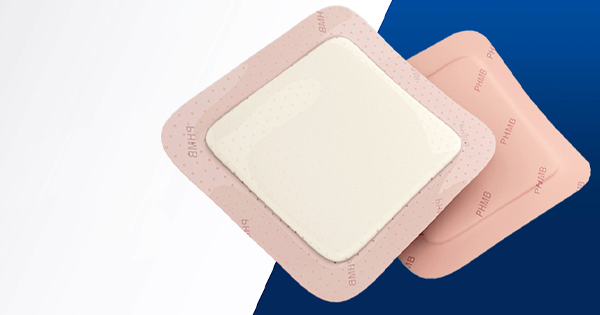
Convatec’s Aquacel Ag+ Extra is designed specifically to target the challenges posed by biofilm in hard-to-heal wounds. The More Than Silver technology incorporates a multimodal mechanism of action that disrupts, removes and destroys biofilm, rather than relying on antimicrobial activity alone (Convatec, 2025). This approach combines a chelating agent that binds metal ions within the extracellular polymeric matrix, a surfactant that weakens and disperses the biofilm structure, and ionic silver that provides broad-spectrum antimicrobial activity by killing bacteria released during disruption (Furtado, Siaw-Sakyi and Bowler, 2019). By targeting both the biofilm matrix and the bacteria it protects, this technology is intended to support wound progression in cases where silver-only dressings may be insufficient.
The clinical relevance of this approach was demonstrated in a multicentre RCT conducted in hard-to-heal VLUs, of which only 3% were infected (Beraldo et al, 2025). In this study, wounds treated with Aquacel Ag+ Extra were 35% more likely to achieve complete healing within 12 weeks compared with Cutimed Sorbact. Overall, 75% of wounds in the Aquacel Ag+ Extra group healed by week 12, compared with 56% in the Cutimed Sorbact group.
Among wounds that did go on to heal, time to closure was also significantly shorter with Aquacel Ag+ Extra, with a median healing time of 56 days compared with 70 days for Cutimed Sorbact, representing a 14-day acceleration in healing. In addition to improved efficacy, Aquacel Ag+ Extra demonstrated a more favourable safety profile, with wounds more than three times less likely to experience an adverse event compared with Cutimed Sorbact.
These findings reinforce the importance of selecting dressings that actively manage biofilm, rather than relying solely on antimicrobial action, particularly in wounds that remain static despite standard therapy. They also support earlier use of effective antibiofilm technologies in clinically non-infected wounds, where covert biofilm may be driving delayed healing and increasing the risk of deterioration (Kang et al, 2023).
Case studies
Two anonymised clinical cases were shared to show how a structured antibiofilm approach can support healing in long-standing wounds that have failed to progress with previous treatment strategies.
The first case involved an older adult male with rheumatoid arthritis, a fixed ankle joint and limited mobility, who had been living with a large, circumferential VLU for several years. His management involved daily dressings, with persistent high exudate levels, malodour and repeated antibiotic courses, despite no clear evidence of overt clinical infection. The ongoing leakage and odour had a significant impact on daily life and wellbeing, highlighting the wider burden of hard-to-heal wounds. Following the introduction of a structured wound hygiene protocol supported by Aquacel Ag+ Extra, visible improvement was observed within 9 weeks. Over following weeks, granulation tissue increased, exudate levels reduced and wound dimensions progressively decreased. By week 45, the wound had closed or was nearing complete closure, alongside notable improvements in comfort, confidence and quality of life.
The second case involved an older adult female with lymphoedema and well-controlled Type 2 diabetes, who had sustained a traumatic lower limb injury resulting in haematoma formation. Despite ongoing daily wound care, the wound remained open for approximately one year and continued to produce high levels of exudate. Using the same structured approach incorporating wound hygiene, effective cleansing, application of an antibiofilm dressing and appropriately adjusted compression, the wound demonstrated consistent signs of improvement. By week 7, exudate had reduced and healthy granulation was displayed, and by weeks 9 and 14 the wound had progressed substantially towards closure.
Both case studies show how wounds that previously failed to improve can re-enter a healing trajectory once biofilm is actively and consistently managed, reinforcing the clinical relevance of early, structured antibiofilm intervention in hard-to-heal wounds.
Wound hygiene as a proactive antibiofilm strategy
A structured approach to wound hygiene frames biofilm management as a routine and proactive component of every dressing change, rather than a reactive response to deterioration. The process begins with thorough cleansing to remove excess exudate, debris and surface contaminants. This is followed by debridement, which removes non-viable tissue such as slough and biofilm-laden deposits, helping to reduce the inflammatory burden within the wound bed. Refashioning of rolled or thickened wound edges further reduces areas that can harbour biofilm and supports epithelial development (Nair et al, 2025).
Once the wound has been prepared, the application of an effective antibiofilm dressing, such as Aquacel Ag+ Extra, supports disruption of residual biofilm, removal of its components and destruction of bacteria released during the process (Torkington-Stokes et al, 2024). Consistent application of this approach is particularly important in chronic wounds that have failed to progress with standard care. Wound hygiene should therefore be viewed as a sustained strategy rather than a one-off intervention, increasing the likelihood of restoring progress in stalled wounds.
The cost of delay: Clinical and system-level implications
Delays in diagnosing and managing hard-to-heal wounds carry significant consequences for both the patient and the healthcare system. Prolonged wound duration is associated with persistent pain, sustained inflammation, reduced mobility, increased risk of complications, emotional distress, sleep disturbance and social isolation related to concerns about leakage and malodour (Falanga et al, 2023). As wounds fail to progress, they often escalate in complexity, requiring more frequent clinical contact, higher dressing usage and increased specialist input.
Beyond the clinical burden, delayed healing drives substantial and avoidable costs. Hard-to-heal wounds require prolonged treatment, repeated appointments and in some cases escalation to hospital-based care or systemic antibiotic use (Marques et al, 2023). Reducing time to healing is therefore an important lever for improving efficiency as well as outcomes, particularly within community services managing high volumes of VLUs.
This relationship between healing speed and cost was a major focus of Professor Guest’s health economic analysis of the multicentre RCT (Beraldo et al, 2025). Using UK cost data and a six-month time horizon, the analysis demonstrated that treating hard-to-heal VLUs with Aquacel Ag+ Extra resulted in an average cost-reduction of more than £250 per patient compared with Cutimed Sorbact. These reductions were achieved alongside superior clinical outcomes, including higher healing rates and faster time to closure.
The cost benefit was consistent regardless of baseline wound size, indicating that earlier use of effective antibiofilm intervention can deliver economic value across a broad spectrum of hard-to-heal VLUs, rather than being limited to smaller or less complex wounds. Reduced treatment duration, fewer adverse events and lower ongoing resource use all contributed to the overall cost reductions observed.
Professor Guest (2025) concluded that treating hard-to-heal VLUs with Aquacel Ag+ Extra represents a cost-effective strategy for UK health services, delivering improved healing outcomes at lower overall cost compared with Cutimed Sorbact.
Integrating evidence into everyday practice
Effective practice requires clinicians to recognise when a wound is failing to progress and to respond with appropriate treatment. This involves regular, structured reassessment, awareness of wound appearance and behaviour, and an understanding of when healing has stalled (Clemett, 2025). Indicators such as persistent slough, ongoing exudate, malodour or a lack of measurable improvement over time should prompt timely review and modification of the treatment plan.
Biofilm management must be viewed as a core component of chronic wound care, rather than a specialist or reactive intervention. Because biofilm is rarely visible, waiting for overt signs of infection risks unnecessary delay and deterioration (Bjarnsholt et al, 2016). Introducing antibiofilm strategies earlier, particularly in wounds that are static despite standard therapy, can help interrupt chronic inflammation and restore healing momentum. Technologies designed specifically to address biofilm, such as Aquacel Ag+ Extra, provide clinicians with a proactive option for managing this hidden barrier to healing.
Treatment selection should therefore be guided not only by wound appearance but by evidence of clinical and economic effectiveness. Choosing dressings that manage exudate, protect the periwound skin and actively target biofilm can influence both healing outcomes and patient experience (Davies, Harish and Price, 2015). The evidence presented reinforces the value of moving beyond traditional or silver-only approaches that may not adequately address biofilm, towards solutions with demonstrated impact on healing progression and resource use.
Discussion
Hard-to-heal wounds often persist for long periods, restricting mobility, contributing to pain and undermining quality of life (Falanga et al, 2023). Biofilm plays a key role in sustaining this chronicity, yet it often goes unrecognised or untreated, allowing wounds to remain static despite ongoing care.
Targeted antibiofilm interventions have been shown to change this trajectory. In a multicentre RCT, Aquacel Ag+ Extra achieved 35% more healed wounds at 12 weeks than Cutimed Sorbact. Wounds that did heal closed 14 days faster and adverse events were more than three times less frequent. These outcomes demonstrate improved efficacy alongside a more favourable safety profile.
Clinical gains were matched by economic benefit. Use of Aquacel Ag+ Extra delivered an average cost-reduction of over £250 per patient over six months, while achieving better healing outcomes at lower overall cost.
Real-world case studies show how structured wound hygiene, supported by effective antibiofilm technology, can enable long-standing wounds to re-enter a healing pathway. Timely assessment, proactive treatment and the adoption of clinically and economically proven antibiofilm strategies are therefore essential to improve outcomes, reduce variation and minimise the cost of delay.