Wound healing is a complex process influenced not only by biomedical factors but also by cultural beliefs and practices. This article follows part 1 in this series, which considered the limitations of the philosophy of science and the role of faith in evidence-based practices, examining the interplay and mutual shaping of superstitions, rituals and scientific approaches in understanding and treating wounds across different cultures. Despite significant advancements in medical science, traditional and superstitious beliefs about wound aetiology and treatment persist, impacting patient outcomes and healthcare practices.
This article also highlights the persistent role of ritualistic practices among healthcare providers, the impact of knowledge deficits on wound care, and potential solutions to bridge the gap between traditional beliefs and evidence-based practices. By enhancing education, improving diagnostic tools, and fostering culturally sensitive communication, the article argues for a more holistic and patient-centred approach to wound care. Through interdisciplinary collaboration and respect for cultural beliefs, healthcare providers can better address the complex needs of patients and improve outcomes in wound treatment.
The role of superstition in the interpretation of wound aetiology and treatment across cultures
Despite significant advancements in the pathology and epidemiology of wounds, wound-specific superstitions remain prevalent in some parts of the world, reflecting the challenges with a purely rationalism-based outlook on medicine, as discussed in Part 1 of this series.
Contemporary ethnographic studies in Cameroon (Peeters Grietens et al, 2012), Ghana (Koka et al, 2016), Sweden (Hjelm and Apelqvist, 2016) and India (Dash et al, 2020) have highlighted the nature of some superstitious beliefs held by people within African, Asian and European migrant communities. These studies build on and reflect earlier seminal work, such as Maclean’s extensive ethnography on ‘magical medicine’ in Nigeria in the 1970s (Maclean, 1970). Beliefs reported within these studies include the common theme that wounds are, in some cases, the result of witches, wizards, ancestral spirits or sorcery and that healing requires warding off ‘evil’ spirits or adhering to traditional or ritualistic healing practices, some of which would be considered actively inimical to healing based on contemporary scientific evidence.
In Ghana, among some communities, people with Buruli ulcers, wounds are categorised into two distinct types: ‘normal’ wounds, which heal quickly and are referred to as ‘fla,’ ‘abi,’ or ‘akuro’ depending on the local dialect, and more persistent wounds termed ‘aboabone,’ ‘akuro bone,’ or ‘abivordi’ (Koka et al, 2016). These terms would appear to correspond to ‘acute’ and ‘chronic’ wounds, respectively, in English-speaking countries.
Whilst ‘normal’ (acute) wounds are typically treated with biomedical methods, non-healing wounds are often attributed to supernatural causes and thus attract non-biomedical healing strategies. Koka et al, (2016) reported that deviating from the supernatural methods described for managing these wounds was believed to result in severe consequences, including infertility and death.
Among Muslim migrant populations in Sweden with diabetic foot ulcers, there is a general acceptance of scientifically-based medical advice, albeit with a more fatalistic attitude towards long-term outcomes, perceived as the ‘will of Allah’ (Hjelm and Apelqvist, 2016). An example of this attitude is clear in this quote from one participant:
“As a good Muslim, I do not bother even if I die; it is OK, and I accept it.”
This outlook potentially reduces the emphasis on controllable factors, such as glycaemic control, leading to worse outcomes (Hjelm and Apelqvist, 2016). It is important to consider, however, that these findings may not represent the attitudes of Muslims towards wound care more broadly, and a holistic approach must be taken when developing an understanding of patient needs and expectations as part of clinical assessments.
The sources and perpetuation of superstitious beliefs in wound care were explored in a study by Dash et al (2020) in the context of burns patients in India. They found a wide range of superstitious beliefs reported by patients, including that eating white foods leads to suppuration of the wound, drinking pomegranate juice increases haemoglobin and fasting may improve healing in burns, among other both harmful and potentially harmless beliefs.
Notably, the study reported that 30% of people could not explain why they followed these practices, 45% felt there was a scientific basis for their superstitious beliefs, and 55% indicated they would not have changed their beliefs should they have been provided education beforehand. Whilst these results must be interpreted cautiously due to the limited sample size (100 patients) and lack of robust validation of data collection tools, they do suggest some potentially unexpected dynamics. Specifically, superstitious beliefs may be entirely untethered to cultural or religious doctrines known to the patient, they may be resistant to education by professionals, and there is an interaction between perceptions of scientific credulity even in entirely unevidenced, in some cases actively harmful practices (i.e. fasting to heal burns).
Potential explanations for this phenomenon have been suggested in a study by Foster and Kokko (2009), which explored the potentially evolutionary value of these seemingly irrational casual associations made by people suffering potentially life-threatening situations.
Superstitious practices, though seemingly irrational, can be favoured by natural selection if the occasional correct association between events offers significant survival benefits.
Their statistical model shows that frequent errors in causal associations are adaptive when the cost of missing a true association is high. This explains why both animals and humans exhibit superstitious behaviours as part of their adaptive strategies. For example, applying honey to wounds is an ancient practice. While it might not always help, the times when it prevents infection or promotes healing due to its antibacterial properties make it a favoured practice, and its use in wound care was certainly not the result of structured scientific inquiry given its use predates physiological understanding of healing or infection by millennia.
Despite the variation in superstitious or religious beliefs associated with wound aetiology and treatments, a common theme emerges across these ethnographic studies. Belief in superstitious explanations does not necessarily conflict with the acceptance of scientific explanations for wounds or their treatment. This phenomenon was described by Peeters Grietens et al (2012) as ‘dual-causality.’ While dual-causality reflects adaptability in patient belief systems, it also underscores the need for nuanced clinical approaches that do not dismiss traditional beliefs outright.
Encouraging dialogue that respects both perspectives can help patients navigate their treatment options more effectively. For example, combining traditional rituals with clear explanations of biomedical principles may improve adherence and outcomes. Similarly, part one of this series discussed how faith in biomedical treatment often coexists with faith in more traditional or superstitious systems of healing. This ‘dual-causality’ is also present in Western contexts, where patients may accept scientific evidence while engaging in rituals or superstitions, reflecting a blend of faith and reason in medical practice. For example, in Cameroon, Burulli ulcer disease (BUD) can be simultaneously perceived to be naturally transmitted by a microbe, and it can also be believed that the insects transmitting this microbe were ‘sent’ by a sorcerer, reflecting a secondary and mystic level of causality.
Clinical rituals in wound care
Despite significant advancements in the scientific understanding of wound healing, clinical decision-making processes often remain rooted in ritualistic behaviours rather than evidence-based methods. These rituals, broadly defined as repetitive practices with no clear technical effect (Strange, 2001), can arise from various factors, including gaps in scientific evidence or practical constraints. However, it is important to note that while evidence deficits could explain a default to ritualistic practices, there is limited qualitative evidence directly linking these gaps to the observed behaviours in wound care. Instead, the formation of these rituals may stem from other factors, such as professional culture, ingrained habits, or psychological responses to uncertainty.
As highlighted in Table 1, studies over the decades have documented persistent ritualistic approaches in wound care. Nurses often rely on habitual dressing choices or past successes rather than systematic clinical assessment.
A recent ‘think aloud’ study revealed significant variation in how nurses interpret wound data during assessments, with decisions frequently shaped by personal opinion or uncritical adherence to medical prescriptions (Smet et al, 2024). These practices, while not superstitious in nature, share behavioural parallels with superstition, such as inappropriate confidence in causal relationships between actions and outcomes.
The overlap between professional rituals and the psychological underpinnings of superstition underscores the adaptive role of rituals in managing uncertainty and providing structure in complex care contexts. However, the persistence of these rituals, even in the absence of clear evidence deficits, suggests they may serve functions beyond compensating for gaps in knowledge, potentially reflecting broader cultural or emotional needs within the professional setting.
By examining the findings in Table 1 alongside broader cultural and superstitious behaviours, this section highlights how ritualistic tendencies in wound care reflect universal responses to uncertainty. Addressing these dynamics requires bridging cultural and clinical domains, enhancing education, and improving evidence-based tools to minimise reliance on ritualistic practices while recognising their psychological utility. This integrated perspective reinforces the need for holistic strategies in wound management, enriching the broader narrative of how uncertainty influences both patients and clinicians.
Knowledge deficits and diagnostic challenges
It has been argued that education and specialised wound care courses may be a potential solution to issues of ritual and variation in the practice of wound care (Smet et al, 2024). However, it is also arguable that broader scientific knowledge deficits in wound healing are likely to contribute towards inconsistent decision-making and, therefore, outcomes in wound care. While these deficits may provide a plausible explanation for the emergence of ritualistic practices, there is limited qualitative evidence directly linking knowledge gaps to these behaviours. Rituals may instead arise from other factors, such as professional norms, emotional coping mechanisms, or perceived external pressures, including legal and institutional expectations.
Unlike other fields of medicine, diagnostic and treatment processes for wounds remain relatively underdeveloped. There remain no empirical and objective tests for many of the major causes and complications of wounds. For example, there is no definitive test for wound infection, which remains a clinical diagnosis (International Wound Infection Institute, 2022).
Causes of wound chronicity, such as dysregulated protease levels, hypoxic wound bed tissues, moisture levels, pH and microbial colonisation, also all lack robust, objective, and readily available tests to determine their relative impacts and, therefore, the efficacy of any specific wound treatment aimed to address them. In many areas, wound measurement, arguably the cornerstone of wound assessment and the most valuable in determining wound healing (or non-healing), is still conducted using paper rulers (Wynn and Clark, 2022). This is despite wounds typically not being recti-linear shapes and, therefore, often impossible to accurately measure manually.
These factors are compounded by the general lack of quality evidence guiding treatment. Cochrane, which publishes high-quality reviews on wound care interventions, frequently finds no robust evidence supporting them. The resulting uncertainty creates fertile ground for the development of habitual or ritualistic practices among clinicians, as discussed in Table 1. These broader deficits in knowledge, lack of concrete metrics from which decisions may be made, and the highly visible nature of outcomes in wounds (i.e. healing or non-healing) arguably make clinical decision-making in wound care vulnerable to precisely the type of false causal associations described by Foster and Kokko (2009). For example, the perceived efficacy of a specific dressing may be attributed to an isolated instance of success rather than robust evidence.
It has been suggested that ritual may be a mechanism to reduce anxiety in situations where decision-making involves uncertainty (Philpin 2002), which is understandable given the aforementioned challenges in wound care. However, these behaviours may also persist due to institutional and cultural factors, such as time constraints, limited access to specialised knowledge, and the reinforcement of established norms within healthcare teams. In defense of such limitations to current practice, it is also worth considering the challenges inherent in conducting studies of wounds in relation to, for example, treatment efficacy, prognostics, and diagnostics due to the unusual pragmatic challenges related to this in wound care. Specifically, the challenges in obtaining access to appropriately homogenous sample groups with which to utilise ‘gold-standard’ randomised controlled trial methods.
Finally, the role of increasing litigiousness in relation to healthcare has long been associated with the development of rituals, particularly in nursing (Strange, 2002). For example, in the case of pressure ulcers, considerable effort is made to ensure documentation is adequate to avoid litigation. In many cases, this documentation involves the completion of risk assessments that have no demonstrated impact on pressure injury incidence or prevention (Moore and Patton, 2019).
In relation to interventions, systematic evidence reviews have consistently found either no or unreliable evidence indicating the efficacy of available interventions to prevent or treat pressure injuries (National Pressure Injury Advisory Panel et al, 2025). Despite this, rituals, such as completing risk assessments, are often perpetuated, potentially as a form of defensive practice, reinforcing behaviours not necessarily aligned with evidence-based care.
The persistence of superstitious beliefs in wound care, despite advancements in broader scientific understanding of wound healing processes, reflects a complex interplay between cultural traditions, knowledge deficits, the challenges inherent in wound diagnosis and treatment, and litigious culture.
In regions where biomedical resources might be limited or distrusted, such as Ghana and Cameroon, supernatural explanations for wounds offer a framework for understanding and managing these conditions. Similarly, even in more medically advanced contexts like Sweden, cultural and religious beliefs shape perceptions and acceptance of medical advice. This is likely compounded by the ongoing reliance on ritualistic practices in clinical settings by professionals. Driven by genuine knowledge deficits, pragmatic challenges in scientific methodologies to develop new insights, and the complex relationships between medico-legal systems and professional practice cultures, highlighting the need for more nuanced research into the origins of these behaviours and their impact on patient outcomes.
Discussion and implications for practice
The persistence of superstitious beliefs in wound care highlights the complex interplay between cultural traditions, knowledge deficits, and the limitations of scientific approaches in fully addressing patient needs. As argued in part one, scientific rationalism, while highly effective, cannot address the emotional or existential dimensions of illness that patients grapple with. The gaps left by science are often filled by ritual or superstition, providing patients with a sense of agency and understanding in a context where purely scientific approaches may feel insufficient. Addressing these issues requires a holistic strategy that integrates cultural sensitivity, enhanced education, new knowledge generation and improved diagnostic tools. Ethnographic studies reveal that traditional and superstitious beliefs often coexist with biomedical practices. For example, in Ghana, chronic wounds are frequently attributed to supernatural causes and treated with traditional methods (Koka et al, 2016).
In contrast, Muslim migrant populations in Sweden may accept scientific medical advice but maintain a fatalistic attitude toward long-term outcomes, viewing them as the ‘will of Allah’ (Hjelm and Apelqvist, 2016). Understanding and respecting these beliefs is crucial for healthcare providers. Engaging in culturally sensitive communication may build trust and encourage patients to incorporate evidence-based practices alongside their traditional healing methods.
The arguments presented in this article illustrate how ritual, superstition, and science interact in the context of wound care. Rituals, which provide a sense of agency and control, often combine practical and superstitious elements. They help structure actions for stability, offering psychological comfort and a framework for dealing with wounds, especially when scientific explanations are lacking or insufficient. Superstitions, on the other hand, offer comfort where science does not, providing answers to existential questions and influencing the interpretation of scientific knowledge. While science provides an understanding of wound physiology and treatment, it often fails to address deeper existential questions, such as “Why must I have this wound?” This gap can lead individuals to turn to superstitious beliefs for comfort and explanations.
Knowledge deficits among healthcare providers may also contribute to the continuation of ritualistic practices. Studies have shown that nurses often rely on personal experience and opinion rather than evidence-based guidelines (Draper, 1985; Sprecht et al, 1995; Blackburn et al, 2019; Guest et al, 2020). The lack of objective tests for conditions such as wound infection and chronicity contributes to uncertainty and reliance on potentially ineffective ritualised practices.
Advanced diagnostic technologies, such as imaging tools, biochemical markers and smart dressings (Dong and Guo, 2019), may provide precise data, improving clinical decision-making. High-quality research is needed to fill gaps in wound care knowledge to compete effectively with alternative explanations which may be entirely unrelated to objective observations of wound phenomena and potentially a result of instinctive attribution of causal relationships between phenomena (Foster and Kokko, 2009) which have proven resistant to education interventions in some cases (Dash et al, 2020).
Counselling, patient education and support groups can help patients cope with the emotional and social challenges of chronic wounds (Ren et al, 2021). Crucially, a patient-centred approach is vital for bridging the gap between scientific and traditional practices. Involving patients in their treatment plans and, respecting their beliefs, and critically, what they offer, which science is unable to address. Shared decision-making models empower patients and improve adherence to evidence-based treatments.
Finally, engaging with anthropologists and sociologists, potentially within clinical teams, may provide insights into cultural practices and beliefs and inform the design of respectful and effective interventions. In the UK, the population is increasingly diverse due to the accelerating rate of immigration, exceeding ‘natural change’ in population levels for most of the last 20 years (Cangiano and Brindle, 2024). This suggests an increasingly diverse range of both religious and cultural belief systems are likely to become prevalent within UK health services.
By integrating these interdisciplinary insights, healthcare providers may develop more effective, culturally sensitive strategies for wound care, improving patient outcomes by ensuring that, at the very least, beliefs or perspectives likely to lead to poorer wound outcomes may be mitigated.
Further consideration of what clinical interventions to address such challenges may look like is required, however, and requires careful thought. Examples of this could include direct and continuous dialogue between clinicians and spiritual/religious leaders, engagement directly with online communities who share and promote alternative forms of medical ‘knowledge,’ and the development of patient education programs that respectfully incorporate traditional beliefs while introducing evidence-based practices. While this article has sought to connect clinical ritualism with the broader theme of superstition, future work could expand on ritualism as a distinct phenomenon, offering deeper insight into its origins, cultural functions, and implications for healthcare practice.
By avoiding a sole focus on what the scientific evidence may provide and incorporating open discussion of spiritual/supernatural beliefs into clinical conversations, the ability of the latter to interfere with the former and vice-versa may be avoided.
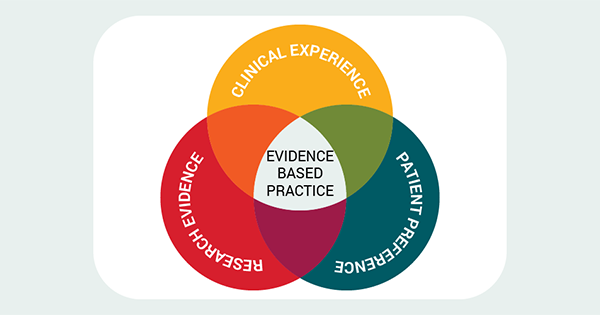
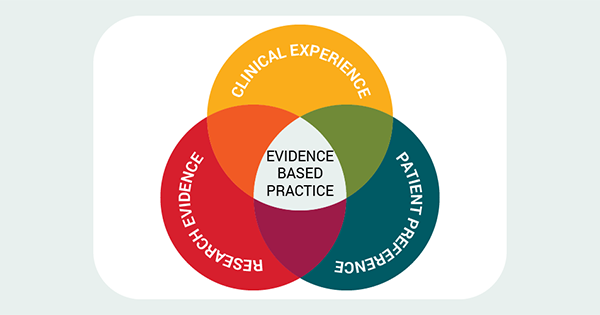
Asking questions, such as ‘why do you think you have this wound?’ or ‘why do you think this wound won’t heal?,’ may help reveal beliefs that could help practitioners identify these potential conflicts, which may not be addressed solely by rational-secular information giving. This reflects a philosophical competence and perhaps a broader ontologically critical-based practice rather than purely an evidence-based practice, allowing clinicians to understand and engage with the broader belief systems that shape a patient’s perception of health and illness and evaluate these critically in a ‘holistic’ sense rather than focussing solely on what science has to offer in terms of helping patients understand and manage their wounds. This does not necessitate the potentially dangerous scientific endorsement of overtly harmful practices, but instead a pragmatic acceptance of their presence within the patient experience and needs to be considered within care planning.
Conclusion
Drawing on evidence from clinical, anthropological, sociological and biological studies, this two-part series sought to elucidate the mechanisms and significance of superstition, ritual and science in wound care. The persistence of superstitious beliefs in wound care highlights the need for a healthcare delivery approach that respects cultural traditions while integrating scientific advancements.
By understanding the complex social interplay between ritual, superstition, the philosophical and pragmatic limitations of the scientific method applied to wound-related challenges and the potential evolutionary basis for what appear to be irrational causal relationships drawn between phenomena, healthcare providers may develop strategies that bridge the gap between superstition and evidence-based practices and hopefully avoid unhelpful rituals.
As explored in Part 1, the coexistence of science and superstition reflects the limitations of empirical methods to fully address human experiences of illness, highlighting the need for healthcare practices that integrate both cultural sensitivity and philosophical depth. Enhanced education, improved diagnostic tools, novel research methods, and interdisciplinary collaboration are essential to addressing knowledge deficits and reducing reliance on practices that may harm wound healing whilst respecting the contribution of spiritual beliefs, which provide comfort where science cannot.
Crucially, it is argued that an ontologically critical-based practice is needed in place of solely evidence-based practice to help support patients to cope with their wounds in some cases. This reflects the inherent limitations of what evidence can be gathered using scientific methodologies and consequently, what types of questions in relation to human suffering they may provide.