Moisture-associated skin damage (MASD) is a form of irritant contact dermatitis. It develops from prolonged exposure of the skin to various sources of moisture and irritants, such as urine, faeces, intestinal fluids, digestive secretions, mucus, saliva, perspiration and wound exudate, and in more severe cases can lead to superficial skin loss (Fletcher et al, 2025).
MASD includes distinct forms of skin damage or loss, such as incontinence-associated dermatitis (IAD), peristomal complications, Intertriginous dermatitis (intertrigo) and periwound moisture-associated dermatitis.
The development of MASD involves more than bodily fluids alone. Rather, skin damage is influenced by multiple factors, including chemical irritants within the moisture source (e.g. proteases and lipases in faeces, drug metabolites), pH, associated microorganisms on the skin surface (e.g. commensal flora) and mechanical factors such as friction (Black et al, 2011).
Emerging evidence now highlights the links between MASD and other skin conditions such as cutaneous infection and pressure ulcers (Beeckman et al, 2015). Adopting a holistic, integrated approach, focused on prevention strategies and the importance of skin integrity, can have overall beneficial results and help to break down barriers to effective care in practice (Beeckman et al, 2020). Clinicians must be vigilant, both in maintaining optimal skin conditions and in diagnosing and treating early stages of MASD to prevent progression and skin breakdown (Black et al, 2011).
Avoidable skin damage continues to cause harm, discomfort and delays in healing across healthcare settings. Flen Health, in partnership with Wounds UK, created the 2025 Best Practice Statement Understanding types of moisture-associated skin damage (MASD): prevention, identification and management (Fletcher et al, 2025), and this document was the centre piece of the expert meeting.
At the meeting, clinicians explored how consistent, evidence-based skin care can reduce avoidable harm linked to all forms of MASD, including IAD, periwound, peristomal and intertriginous skin conditions. A selection of clinicians from community, social and acute care backgrounds were invited to discuss these issues.
The overall aims of the expert meeting were to:
- Gain insight from clinicians about their understanding and experience of MASD.
- Gain insight into the effectiveness of the 2025 MASD Best Practice Statement (Fletcher, 2025).
- Understand current care protocols versus those presented in the Best Practice guidelines (similarities and gaps).
- Discuss key factors that influence clinical decision-making around MASD.
- Learn what currently drives product treatment choice for moderate to severe MASD, including the prevention and treatment of fungal infections.
Current landscape of MASD
The clinicians in the expert group generally see a mixture of presentations and aetiologies that fall under the MASD umbrella – i.e. IAD, peristomal complications, intertrigo and periwound moisture-associated dermatitis [Figure 1].
The majority of referrals for MASD come via residential and nursing homes and, in these cases, are largely related to IAD. In all care settings, anecdotal evidence strongly indicates that IAD is the primary type of MASD treated, followed by peristomal dermatitis.
In addition to those from care homes, referrals from district nurses are also seen in practice. In the acute setting, the pathway to care tends to be via direct referrals from wards, with referrals from ward managers for treatment.
Ideally, referrals should be made to Tissue Viability specialists; however, this is not currently happening in most settings. When referrals are made, they are often delayed and the MASD is already quite severe. Once referred, MASD is easier to diagnose and manage, as Tissue Viability Nurses (TVNs) request photographs on admission and weekly updates to monitor wound progress.
The importance of prevention and core principles of MASD management
It is universally agreed that the key element of MASD management is prevention – taking measures to protect the skin before damage occurs.
Although MASD is often described using different subtypes, the most effective management approach is not based on subtype, but rather identifying the cause of skin damage quickly and focusing on prevention.
In practice, MASD management can become unnecessarily complex when multiple products are used without a clear rationale. Layering products may increase the treatment burden, reduce consistency of care and cause confusion among staff. Secondary infections, particularly fungal infections, are common across all MASD presentations and can be harder to manage when multiple products are involved or staff education is limited. Using a clear, simple pathway with multimodal products helps prevent infection, including fungal complications, and supports consistent, effective care.
MASD management can be guided by five core principles, which together provide a consistent, practical framework for prevention and clinical decision-making, applicable across all MASD presentations regardless of cause or severity [Table 1]. A visual overview of these principles is shown in Figure 2.
There is also a need to focus on the patient and their individual needs, as opposed to task-oriented wound care. Ritualistic practice – or, doing things because ‘that is the way we have always done them’ – can be counter-productive and is often not the best course of action for the individual patient.
Factors influencing treatment options
When any damage to the skin occurs as a result of MASD, several factors need to be considered as part of the decision-making process when choosing treatment options:
- Key clinical features.
- Risk factors.
- Severity of skin breakdown.
- Tissue type – is it sloughy? Is debridement needed?
- Infection risk, particularly fungal infection.
- Cleansing, protecting and restoring the skin.
- Risk of pressure damage, particularly if the affected area overlies a pressure-prone site.
- Any additional factors that need to be considered for the individual or patient group (e.g. anti-fungal treatments as part of their individual care pathway).
In some cases, the subtype of MASD may influence treatment choice. For example, peristomal skin damage requires products that do not interfere with appliance adhesion.
Applying the principles in practice
While the core principles provide a consistent framework for decision-making, they must be adapted to the severity and progression of skin damage. Table 2 demonstrates how these principles can be applied across increasing stages of MASD severity using a structured treatment pathway. This pathway supports timely escalation or de-escalation of care while maintaining a clear and consistent approach.
Escalation of care in moderate to severe MASD
In moderate to severe MASD, additional considerations include infection risk and whether treatment needs to be stepped up or stepped down over time. This may involve introducing additional products to manage exudate, provide antimicrobial protection or support healing, while maintaining a clear and consistent treatment pathway.
Use of Flaminal® in practice
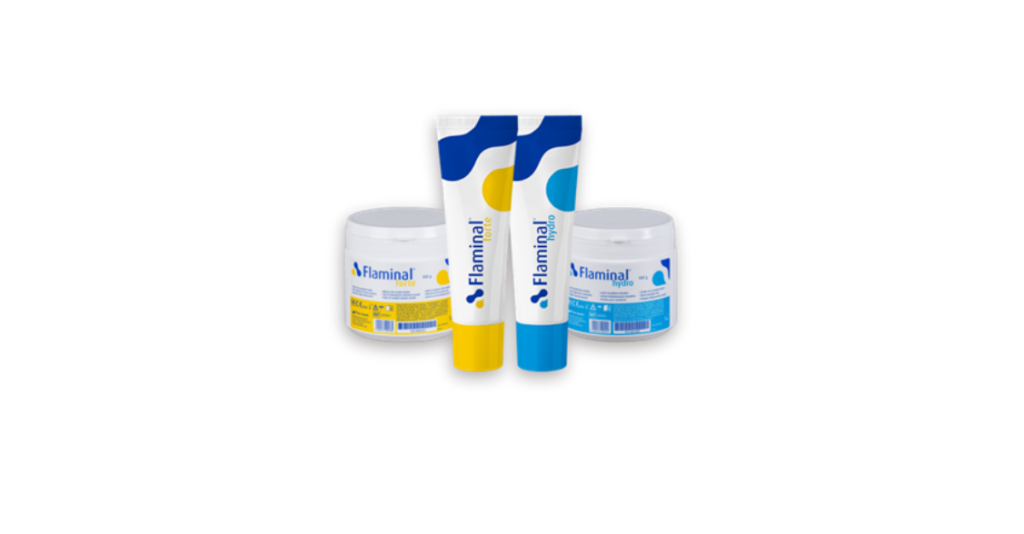
Flaminal® (Flen Health) is a primary wound dressing known as an enzyme alginogel. It is available in two formulations: Flaminal® Hydro and Flaminal® Forte. Flaminal® Hydro is indicated for slight to moderate levels of exudate, while Flaminal® Forte is suitable for moderate to high levels of exudate.
The group agreed that there is a need for Flaminal® Hydro and Flaminal® Forte in practice for the management of moderate to severe MASD. Importantly, these products are non-cytotoxic and safe for use across all age groups, so there is low risk in using it as a treatment.
A major benefit of Flaminal® Hydro and Flaminal® Forte, as identified by the panel, is their ability to provide antimicrobial protection, including against certain fungi, which can also cause infections associated with MASD.
Multimodal products can help simplify MASD care. Flaminal® Hydro and Flaminal® Forte are multimodal products that provide exudate management, antimicrobial protection and enables autolytic debridement in a single product. This allows them to be used by clinicians with a range of skill sets and helps reduce the need for more complicated treatment options that may create confusion in practice. In this context, they are considered ‘easy’ and ‘safe’, providing a simple and safe solution.
One group member noted that, in their experience, using Flaminal® Hydro or Flaminal® Forte works best when started early to prevent further deterioration and complications such as infection. Therefore, Flaminal® Hydro or Flaminal® Forte should be used as soon as moderate skin damage is evident.
Skin tone
The Best Practice document (Fletcher et al, 2025) advocates including skin tone as part of the MASD assessment process. However, the group felt that more education is generally needed around identifying and preventing MASD on different skin tones. Diversity is needed within educational resources and skin tone needs to be embedded in assessment and care pathways.
It is recommended that skin inspection with an awareness of skin tone should be carried out as part of a full holistic assessment that includes the patient’s skin, their overall health and medical history, and their wound, ensuring that care is tailored to the individual and their needs (Dhoonmoon et al, 2021). The patient’s baseline skin tone should be established, so that the skin can be monitored for any changes, using a structured tool such as the skin tone tool (Dhoonmoon et al, 2021; adapted from Ho and Robinson, 2015). Anecdotal evidence from clinicians who have used a skin tone assessment tool in practice reported positive outcomes in practice.
Language and communication
A common challenge identified is that there is frequent confusion, and some frustration, around the use of language to define moisture wounds. Specifically, this tends to include confusion of terminology (with MASD, periwound and maceration all being used as interchangeable terms). Additionally, pressure ulcers (PUs) are reported alongside moisture lesions, meaning specific MASD is not the lead complaint and may be overlooked. In some cases, only IAD is reported, without linking this to MASD.
It should be noted that the term ‘MASD’ originated from research funding and is a newly implemented term. Within practice, the term ‘maceration’ or ‘moisture lesion’ is sometimes more easily understood; understanding is the most important factor when considering language and terminology, as misunderstandings can cause confusion in identifying the correct cause and the correct cause delays to treatment, impacting patient health and outcomes.
MASD referral and diagnosis can be complicated by terminology; in particular, there can be confusion between PUs and medical adhesive-related skin injuries (MARSI). In addition, IAD can be confused with intertrigo. MASD and MARSI are treated in different ways, as are IAD and stoma care; however, there is conflation of treatment due to overly complicated terminology. These challenges often complicate and delay referrals for MASD, resulting in waste of practitioner time and resources (and impacting patients).
Staff education
When considering MASD treatment, it is important to think about who will be carrying out the day-to-day care of patients. Care is often provided by care home workers, unregistered carers or healthcare assistants, who will need to have appropriate knowledge of the skin and how it can be protected and treated.
It is important that knowledge and education is translated to staff at all levels, at an appropriate level to maximise understanding. There may, for example, be language barriers or some people may be more visual learners, so education should be made accessible (for example, in digital format).
Implementing best practice needs involvement at all levels, and consideration for how this can be achieved. Structured care pathways can help to simplify decision-making and help to embed best practice.
Industry-supported education was also discussed as a potential enabler. Education provided by company representatives was recognised as valuable in terms of resource support and product knowledge, while education led by clinicians with direct patient care experience was viewed as offering greater practical relevance and educational value for staff. The panel emphasised the importance of maintaining an appropriate balance between industry involvement and clinician-led education to ensure credibility, independence and meaningful learning outcomes.
To drive improvement within MASD prevention and management, there is a need for data collection and joined-up thinking; for example, it is recognised that IAD represents a significant risk factor for the development of severe pressure ulcers.
Conclusion
When managing MASD, prevention is the most important aspect. When damage occurs, the cause needs to be identified so that a prevention plan can be put in place. Product selection can be confusing as so many different options are available, so a safe, multimodal product option that can be widely used for both prevention and treatment should be implemented across departments.
Staff at all levels need to be educated about the importance of prevention, continuous assessment and treatment. This needs to be made as simple as possible to ensure the widest possible uptake. The Best Practice Statement can be used to encourage education and embedding care pathways in practice, providing education that can be tailored to staff at all levels.