Chronic wounds, including leg ulcers, represent a significant burden to both patients and the NHS (Guest et al, 2015; National Wound Care Strategy Programme [NWCSP], 2020). Venous leg ulcers, most commonly caused by chronic venous insufficiency, account for the majority of leg ulcers (60–80% of cases) and are often recurrent and slow to heal (NICE, 2024). They can significantly impact a patient’s quality of life, contributing to pain, reduced mobility and social isolation, while also increasing healthcare costs and use of clinical resources (Guest et al, 2020).
The incidence and prevalence of wounds are expected to rise among individuals with obesity, diabetes, advancing age and lower-limb arterial disease; correspondingly, the burden of leg ulcers is also anticipated to increase (Sen, 2019). The financial cost of managing leg ulceration is high when including nursing care, medical care and treatment-related costs, e.g. wound dressings, compression systems, community visits and hospital care.
Urwin et al (2022) estimated that the national cost of managing venous leg ulcers was £102 million, with an annual per person cost of £4,787.70, using data collected from community activity, from the VenUS IV study (Ashby et al, 2014). For individuals whose venous leg ulcer was the primary (and most severe) wound, the mean 2-week treatment cost was £166.39 (95% CI [£157.78–£175.00]), with community staff time accounting for more than half of this expenditure. Costs were notably higher when antimicrobial dressings were used and when wound care was delivered in the patient’s home.
Despite clear evidence-based recommendations, variation in lower-limb wound management continues to exist across England, contributing to increased care costs, extended healing times and poorer patient outcomes (NWCSP, 2023; Atkin et al, 2024).
National treatment recommendations, including the NWCSP (2020), emphasise the importance of early assessment and prompt initiation of appropriate treatment for lower limb wounds. Compression therapy remains the gold standard for the management of venous leg ulcers, supporting venous return, reducing oedema, and improving healing outcomes (O’Meara et al, 2012; Wounds UK, 2022).
The NWCSP recommends that immediate and necessary care for lower-limb wounds should include the application of mild graduated compression, where red flag symptoms are excluded (NWCSP, 2020). This approach aims to reduce delays in treatment and promote a more standardised model of care across healthcare settings.
Early initiation of compression is a key component of effective management of patients with venous leg ulcers and is associated with improved healing outcomes. Evidence demonstrates a statistically significant improvement in healing rates when compression is used compared with no compression (Shi et al, 2021; Patton et al, 2023).
However, in practice, translating these recommendations into care delivery remains challenging due to a range of factors, including service limitations, uncertainty in clinical decision-making and variation in local processes.
Clinical issue requiring change
Within a large acute NHS Trust, patients presenting with lower-limb wounds were not consistently receiving compression therapy in line with best practice. This was largely due to practical and clinical barriers, as well as the historical perception that the community setting was primarily responsible for delivering this care.
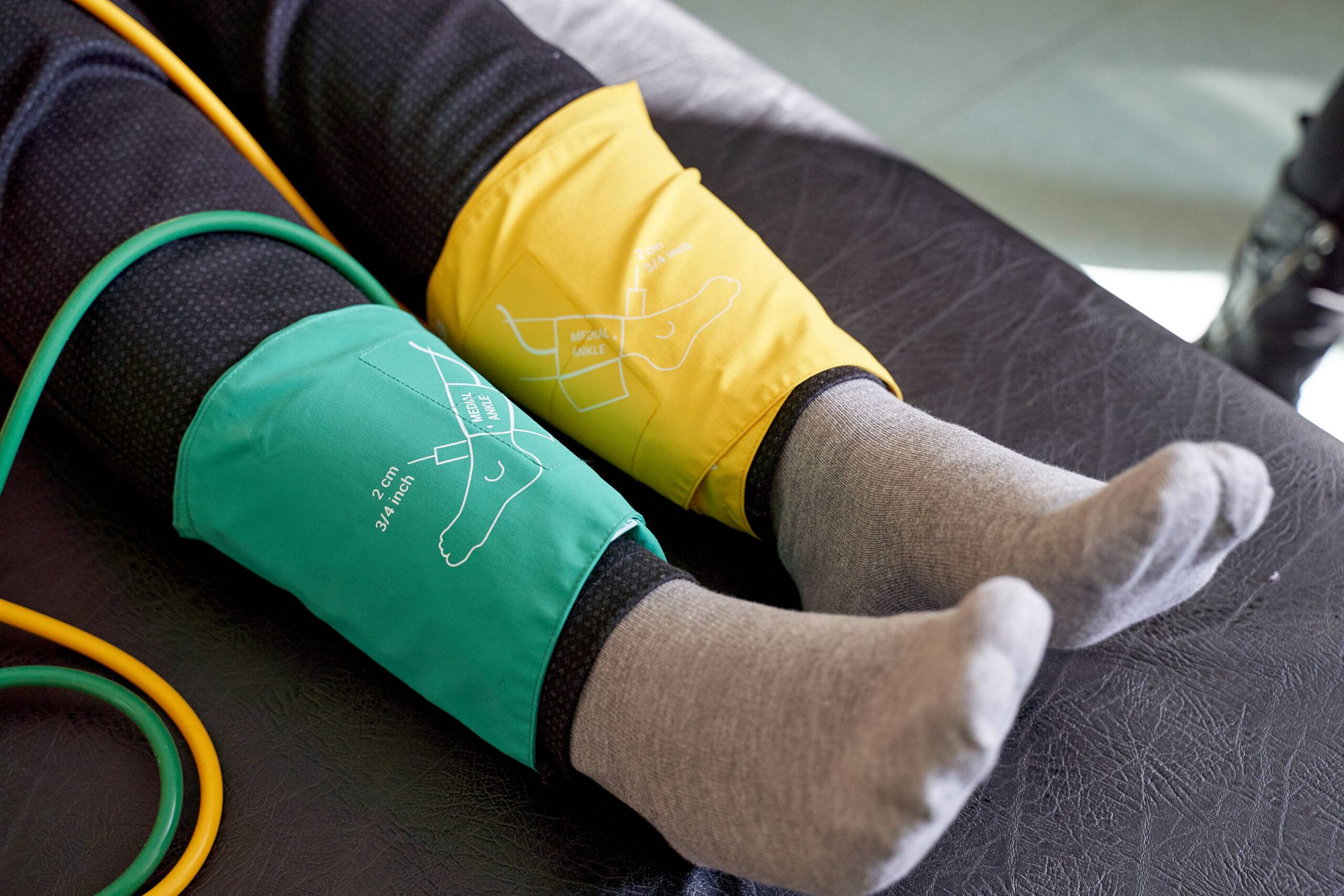
Locally, several factors contributed to gaps in care delivery. Previous ankle–brachial pressure index (ABPI) results and community documentation were not routinely accessible, meaning it was often unclear whether patients had undergone full lower limb assessment or were already established on compression therapy prior to admission. In addition, ABPI assessment devices were not available to the tissue viability service, limiting the ability to undertake assessment at the point of review. As a result, decisions regarding compression therapy were frequently delayed.
The compression bandaging options available within the Trust were limited to four-layer systems, which were time-consuming to apply and not always practical. This, combined with uncertainty regarding safe application in the absence of ABPI, led to reduced confidence among tissue viability nurses (TVNs).
The recommendation for patients admitted to hospital with established compression therapy was for it to be removed to facilitate wound assessment. Lower-limb wounds were then commonly managed with simple bandages, rather than therapeutic compression. Consequently, care was not consistently aligned with best practice recommendations.
A review of national guidance identified that early application of mild graduated compression could be considered where red-flag symptoms were excluded, without the requirement to complete an immediate ABPI assessment. This highlighted an opportunity to introduce a reduced compression approach within the acute setting, supported by structured clinical assessment, to enable earlier and safer intervention.
Method
Development and implementation of an early reduced compression approach
Following identification of gaps in initiating compression therapy, a practice development approach was undertaken to address variation in the management of lower-limb wounds.
A review of national guidance, including the NWCSP and best practice statements for leg ulcer management, was undertaken to identify evidence-based recommendations applicable to the acute setting (Wounds UK, 2022; NWCSP, 2020).
Based on this, a clinical screening process was developed, adapted from national guidance, to support safe clinical decision-making where immediate ABPI results were not available. This included an initial review of the patient’s records to identify a history of arterial disease or unstable cardiac conditions, followed by a focused bedside assessment. A structured approach was used to support identification of red flag symptoms that would contraindicate compression and require further assessment or escalation [Figure 1].
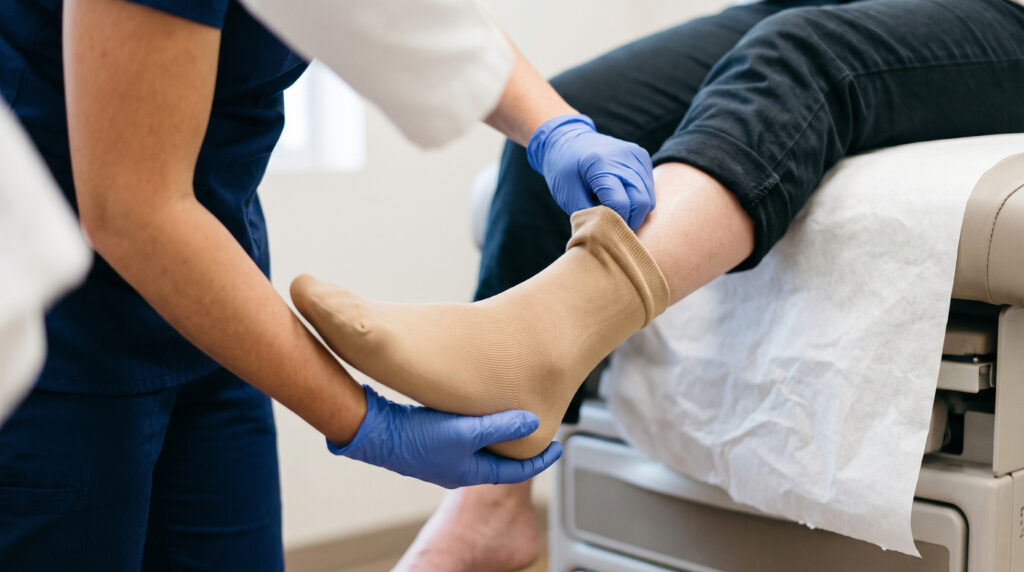
In parallel, compression options within the acute setting were reviewed. Four-layer compression systems were identified as impractical due to the time required for application. A two-layer reduced compression system was, therefore, introduced as a more feasible alternative to enable timely intervention while maintaining a safe level of compression.
Patients initiated on reduced compression required follow-up, including completion of a full lower-limb assessment and ABPI within 14 days, in line with national guidance (NWCSP, 2020). Where patients were discharged prior to completion of this assessment, a potential risk to continuity of care was identified, particularly if appropriate community referral was not completed at the point of discharge.
To support continuity of care, a lower-limb passport was developed as a communication tool to complement existing referral processes between acute and community services. The passport documented treatment initiated in hospital, including the type of compression applied and onward referral requirements, and was aligned with NWCSP recommendations for immediate care, assessment, and ongoing management [Figure 2].
Results
Following implementation of the early reduced compression approach, reduced compression was incorporated into routine clinical practice within the acute setting. This enabled tissue viability nurses to initiate compression therapy for patients with significant lower-limb wounds following a structured assessment and exclusion of red flag symptoms, where previously no pathway existed to support this practice.
Clinical improvements were observed, including reductions in oedema and exudate, with improved wound progression noted in patients where compression was applied earlier. The use of a two-layer reduced compression system also enabled more timely and practical application within ward environments.
The introduction of a structured clinical screening process improved confidence within the tissue viability team, supporting more consistent and safer clinical decision-making.
In addition, patients who were already established on compression therapy in the community reported improved reassurance during admission, as continuity of treatment was maintained.
Discussion
Evidence-based lower-limb wound management in acute settings is often challenged by variation in clinical practice and delays in initiating compression therapy. This project demonstrated that a structured approach can support safe and appropriate clinical decision-making in situations where immediate ABPI results are unavailable.
By introducing a clinical screening process alongside a reduced compression option, it was possible to address uncertainty and enable earlier intervention. This improved consistency in practice, supported better wound progression, and reduced escalation of deteriorating lower-limb wounds.
This approach aligns with national guidance advocating for early intervention and integrated care pathways. However, it has also highlighted a key limitation within the current system, namely the lack of seamless integration between acute and community services. While the lower-limb passport was developed to support communication, full implementation across community services, including district nursing teams, general practice and leg ulcer clinics, remains to be achieved.
There is significant potential to expand this approach beyond a single organisation and embed it within integrated care systems, supporting a standardised pathway for lower limb wound management across acute and community settings. Wider adoption could improve continuity of care, reduce variation in practice, and ensure that patients initiated on compression receive effective follow-up and appropriate assessment across care settings.
Future work should focus on strengthening collaboration between acute and community providers, improving referral pathways, and embedding shared tools to support consistent, system-wide care delivery.
Conclusion
This practice development project demonstrates that a structured, guideline-based approach can support safe and timely initiation of reduced compression for lower limb wounds within the acute setting. By addressing both clinical decision-making and practical barriers, earlier intervention was achieved, improving consistency of care and supporting better wound outcomes.
While this approach has shown positive impact locally, further work is required to strengthen integration with community services and ensure continuity of care. Wider adoption of this model across integrated care systems has the potential to support more consistent, patient-centred management of lower limb wounds across care settings.