Clinical Guidelines And Supplements
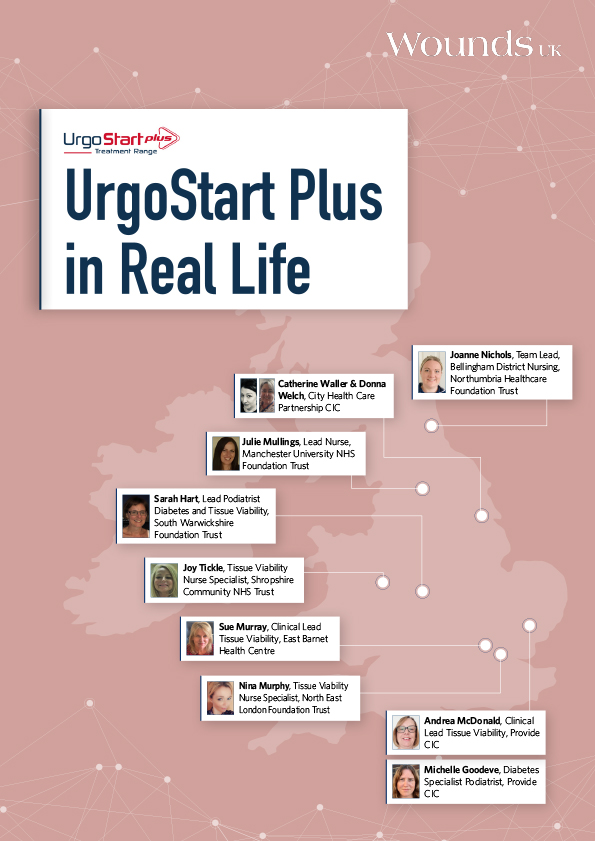
Supplement: Assessing efficacy of a TLC-NOSF dressing on DFUs: The Explorer studyVIEW PDF
March 2013 Volume 9 Issue 1The announcement by Urgo Medical of the pioneering Explorer study into the efficacy of UrgoStart® Contact for treating diabetic foot ulcers (DFUs) is an exciting development in the management of these potentially devastating wounds. Some 2–10% of people...
Supplement: Comparing wound classification systems: Impact on diabetic heel ulcerationVIEW PDF
March 2013 Volume 9 Issue 1Background: Ulcer classification systems can provide a framework for healthcare staff to predict potential risk and prompt the right care at the right time. Aim: To explore if consensus is achieved when two wound classification systems are applied to grade...
Supplement: Diabetic foot ulcer management in the communityVIEW PDF
March 2013 Volume 9 Issue 1Foot ulcers affect as many as 1 in 10 people with diabetes and it is important for people with this condition to understand the potentially severe consequences of leaving a foot ulcer untreated. Even small ulcers on the foot can represent a serious risk because...
Supplement: Improving outcomes in diabetic foot care: Collaboration and education the order of the dayVIEW PDF
March 2013 Volume 9 Issue 1Twenty-two years ago, I entered the brave – relatively new – world of the tissue viability nurse (TVN), in a busy city hospital. The hospital included a specialist diabetes ward, vascular service, and large renal unit. Not surprisingly, my first thoughts...
Supplement: Management of heel pressure ulcers among inpatients with diabetes VIEW PDF
March 2013 Volume 9 Issue 1Approximately 6000 people with diabetes undergo leg, foot, or toe amputations each year in England, many of which are avoidable. The risk of lower extremity amputation for people with diabetes is ≥20 times that of people without diabetes. Major amputation...
Supplement: No foot is an islandVIEW PDF
March 2013 Volume 9 Issue 1Foot ulcers are a common cause of hospital admission in people with diabetes and cause great expense to the NHS, yet patients are not consistently receiving optimal foot care from a multidisciplinary team – and the team is incomplete without the patient....
Effective debridement in a changing NHS: A UK consensusVIEW PDFThis document aims to provide nurses and other healthcare professionals, who care for patients with wounds in both community and acute care settings, with the information and practical tools required to facilitate optimum wound healing through appropriate...
A next generation foam AQUACEL® Foam DressingVIEW PDFThis debate, coupled with the identified potential to further enhance the performance capabilities of foam dressings, has driven the development of a new foam dressing incorporating Hydrofiber® Technology aimed at extending the use of foam dressings across...
Best practice guidelines for skin and wound care in epidermolysis bullosaVIEW PDFThese guidelines have been developed to aid clinicians in the management of skin and wound care for patients with the genetic skin fragility disorder epidermolysis bullosa (EB). Management strategies for wounds or wound complications are suggested for patients...

Quick Search Buttons
CompressionDACCDebridementExudateHoneyHydrofiberMoisture LesionsPHMBPressure Ulcers